
Jember's Ajong Tobacco Hunted by Buyers as Far as Europe
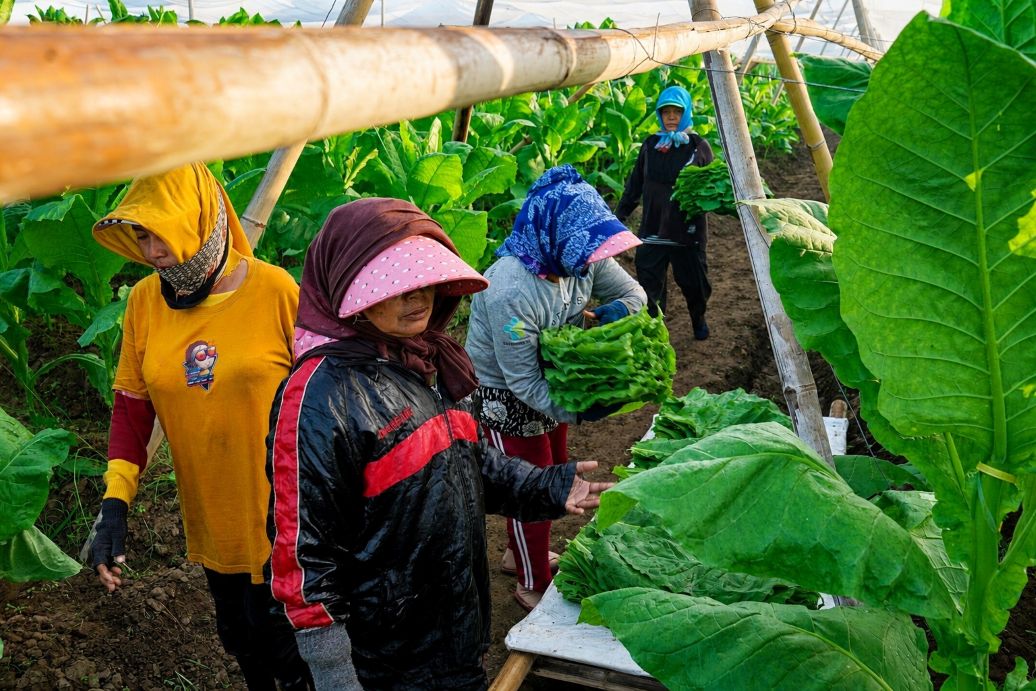
Tobacco production in Ajong village, Jember Regency, East Java, continues to be the primary target of global buyers, ranging from Asia and Europe to Latin America.
The region is increasingly cementing its reputation abroad through the cultivation of premium Shade-Grown Tobacco (TBN, Tembakau Bawah Naungan) produced by PTPN I (Persero) Regional 5.
Although the export market potential is highly attractive, PTPN I, as a state-owned plantation enterprise, does not wish to monopolise the lucrative foreign exchange alone. The management of PTPN I (Persero) has chosen a populist option that sides with the people in order to meet the continuously rising demand of the global market.
This strategic step has been realised through a partnership scheme with the surrounding community that is inclusive, professional and competitive. The presence of these tobacco plantations has proven to contribute tangibly to high levels of local employment absorption, whilst also preserving the dignity of land-owning residents.
The President Director of PTPN I, Abdul Rivai Ras, affirmed that the policy of partnering with local communities is a mandate of the state that must be carried out. In the context of the partnership in Jember, PTPN I has embraced farmers who own paddy fields usually planted with rice or secondary crops to take part in the global tobacco supply chain through a sustainable business model.
Abdul Rivai said the cooperation involves residents directly, in a structured and systematic manner. He added that the agribusiness collaboration in Ajong, Jember, is designed as a business model that is both inclusive and sustainable. On the one hand, PTPN I strengthens its position in the international market through the excellence of its TBN, and on the other, local farmers bring extraordinary land asset potential.
“Through the commodity rotation scheme, we rent residents’ paddy fields competitively, with a full commitment that production and cultivation activities in the field continue to empower the landowners themselves. With this dual pattern, farmers are entitled to receive rent money upfront as well as wages from their work. Through this approach, their ‘praja’ — meaning their dignity as paddy field owners — remains fully preserved. This is a highly productive form of collaboration,” said Abdul Rivai Ras in Jakarta on Thursday (9/7).
The land partnership scheme implemented by PTPN I Regional 5 in Ajong is projected to become a national model for future agribusiness partnerships.
LAND RENTAL COMPENSATION
Rivai explained that the rental compensation for paddy fields applied in Ajong is considered highly competitive and of high economic value for each hectare of land per planting season. The guarantee of fresh funds at the start of the season provides strong financial resilience for landowning families before the planting period begins.
Although the status of their land is leased to the corporation for export tobacco cultivation, the farmers do not lose legal or physical access to the land assets they own. Landowners remain directly involved in the fields, safeguarding their own assets, whilst also gaining a golden opportunity to acquire the transfer of state-of-the-art agricultural cultivation technology.
“Landowning farmers essentially need certainty of results, security of their assets, and self-confidence before others. What is far more important in this programme is that these rice and secondary-crop landowning farmers, who generally still practise traditional cultivation, can now absorb knowledge and direct experience from a modern farming model.
Including smart farming based on scientific farming. With the knowledge transferred, PTPN I (Persero) hopes they can become more independent and prosperous in the future,” added Rivai.
Through this massive expansion of the partnership scale, PTPN I positions local landowning farmers as strategic partners in the corporation’s circular economy. This mutually beneficial cooperation places the Ajong community at the centre of new economic growth in the national plantation sector.
This symphony of labour-intensive partnership has proven successful in multiplying community income, both from land rental compensation and the daily wages received regularly.
PARTNERSHIP BENEFITS
The tangible benefits of this partnership web are directly felt by Supardi (48), a landowning farmer in Ajong village who usually grows rice.
He described PTPN I’s initiative to rent residents’ paddy fields using a labour-intensive model as a concrete step by the corporation in building inclusive collaboration with the farming community.
“We feel very fortunate with this land partnership programme from PTPN I Regional 5. The compensation payments settled upfront give us certainty to meet our family’s needs while also serving as capital for farming in the following season. Moreover, we have not lost our livelihoods because we are still involved in cultivating our own land with very decent daily wages. That way, we still have a sense of pride and dignity because we are looking after our own land,” said Supardi, full of gratitude.
The inclusive collaboration model pioneered by PTPN I (Persero) continues to receive an extraordinarily warm response from the people of Jember. This is evident in the fact that each planting season, high community enthusiasm is able to mobilise the uptake of hundreds to thousands of hectares of paddy fields for rental and sustainable cooperation.
Through this strong commitment, PTPN I has not only succeeded in maintaining the continuity of premium tobacco supply in the world market, but has also cemented its role as a down-to-earth driver of the people’s economic welfare.
Source: jawawa.id (https://jawawa.id/newsitem/jembers-ajong-tobacco-hunted-by-buyers-as-far-as-europe-1783605081)
Originally published by Media Indonesia (https://mediaindonesia.com/nusantara/909279/tembakau-ajong-jember-jadi-buruan-pembeli-hingga-eropa-), translated from Indonesian