
JD Vance Arrives in Switzerland as US and Iran Begin Talks on Implementing Peace Agreement
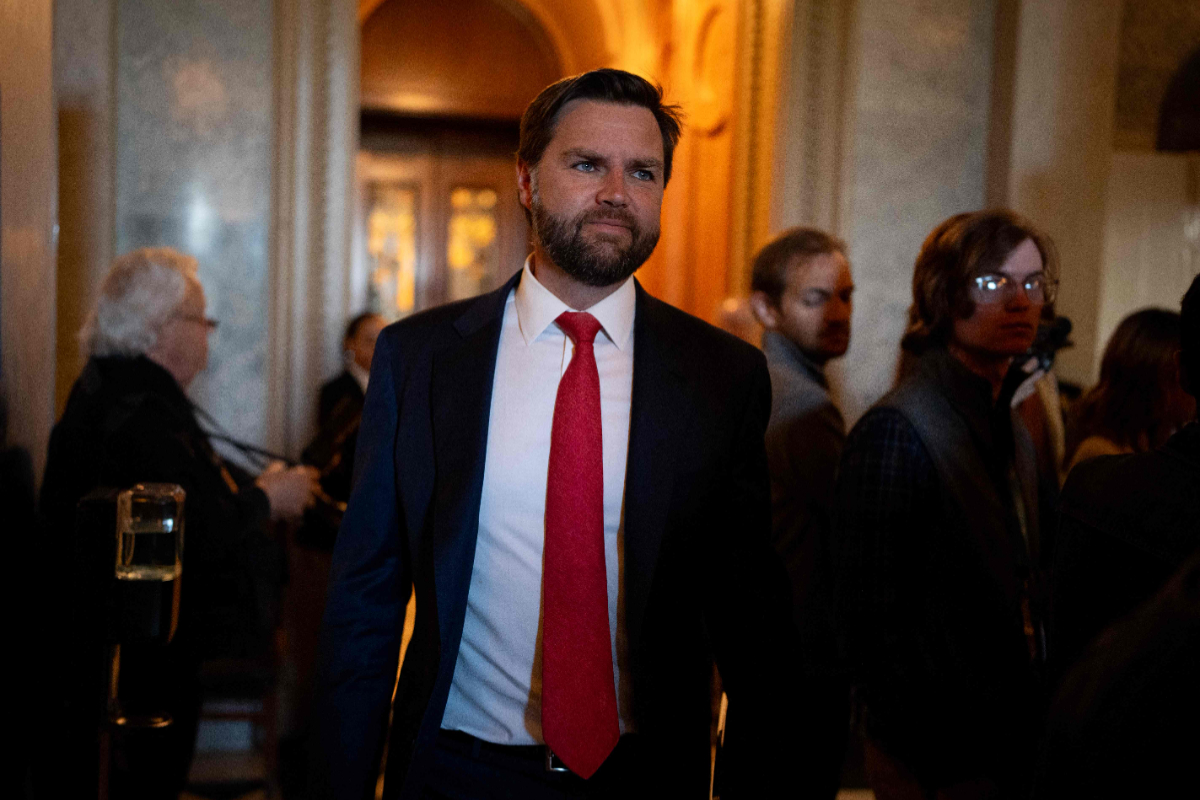
US Vice President JD Vance has arrived in Switzerland to lead high-level negotiations with Iran regarding the implementation of a temporary agreement designed to end tensions between the two nations.
The meeting, taking place at the Buergenstock mountain resort in Switzerland on Sunday (21/6) local time, is being held amidst ongoing Middle East volatility, including the continuing conflict in Lebanon and controversies surrounding Iran’s closure of the Strait of Hormuz.
The United States delegation is led directly by Vance, while Iran has sent the Speaker of Parliament and its chief negotiator, Mohammad Bagher Ghalibaf. The Swiss Foreign Ministry confirmed that talks commenced on Sunday (21/6) morning, involving several mediating parties.
These negotiations are a follow-up to the 60-day ceasefire extension agreement previously reached by Washington and Tehran as an initial step towards a broader diplomatic process.
Prior to his departure from Maryland to Switzerland, Vance expressed his hope that the negotiations could yield concrete progress on several key issues. “I hope we can make progress on the nuclear issue and also progress on the ceasefire issue in Lebanon,” Vance told reporters, as reported by Al Jazeera, on Sunday (21/6).
The Iranian delegation arrived in Switzerland earlier on Saturday (20/6) evening. Iranian state media reported that the delegation was accompanied by Foreign Minister Abbas Araghchi.
Pakistan, acting as a mediator in the temporary US-Iran agreement, also sent high-level representatives. Pakistani Prime Minister Shehbaz Sharif and Pakistan Army Chief General Syed Asim Munir were reported to be present to support the negotiations.
Although both nations have returned to the negotiating table, each maintains different priorities. Washington is said to want to focus on discussions regarding Iran’s nuclear programme, whereas Tehran is placing more emphasis on the implementation of the ceasefire and the cessation of Israeli military operations in Lebanon.
These talks are taking place as the newly signed temporary agreement faces challenges on the ground. On Saturday (20/6), Israel launched further attacks on Lebanon which, according to local media reports, caused dozens of casualties.
In response, the Islamic Revolutionary Guard Corps (IRGC) announced the closure of the Strait of Hormuz. Tehran considers the Israeli attacks to be in violation of the ceasefire commitments previously guaranteed by the United Nations and the United States.
The IRGC warned that ships traversing the Strait of Hormuz could face security risks. However, the US military has denied any disruption to international shipping lanes. The US Central Command (CENTCOM) stated that at least 55 merchant vessels continue to traverse the Strait of Hormuz, carrying more than 17 million barrels of oil destined for global markets.
CENTCOM emphasised that it will continue to maintain the security of this strategic shipping route to ensure that trade activities proceed normally. US President Donald Trump also stated that ships passing through the Strait of Hormuz would not be subject to additional fees as long as the ceasefire remains in effect. However, he did not rule out the possibility of applying certain tariffs should the peace process fail.
Meanwhile, Iran maintains that the primary focus of this round of negotiations is to ensure the implementation of various points agreed upon in the memorandum of understanding between the two countries. According to several Iranian officials, the agenda includes halting fighting in Lebanon, lifting the US maritime blockade, reopening the Strait of Hormuz, releasing frozen Iranian assets, and easing sanctions on the country’s oil and petrochemical sectors.
Tehran acknowledges that these issues cannot be resolved in a single round of negotiations. However, Iran hopes for concrete steps to begin implementing the agreement signed by President Donald Trump and Iranian President Masoud Pezeshkian earlier this week.
Amidst this diplomatic process, the security situation in Lebanon continues to show the fragility of the existing ceasefire. The Iran-backed Hezbollah group claims to have launched attacks against Israeli forces, while the Israeli military stated its operations were a response to prior attacks by Hezbollah. Israeli media reported that Prime Minister Benjamin Netanyahu and the Israeli Defence Minister have instructed the cessation of new attacks on Lebanon, although Israeli forces are said to be maintaining control over territories currently under their command.