
JCI Weakens Today: Still Disrupted by Iran-US Tensions and Thin Foreign Exchange Reserves
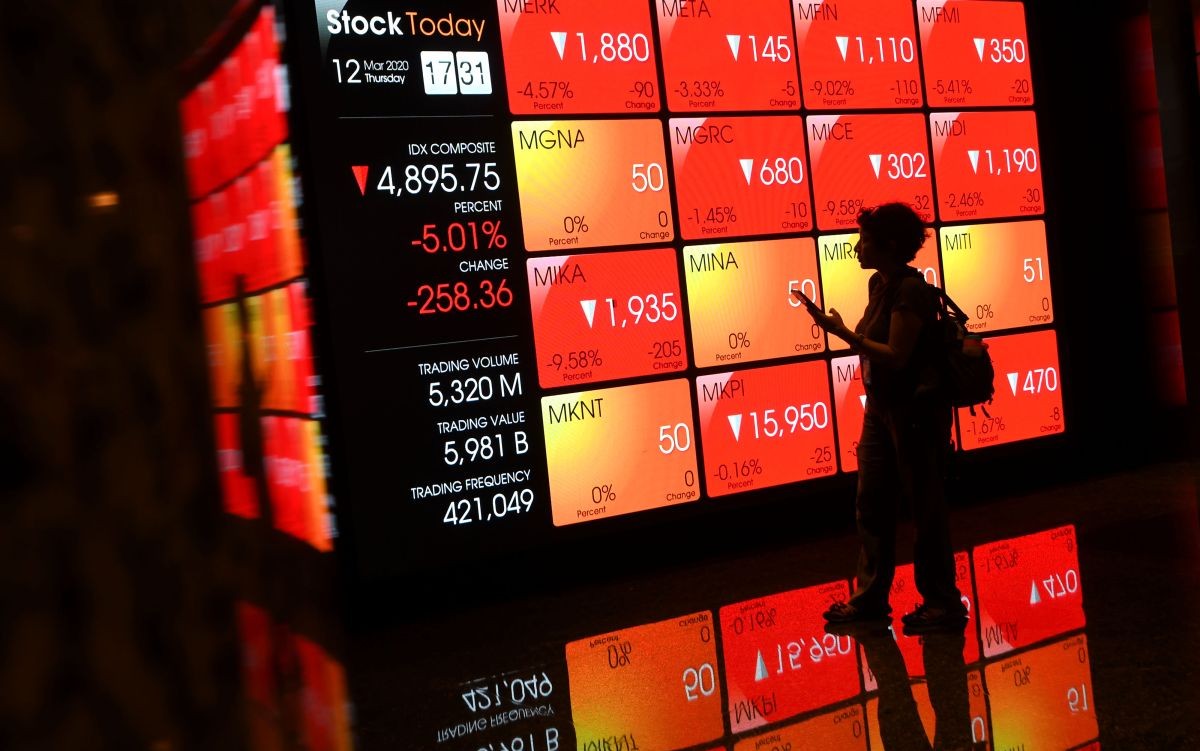
The Jakarta Composite Index (JCI) opened weaker in Thursday morning trading, in line with increased caution among market participants regarding the dynamics of the conflict between the United States and Iran, as well as external pressures on the domestic economy. The JCI today fell 40.75 points or 0.56% to the level of 7,238.46, while the LQ45 index also corrected by 0.69% to 728.57.
Head of Research at Kiwoom Sekuritas Indonesia, Liza Camelia Suryanata, stated that the JCI resistance level is at 7,325, with potential strengthening towards 7,600 if it can be breached in the medium term. However, global sentiment remains the dominant factor. Although a temporary ceasefire was achieved between the United States and Iran, tensions have not fully subsided.
Donald Trump stated that a peace agreement serves as the basis for negotiations, but Iran accused there have been violations from the start, including drone activities and conflicts in Lebanon. This situation keeps regional stability fragile, even opening the potential for further escalation that could affect global energy routes such as the Strait of Hormuz. As a result, world oil prices are moving volatilely, with WTI and Brent oil at around US$97 per barrel, reflecting high supply uncertainty.
Domestically, pressure also comes from the decline in Indonesia’s foreign exchange reserves to US$148.2 billion in March 2026, the lowest since July 2024. This decline was triggered by Bank Indonesia’s interventions to maintain rupiah stability, as well as pressures from capital outflows and weakening trade balance.
Although still above international adequacy standards, the declining reserve trend reflects increasing stabilisation costs amid volatile global conditions. Additionally, energy distribution issues are also a market concern. Two Pertamina tankers remain held in the Persian Gulf area due to technical constraints and security coordination in the Strait of Hormuz.
The government, through Minister of Energy and Mineral Resources Bahlil Lahadalia, stated that communication with Iranian parties continues to ensure smooth energy distribution. Nevertheless, the government assures that domestic energy supplies remain secure due to diversified oil import sources to other countries such as Angola, Nigeria, and the United States.
With a combination of geopolitical pressures, energy volatility, and domestic factors like foreign exchange reserves, the JCI’s movements are expected to remain limited in the short term with a tendency towards volatility.