
JCI Weakens Following Asia as Markets Monitor Direction of US-Iran Conflict
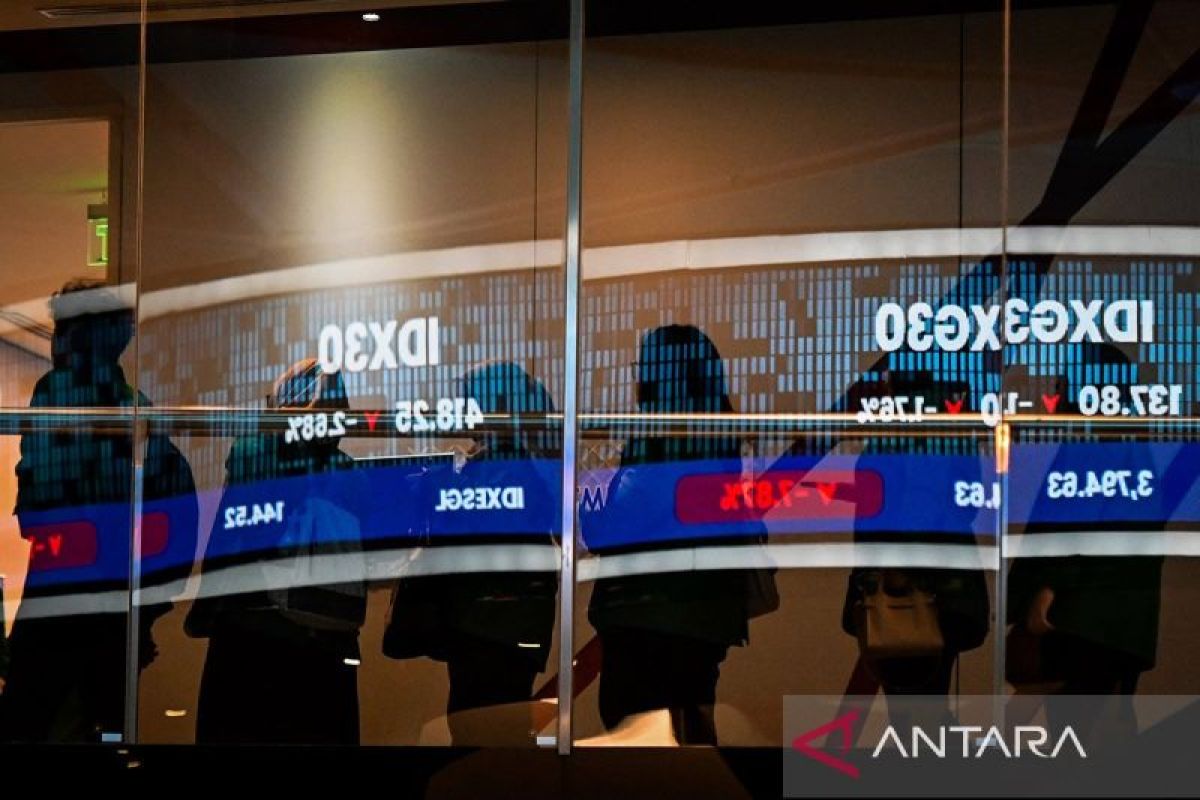
The Jakarta Composite Index (JCI) of the Indonesia Stock Exchange (BEI) moved lower on Thursday morning, following Asian markets, as market participants continue to monitor developments in the direction of the conflict between the United States (US) and Iran.
The JCI opened down 40.75 points or 0.56% at 7,238.46. Meanwhile, the LQ45 index of 45 leading stocks fell 5.05 points or 0.69% to 728.57.
“Kiwoom Research sees the next JCI resistance at 7,325; if this level is also breached, the JCI will advance further towards the 7,600 target, which is the medium-term resistance,” said Head of Research at Kiwoom Sekuritas Indonesia, Liza Camelia Suryanata, in her analysis in Jakarta on Thursday.
From abroad, the US and Iran reached a two-week ceasefire agreement mediated by Pakistan, with a delay in US attacks on Iran ahead of the Strait of Hormuz opening deadline.
US President Donald Trump stated that the US has achieved its main military objectives and accepted Iran’s 10-point peace proposal as a basis for negotiations. Meanwhile, Iran stated it would halt defensive operations and allow safe shipping lanes through the Strait of Hormuz during coordination with its military.
However, after the agreement, Iran accused the US of violating three main clauses of the proposal even before negotiations began, including a ceasefire violation in Lebanon, a drone entering Iranian airspace, and rejection of Iran’s uranium enrichment rights.
Additionally, Iran accused Israel of violating the agreement by launching a major attack on Lebanon, while Israel stated that Lebanon is not included in the ceasefire and will continue to attack Hezbollah.
Iran described the ceasefire as unreasonable under those conditions and threatened to withdraw from the agreement.
Furthermore, Iran stated that the ceasefire covers all fronts including Lebanon, differing from the US position, and plans to impose cryptocurrency fees on tankers passing through the Strait of Hormuz while still requiring shipping permits through the route.
Crude oil prices experienced extreme volatility, with WTI oil at $97.10 per barrel and Brent oil at $97.10 per barrel in morning trading at 08:55 WIB.
Domestically, Indonesia’s foreign exchange reserves declined from $151.9 billion in February 2026 to $148.2 billion in March 2026, the lowest since July 2024, due to Bank Indonesia (BI) interventions to stem rupiah weakening amid geopolitical pressures and high global yields.
Although still above adequacy standards (around 6 months of imports), this decline reflects pressure from weakening trade balance and portfolio outflows, as well as rising intervention costs in volatile global conditions.
Looking ahead, the direction of foreign exchange reserves will be determined by global financial conditions (US yields and Fed policy), the sustainability of trade surpluses, and the credibility of domestic policies, with a stable outlook but gradual recovery expected.
On the other hand, two Pertamina tankers, Pertamina Pride carrying crude oil for domestic needs and Gamsunoro serving consumer cargo, remain stuck in the Persian Gulf, respectively at Ras Tanura (Saudi Arabia) and Khor al Zubair (Iraq).
The two tankers have not been able to pass through the Strait of Hormuz despite the US-Iran ceasefire, due to technical constraints such as safety, insurance, and coordination with Iranian authorities, as well as potential congestion and shipping permits.
The government, through Minister of Energy and Mineral Resources Bahlil Lahadalia, stated that intensive communication with Iran is ongoing and hopes this issue can be resolved soon within the two-week pause period.
On the other hand, the government assures that energy supplies remain secure because imports do not depend on Middle Eastern fuels, with crude oil portions around 20-25% that can be redirected from other countries such as Angola, Nigeria, and the US.
In Wednesday’s trading (08/04), European stock markets uniformly strengthened, including the Euro Stoxx 50 up 5.02%, the UK FTSE 100 up 2.51%, the German DAX up 5.06%, and the French CAC 40 up 4.49%.
The US Wall Street markets also uniformly strengthened on Wednesday (08/04), including the Dow Jones Industrial Average up 2.85% to 47,909.92, the S&P 500 up 2.51% to 6,611.83, and the Nasdaq Composite up 2.90% to 24,903.17.
Regional Asian stock markets this morning included the Nikkei down 296.42 points or 0.53% to 56,012.00, the Shanghai index down 21.88 points or 0.55% to 3,973.12, the Hang Seng down 145.52 points or 0.56% to 25,747.50, and the Strait Times down 9.17 points or 0.18% to 4,986.88.
Source: jawawa.id (https://jawawa.id/newsitem/jci-weakens-following-asia-as-markets-monitor-direction-of-us-iran-conflict-1775703054)
Originally published by Antara (Indonesian) (https://www.antaranews.com/berita/5518484/ihsg-melemah-ikuti-asia-seiring-pasar-cermati-arah-konflik-as-iran), translated from Indonesian