
JCI Surges 4% Following Meeting Between Dasco and Himbara Heads
The Indonesia Composite Index (IHSG) surged during trading on Tuesday (9/6/2026). Thirty minutes before the end of the first session, the IHSG rose by 4.01%, gaining 214 points to reach the 5,556.19 level.
The volatile movement of the IHSG this week indicates that the domestic market is still in a phase of seeking equilibrium following heavy selling pressure in recent sessions. Technically and psychologically, the sharp rebound at the opening reflects bargain hunting rather than a complete shift in overall sentiment.
The surge in the IHSG was primarily supported by large-cap stocks, which provided the largest contribution to the index. PT Telkom Indonesia Tbk (TLKM) was the main driver, contributing approximately 24 points to the index, followed by PT Sinar Mas Multi Artha (SMMA) and the three largest Indonesian banking entities: Bank Rakyat Indonesia (BBRI), Bank Mandiri (BMRI), and Bank Central Asia (BBCA).
This phenomenon indicates that the market is beginning to view the valuations of several large-cap stocks as attractive areas following recent corrections. Additionally, strength in telecommunications, retail, and commodity stocks helped support market sentiment.
Notably, TLKM shares strengthened after the company announced an attractive dividend yield. TLKM will distribute a cash dividend from its 2025 net profit equivalent to 123% of net profit, amounting to Rp 21.9 trillion. Approximately Rp 4.2 trillion of the distributed dividend will be taken from the Company’s retained earnings from the previous year. This decision was approved by TLKM shareholders during the Annual General Meeting of Shareholders (RUPST) held today, with the cash dividend set at Rp 221 per share. Based on yesterday’s price, TLKM offers a dividend yield of approximately 9%.
Strengthening State-Owned Banks
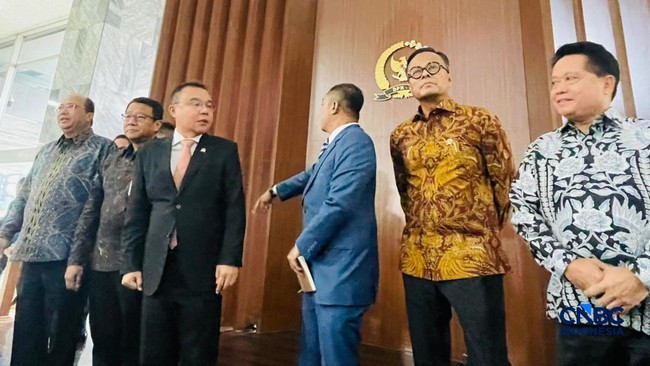
The IHSG jumped following a meeting between the Deputy Speaker of the House of Representatives, Sufmi Dasco Ahmad, with the Association of State-Owned Banks (Himbara), the Indonesian Banks Association (Perbanas), and several other financial sector stakeholders at the Nusantara III Building, Parliament Complex, Senauyan, Central Jakarta, on Tuesday (9/6/2026).
Also present at the meeting were the Chairman of Himbara and President Director of PT Bank Negara Indonesia (Persero) Tbk, Putrama Wahju Setiawan, and the Chairman of Perbanas and President Director of PT Bank Rakyat Indonesia (Persero) Tbk, Hery Gunardi. Also in attendance were State Secretary Prasetyo Hadi and the Head of the SOE Regulatory Agency/COO of Danantara Indonesia, Dony Oskaria.
“Today, the House of Representatives of the Republic of Indonesia is conducting coordination and evaluation regarding the current situation related to the banking situation in the country,” said Dasco.
He stated that he had received information regarding the current banking situation from Himbara and Perbanas. “Based on the results of the discussion, the developments are very good,” Dasco added.
On the other hand, external sentiment is relatively more conducive compared to the previous wave of sell-offs. While the Rupiah remains around Rp 18,160 per US Dollar, its weakening has begun to stabilise. This condition has slightly eased investor concerns regarding potential further pressure on the domestic financial market.
Pressure on the Rupiah
Nevertheless, volatility is expected to remain high throughout the session. This is reflected in the index movement, which initially surged by more than 1.5% at the opening but then quickly corrected before rebounding again.
In terms of stock movement, the market condition this morning remains quite positive. A total of 335 stocks gained, 262 declined, and 362 remained stagnant. This means the IHSG’s morning strength was not only supported by a few large stocks but is also being followed by a wider range of equities.
Technically, this morning’s IHSG rebound has not yet fully reversed the downward trend seen in recent periods. Although the index surged by more than 1%, it remains well below key resistance areas, suggesting that volatility will remain high. The 5,300 area has now become a crucial level that market participants will monitor as the primary defence zone following the heavy selling pressure of recent sessions.