
JCI Strengthens to 6,216, Session 1 Up 0.48%
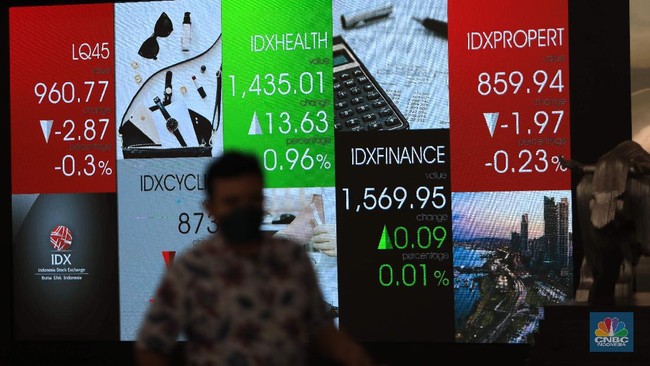
The Indonesia Composite Index (JCI) managed to remain in the green until the end of the first trading session on Friday (31/07/2026), despite large-cap banking stocks acting as the primary drag on the index. The JCI strengthened by 0.48% to the level of 6,216.28, having fluctuated within a range of 6,201.89 to 6,236.62 during the first session.
From a sectoral perspective, almost all sectors remained in the green. The basic materials sector rose by 2.25%, property by 1.48%, utilities by 1.37%, and non-primary consumer goods by 1.12%. Conversely, pressure was felt in the financial sector, which fell by 0.51%, followed by technology, which weakened by 0.30%, and primary consumer goods, which corrected by 0.13%.
The JCI’s gains were primarily supported by commodity and property-based stocks. PT Amman Mineral Internasional Tbk (AMMN) was the largest contributor, adding 7.63 points to the index. Other notable contributors included PT Maha Properti Indonesia Tbk (MPRO) and PT Vale Indonesia Tbk (INCO), which each contributed 2.10 points, followed by PT Bank Mandiri (Persero) Tbk (BMRI) with 1.85 points, PT Barito Renewables Energy Tbk (BREN) with 1.75 points, and PT Barito Pacific Tbk (BRPT) with 1.64 points.
On the other hand, the index’s gains were still constrained by the decline in banking and telecommunications stocks. PT Bank Central Asia Tbk (BBCA) was the heaviest weight, reducing the JCI by 9.99 points, followed by PT Telkom Indonesia (Persero) Tbk (TLKM) which cut 6.27 points, PT Sinar Mas Multiartha Tbk (SMMA) by 3.17 points, and PT Capital Financial Indonesia Tbk (CASA) by 1.74 points.
Overall, the JCI’s movement in the first session showed a pattern of healthy consolidation following a rally in recent weeks. As long as the index remains above its 20-day moving average, the short-term trend remains positive, although investors should remain cautious of the slowing upward momentum reflected in the MACD indicator.