
JCI potential for volatility driven by oil prices and high interest rates
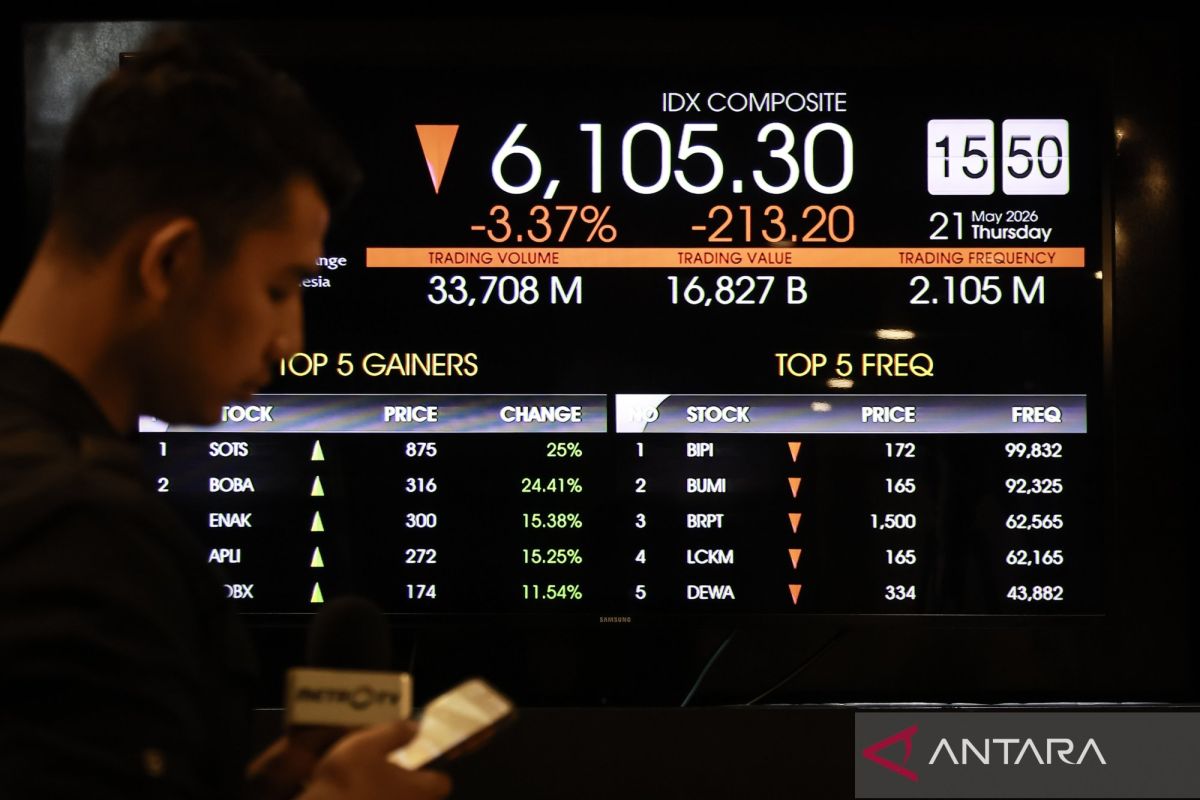
Overall, the short-term outlook for the Indonesian market is improving, yet it remains vulnerable to external pressures such as high oil prices, persistently high global interest rates, and a weakening trade surplus, according to a study by the Lotus Andalan Sekuritas Research Team in Jakarta on Wednesday.
The JCI opened stronger by 11.67 points or 0.19 per cent to 6,207.10. Meanwhile, the LQ45 index, comprising 45 blue-chip stocks, declined by 0.25 points or 0.04 per cent to 619.02.
Internationally, US stock markets reached new record highs on 2 June 2026, driven by optimism surrounding developments in Artificial Intelligence (AI) and the semiconductor sector. This sentiment reinforces investor confidence that the AI investment cycle is still in a long-term growth phase. However, behind this rally, the market is also facing risks regarding index concentration in a handful of large-cap technology stocks.
Furthermore, geopolitical tensions between the US and Iran have increased concerns regarding global energy supplies, following threats from Iran to block the Strait of Hormuz. This situation has pushed global oil prices back towards the $100 per barrel level, potentially triggering global inflationary pressures. Additionally, robust US labour market data and rising inflation in the Eurozone have limited the likelihood of interest rate cuts by major central banks.
“The combination of high energy prices, persistent inflation, and high interest rates has the potential to reduce investor interest in emerging market assets, including Indonesia,” stated the Lotus Andalan Sekuritas Research Team.
Domestically, Indonesia’s manufacturing PMI returned to the expansion zone in May 2026, indicating that domestic economic activity is beginning to improve after experiencing contraction in the previous month. Nevertheless, several risks persist; foreign investors recorded a net sell of Rp1.39 trillion, suggesting that global investor confidence in the domestic market has not yet fully recovered.
Meanwhile, Indonesia’s trade surplus dropped sharply to just $90 million due to a surge in imports, while inflation in May 2026 rose to 3.08 per cent year-on-year (yoy) due to rising transport and energy costs. In the banking sector, high levels of undisbursed loans indicate that while liquidity remains strong, demand for productive credit has not yet fully recovered.