
JCI Plunges as MSCI Considers Downgrading Indonesia’s Market Status
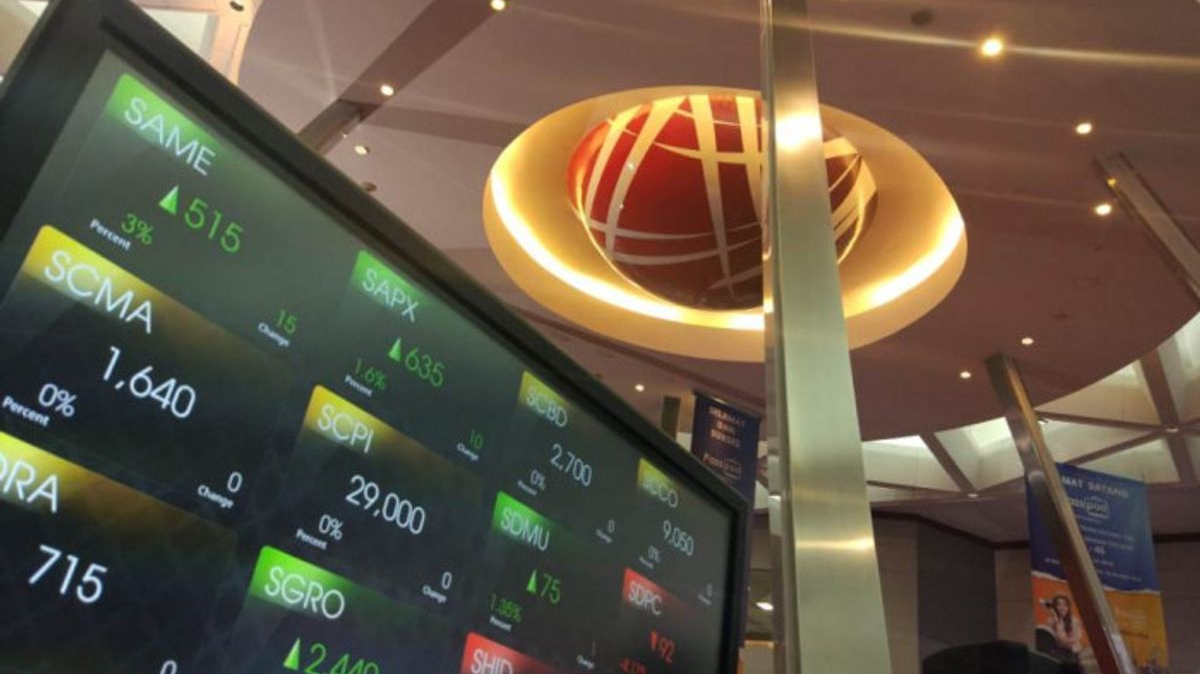
Pressure on Indonesia’s capital market intensified after MSCI considered changing the classification of the country’s stock market, a move that could reduce access to international investment. Citing Medcom, the Jakarta Composite Index (JCI) fell by more than 5 per cent at the start of trading on Monday, 19 October 2026, after dropping 11.6 per cent the previous Friday.
The decline took Indonesian shares to their lowest level in six years. It further weakened investor sentiment, already under pressure amid concerns about share-ownership transparency and trading practices in the domestic market.
MSCI is considering reclassifying Indonesia from an emerging market to a standalone market. If implemented, the change could reduce Indonesia’s access to international capital flows that use global indices as investment benchmarks.
Standalone-market status could also affect Indonesia’s ability to compete for foreign investment. Under that classification, Indonesia could be grouped with countries such as Lebanon and Zimbabwe.
Transparency concerns are not new for MSCI. In January, the index provider warned that Indonesia could be downgraded to frontier-market status because of limited information on share ownership and trading behaviour.
In a statement on Friday, however, MSCI said progress in addressing the issues remained insufficient. It even suggested that a downgrade to frontier-market status might not fully reflect the seriousness of the problems.
Goldman Sachs strategists said Indonesia needed to demonstrate verifiable reform outcomes rather than simply announce plans for improvement.
“The burden of proof has now shifted to avoiding reclassification; tangible evidence is needed that the announced reforms have been implemented consistently and have genuinely improved market functioning,” the Goldman Sachs strategists wrote in a note.
IDX tightens response to market volatility
In response to trading pressure, the Indonesia Stock Exchange (IDX) announced a change to the lower auto-rejection limit on Monday. The limit was reduced from 15 per cent to 7 per cent to give investors time to assess information before making decisions.
The IDX said the policy was intended to give market participants an opportunity to evaluate available information and consider Indonesia’s economic fundamentals. The move followed a weekend meeting between financial regulators and several capital-market participants, including analysts and economists.
On the regulatory front, Indonesian authorities on Friday imposed sanctions over alleged share-trading manipulation involving three companies. The total fines amounted to Rp2.1 trillion.
Angus Mackintosh, an ASEAN specialist at Singapore-based Aletheia Capital, said the fines showed that the Financial Services Authority (OJK) had been addressing problems in the stock market for some time.
“The fines are a positive step, but coordinated action is needed to assert the OJK’s authority and take firm measures against specific parties known to be involved in market abuse,” he said, according to Channel News Asia.
Potential foreign capital outflows
The prospect of a reclassification has also raised concerns about potential share sales by international investors. Goldman Sachs estimates that removing Indonesia from MSCI indices could trigger US$5.6 billion in passive outflows.
Active funds that benchmark themselves against MSCI indices also hold more than US$8 billion in Indonesian assets. Whether they sell their holdings, however, depends on the policies of individual investment managers rather than following index changes automatically.
Foreign investor pressure has in fact persisted throughout the year. International investors have recorded net sales of US$4.88 billion in Indonesian shares, pointing to the possibility of the largest annual outflow in at least 16 years.
Aninda Mitra, head of Asia macro and investment strategy at BNY Investments, said foreign investors’ exposure to Indonesian shares had fallen significantly.
“On the other hand, even though there are attractive companies and banks with strong fundamentals, it will be more difficult to attract substantial capital in the current environment,” she said.
Her comments highlight the challenge of attracting new investment despite the perceived strength of some Indonesian companies and banks. Uncertainty over the market classification could make it harder for Indonesia to secure large amounts of capital.
Rupiah and bonds also in focus
The pressure on shares comes as President Prabowo Subianto’s government faces challenges in maintaining investor confidence. Moody’s and Fitch had previously downgraded Indonesia’s sovereign credit outlook to negative.
Market concerns extend beyond equities, which are valued at around US$500 billion. The weakening rupiah is also in focus: it stood at Rp18,040 to the US dollar, close to the record low of Rp18,190 recorded last June.
Gary Tan, a portfolio manager at Singapore-based Allspring Global Investments, highlighted risks beyond share sales directly linked to index changes.
“Our greater concern is not the index-related selling itself,” Gary Tan said.
He said the knock-on effects on the rupiah and domestic bond yields warranted attention. Disruption in financial markets could tighten financing conditions and have broader consequences for real economic activity.
MSCI’s review has therefore become a major concern for Indonesia’s capital market, with implications for trading transparency, investor confidence, foreign capital flows, and the stability of the rupiah and domestic bonds.
Source: jawawa.id (https://jawawa.id/newsitem/jci-plunges-as-msci-considers-downgrading-indonesias-market-status-1792425024)
Originally published by suaralandak.co.id (https://www.suaralandak.co.id/ihsg-anjlok-msci-status-indonesia), translated from Indonesian