
JCI Plunges 3.56% Following MSCI Announcement
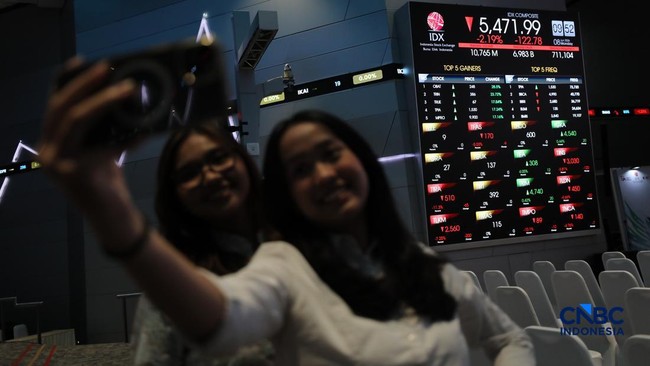
Jakarta - The Jakarta Composite Index (JCI) plunged during trading on Wednesday (24/6/2026) following MSCI’s announcement that it would maintain the Indonesian capital market in the emerging market category. At the close of the second session, the JCI had plummeted 3.56%, or 217 points, to 5,883.88. During the day’s trading, the JCI moved within a range, reaching a high of 6,171 and a low of 5,876. Transaction value for the day reached Rp 15.15 trillion, with a volume of 26.94 billion shares changing hands across 2.03 million transactions. A total of 98 stocks advanced, 611 declined, and 104 remained unchanged. The most actively traded stocks were TPIA, BBCA, DSSA, BBRI, and BMRI. According to Refinitiv data, all trading sectors weakened, with the deepest corrections recorded in raw materials, energy, and healthcare. Large-cap blue-chip stocks and those affiliated with conglomerate business groups uniformly weakened significantly. Specifically, the stocks weighing most heavily on the JCI’s performance were MORA, BBRI, BBCA, BRMS, BMRI, AMMN, SMMA, BRPT, ENRG, and BUMI. Entering Wednesday’s trading, domestic financial market participants were monitoring several important sentiments from both home and abroad. The main sentiment came from the MSCI 2026 Market Classification Review announcement. Indonesia was retained in Emerging Market status, but MSCI provided several notes regarding share ownership transparency, free float, and allegations of coordinated trading in the domestic stock market. Domestically, the market was also observing money supply data for May 2026, which showed economic liquidity growing faster. At the same time, other domestic policies and issues drew attention, ranging from the implementation of a new 8% commission for online motorcycle taxis starting 1 July 2026, to developments regarding Patriot Bonds and Merah Putih Bonds. Global index provider MSCI announced the results of its MSCI 2026 Market Classification Review in the early hours of Wednesday. In the annual report, Indonesia’s equity market was confirmed to remain in the Emerging Markets category. In the latest review, MSCI stated that international institutional investors often convey concerns when they experience persistent non-transparency in share ownership structures and suspect coordinated trading behaviour. These two concerns materially limit investors’ ability to assess the true free float and to rely on observed market prices for portfolio construction and index replication, and both relate directly to the Information Flow and Market Infrastructure pillars of the MSCI Market Accessibility framework. Nevertheless, MSCI acknowledged recent transparency reforms announced by the Financial Services Authority (OJK), the Indonesia Stock Exchange (IDX), and the Indonesian Central Securities Depository (KSEI). These reforms include enhanced disclosure of shareholders with ownership above 1%, more detailed investor classification, the introduction of a High Shareholding Concentration (HSC) framework, and a roadmap to increase the minimum free float requirement to 15%. “While these announcements are steps in the right direction, what matters to international institutional investors is the consistent implementation and sustained effect of these measures across the market,” MSCI wrote in its latest report. MSCI stated it will continue to assess their scope, consistency, and ongoing effectiveness in the context of free float determination and broader investability assessment. “If adequate progress is not visible by the time of the MSCI November 2026 Index Review, MSCI will consider various options for the appropriate treatment of the Indonesian market, potentially including a consultation on reclassifying Indonesia from Emerging Market to Frontier Market,” MSCI wrote. The next MSCI evaluation target will take place in November 2026. Meanwhile, Asia-Pacific bourses opened mixed on Wednesday, as investors assessed whether a rebound in technology stocks could stabilise market sentiment after a massive sell-off on Wall Street dragged down regional markets the previous day. Market participants continued to monitor pressure on the global technology sector, especially after semiconductor-related stocks experienced sharp corrections. This condition sparked concerns that the artificial intelligence (AI)-based rally is beginning to face fundamental challenges beyond technical factors. In Japan, the Nikkei 225 index weakened 0.2% in early trading. South Korea’s Kospi index, however, surged more than 2% after plunging around 10% the day before. In Australia, the S&P/ASX 200 index moved flat or tended to stagnate. Hong Kong’s Hang Seng index futures were at 23,498, higher than the previous close of 23,336.28.