
JCI Plunges 11.57%: Its Worst Fall Since the 1998 Crisis
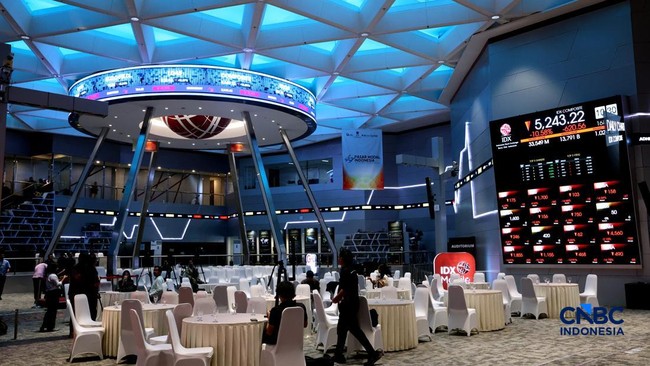
Jakarta, CNBC Indonesia — The Jakarta Composite Index (JCI) recorded one of the worst declines in the history of Indonesia’s capital market.
On Friday, 16 October 2026, the JCI plunged 11.57% to 5,199.96, its steepest daily fall in 28 years, or since the 1998 monetary crisis.
According to Refinitiv data, the decline was even sharper than during the 2008 global financial crisis, when the index fell 10.38% in a single day. The last deeper fall came on 8 January 1998, when the JCI plunged 11.95% amid the monetary crisis.
The latest sell-off came amid investor concerns that Morgan Stanley Capital International (MSCI) could downgrade Indonesia’s stock market from Emerging Market to Standalone Market. Fears about the impact on foreign capital flows also weighed on domestic share trading.
Over nearly three decades, the JCI has suffered several daily declines of more than 10%, during the 1998 monetary crisis, the 2002 Bali bombing and the 2008 global financial crisis.
The following are the five largest daily falls in the JCI, based on Refinitiv data from January 1998 to 16 October 2026.
8 January 1998: JCI plunges 11.95%
The largest daily fall in the period occurred on 8 January 1998. The index plunged 11.95% and closed at 347.11 amid the monetary crisis engulfing Indonesia.
The JCI’s collapse coincided with a sharp fall in the rupiah, which lost around 26% of its value against the US dollar in a single day.
Selling pressure was so intense that the index briefly fell by about 19% during the session, before recovering some of its losses towards the close.
Investor panic intensified after the government announced its 1998/1999 draft state budget, which was considered inadequate to address the economic problems of the time. Concerns about the continuation of the economic rescue programme with the International Monetary Fund (IMF) further eroded market confidence and triggered heavy share selling.
16 October 2026: JCI plunges 11.32%
Nearly 28 years later, the JCI again recorded a double-digit daily decline. On Friday, 16 October 2026, the index fell 11.32% to 5,199.96, its steepest drop since January 1998.
Unlike the 1998 monetary crisis, the latest pressure came amid concerns about Indonesia’s position in global stock indices.
MSCI has opened a consultation on a proposal to downgrade Indonesia’s stock market from Emerging Market to Standalone Market. The move follows market concerns about insufficient transparency over share ownership, alleged co-ordinated trading practices and weak enforcement of capital-market rules.
If implemented, the plan could result in Indonesian shares being removed from several MSCI global indices, which are used as benchmarks by international fund managers.
8 October 2008: JCI falls 10.38%
Before the 2026 decline, one of the JCI’s largest falls occurred on 8 October 2008. The index dropped 10.38% to 1,451.67 before the Indonesia Stock Exchange (IDX) halted trading.
At the time, the global financial crisis was shaking markets worldwide following the bankruptcy of Lehman Brothers in September 2008. Concerns about the health of financial institutions and a global economic slowdown prompted sell-offs across stock exchanges, including Indonesia’s.
Trading was halted to calm investor panic and prevent further selling pressure. The exchange remained closed for several subsequent trading days before reopening on 13 October 2008.
14 October 2002: JCI falls 10.36%
Another major decline occurred on 14 October 2002, when the JCI plunged 10.36% to close at 337.48.
The fall came on the first trading day after the Bali bombings on 12 October 2002. The attack, which killed hundreds of people, shook Indonesia and raised concerns about security and national economic activity.
The stock market reacted negatively as trading resumed on Monday, 14 October 2002. Investors feared the attacks would affect tourism, investment and international confidence in Indonesia.
The pressure was not limited to the stock market. The rupiah also weakened against the US dollar amid heightened uncertainty following the attacks.
6 October 2008: JCI plunges 10.03%
The 2008 global financial crisis caused the JCI to fall by more than 10% on more than one occasion.
Two days before the 8 October plunge, the JCI had already dropped 10.03% to 1,648.74 on Monday, 6 October 2008.
The fall came as the Indonesia Stock Exchange (IDX) reopened after the long Eid al-Fitr holiday. While the domestic exchange was closed, global stock markets continued to come under pressure as the US financial crisis worsened.
When trading resumed, concerns about the impact of the global crisis immediately triggered heavy selling in Indonesia’s stock market. Investors grew increasingly worried about the world economy, particularly as the US financial-sector crisis began affecting financial markets in countries around the world.