
JCI Plunges 1.25% to 6,099, Pressured by Key Stock Performance
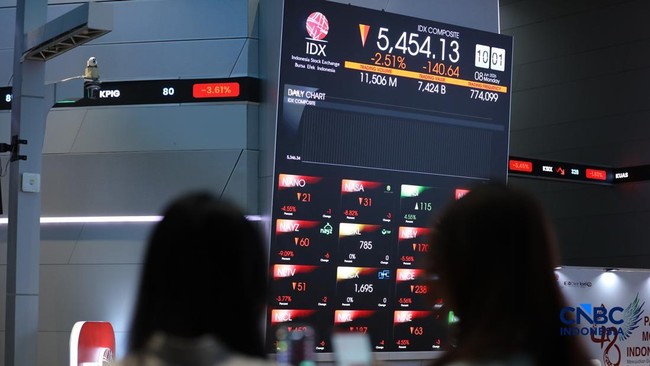
The Jakarta Composite Index (JCI) started the trading week in negative territory despite some improving market sentiment, closing the first session on Monday (22/6/2026) down 1.25% or 77.21 points at 6,099.92. Based on Indonesia Stock Exchange (IDX) data via the IDX Mobile application at 09.00 WIB, the JCI opened in positive territory at 6,217.05, with a session high of 6,226.72 and a low of 6,052.94. Trading activity was fairly busy at the start of the session, with transaction value reaching Rp 7.62 trillion on volume of 13.43 billion shares traded in 1.10 million transactions. Market breadth was negative, with 200 stocks advancing, 476 declining, and 135 unchanged. Indonesia Stock Exchange market capitalisation was recorded at Rp 10,696 trillion. Most sectors weakened, with only property and energy posting gains, while healthcare, basic materials, and infrastructure experienced the deepest corrections. Bank Central Asia (BBCA) was the main drag on the JCI, contributing a 9.37 index point decline, followed by TLKM, BMRI, SMMA, and BBRI. On the first trading day of the week, market participants are also monitoring several key domestic and international developments. Domestically, attention is focused on the MSCI Classification announcement scheduled for 24 June 2026, which is crucial as it relates to market accessibility and could influence global investor perception of Indonesia’s capital market. Last Friday, MSCI released its Global Market Accessibility Review 2026, maintaining Indonesia’s Emerging Market status, but downgraded its assessment on the Information Flow criterion from ‘+’ to ‘-’. If Indonesia is retained with limited caveats, pressure on the stock market could ease; however, additional negative signals from MSCI could reignite concerns over foreign fund flows. Another sentiment being watched is the development of the US-Iran conflict. Peace hopes had emerged after US President Donald Trump and Iranian President Masoud Pezeshkian signed a 14-point virtual peace memorandum of understanding last Wednesday. However, the path to a permanent agreement remains rocky, as peace talks originally scheduled for Friday (19/6/2026) in Burgenstock, Switzerland, were cancelled. In the latest development, President Trump threatened to attack Iran again, even as Vice President JD Vance met Iranian officials in Switzerland for the first post-temporary peace deal negotiations. That meeting was overshadowed by Tehran’s decision to re-close the Strait of Hormuz, citing US failure to ensure a ceasefire in Lebanon. Trump demanded Iran cease its support for Hezbollah and warned the US would strike harder if the conflict continues, with Fox News reporting Trump threatened Iran would ‘lose its country’ if it kept the strait closed. For markets, developments in the Strait of Hormuz are critical as the waterway is a main artery for global oil trade. If tensions escalate and disrupt global energy flows, oil prices could remain elevated.