
JCI Plummets Significantly by 5.41 Per Cent to Return to 5,860 Level
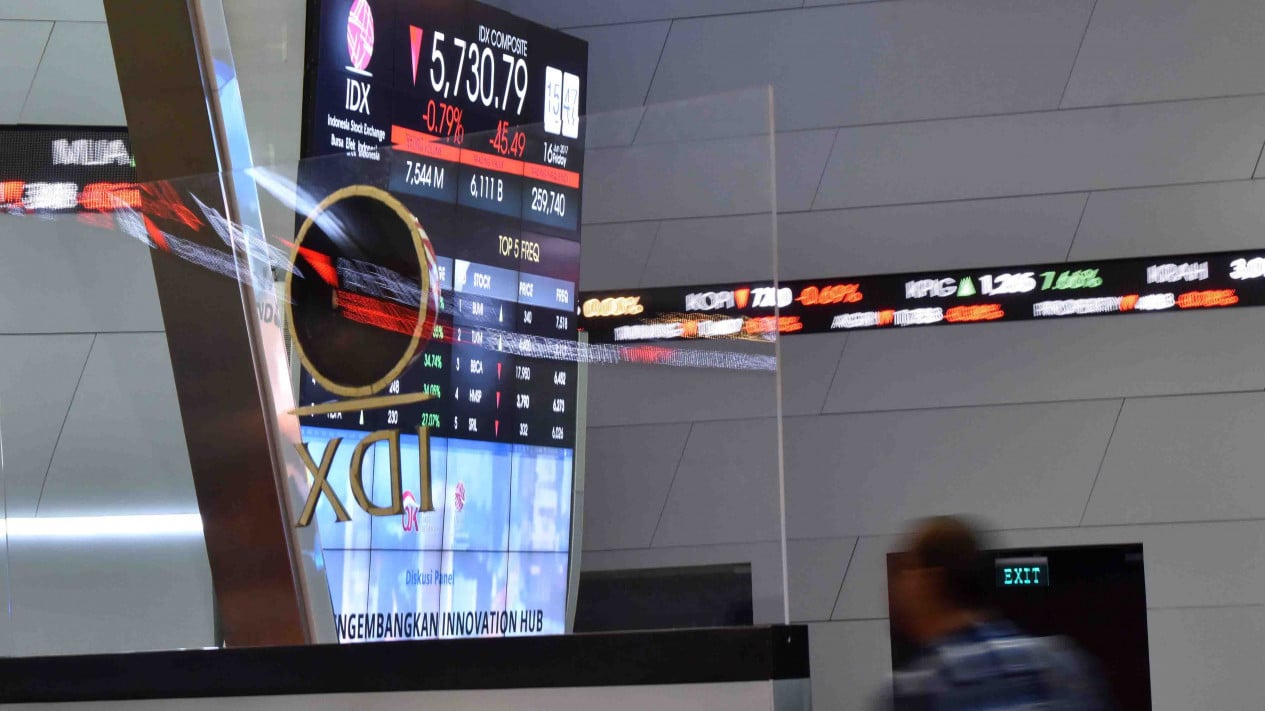
The Jakarta Composite Index (JCI) plummeted significantly during trading on Wednesday, 3 June 2026. By the second session of trading, at approximately 13:30 WIB, the JCI had dropped by 335 points, or 5.41 per cent, returning to the 5,860 level. This followed a decline of 255.71 points, or 4.13 per cent, to the 5,939 position recorded just before the end of the first session at 11:10 WIB.
Stock analyst from MNC Sekuritas, Herditya Wicaksana, stated that the depreciation of the Rupiah against the US Dollar has been the primary sentiment driving this significant decline. “We expect the current correction in the JCI to be caused by the weakening of the Rupiah against the US Dollar, which has now reached Rp17,928 per US Dollar,” said Didit in Jakarta on Wednesday.
He further explained that pressure also originated from conglomerate stocks, which recorded significant losses and acted as a major weight on the JCI due to their large market capitalisation. “On the other hand, the JCI’s movement is being burdened by conglomerate issuers that had seen significant gains, even experiencing automatic reject upwards (ARA), over the past two days,” added Didit.
He noted that the JCI remains in a weakening phase, with no immediate opportunity for a rebound. From a technical perspective, the JCI is still in a downtrend and has yet to show any valid signs of a reversal.
Information indicates that the Rupiah’s exchange rate against the US Dollar continues to slide. In the spot market at 10:38 WIB this morning, the Rupiah had fallen to the level of Rp17,905 per US Dollar.
Economic and money market observer, Ibrahim Assuaibi, stated that the Rupiah’s weakness was triggered by increasing geopolitical tensions in the Middle East, which have pushed up global oil prices and strengthened the US Dollar. “Today, the Rupiah weakened again due to the rise in global crude oil, with WTI at 94.58 (US Dollars per barrel) and Brent crude oil also strengthening to 96.72,” Ibrahim said in a statement on Wednesday.
Furthermore, the deadlock in negotiations between the US and Iran has increased uncertainty in global markets. Tensions between Iran and Israel have also worsened market sentiment. Ibrahim assessed that these conditions are triggering concerns regarding global energy supplies, thereby keeping oil prices high.