
JCI Plummets: Market Cap Evaporates by Rp6,000 Trillion, Blue-Chip Valuations Collapse
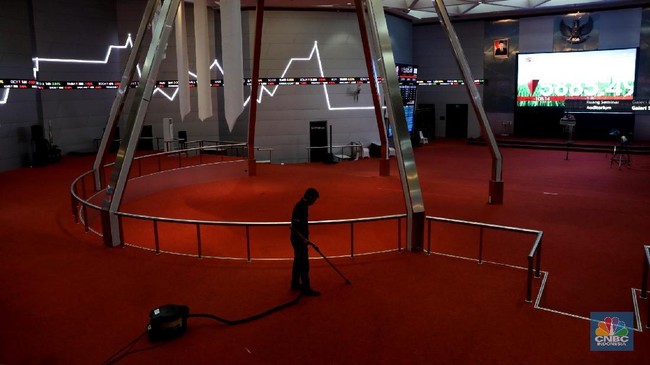
Jakarta, CNBC Indonesia - The Indonesia Composite Index (JCI) recorded a deep correction during the first trading session today, Wednesday (3/6/2026). The Indonesian market’s benchmark index closed significantly weaker, landing at the 5,889.48 level.
This position represents a steep decline compared to the previous trading close, which stood at 6,195.43. This massive selling pressure reflects a rational response from market participants to a series of unfavourable macroeconomic and institutional sentiments.
As a result of this series of weakenings, the market valuations of the largest-cap issuers on the Indonesia Stock Exchange experienced a very sharp contraction in just half a day of trading.
Three Main Sentiments Pressuring the Stock Market
Today’s negative movement of the JCI was directly triggered by three main factors that coincided to pressure the psychology of both institutional and retail investors. The first primary catalyst for this fall was the circulation of rumours in the financial market regarding a report from S&P Global Ratings. Speculation has strengthened among market participants that S&P’s report for Indonesia this June will show poor projections for economic stability. This news triggered anticipatory moves by investors, particularly foreign investors, to immediately relocate their risky asset portfolios to instruments deemed safer.
The second pressure factor originated from investment sector dynamics. The international rating agency, Moody’s, released a report downgradting Danantara Investment Management to Baa2 with a negative outlook. This rating adjustment for the strategic fund management institution automatically increased uncertainty regarding the prospects of financial institution stability and future investment flows.
Complementing the two sentiments above, the third factor is the continued depreciation of the Rupiah against the US Dollar. Based on foreign exchange market data at 12:00 WIB, the Rupiah has broken a new psychological barrier, weakening to Rp17,930 per US Dollar. This weakness further weighs on stock market sentiment because, from the perspective of foreign investors, they face a double capital loss due to both the decline in share prices and the depreciation of the Rupiah.
Shrinkage of Major Issuer Market Capitalisation
The collapse of the JCI has impacted the total market capitalisation of the Indonesian stock exchange. Comparing the peak market cap on 19 January 2026 (Rp 16,640) to today (Rp 10,357), the value has evaporated by Rp 6,282 trillion.
Consequently, the market capitalisation of Indonesia’s giant issuers has also collapsed. The market cap of the top ten issuers declined aggressively. Based on calculations comparing the close of 2 June to the first session of 3 June, the accumulated market capitalisation of these ten companies evaporated by Rp 157.22 trillion, or a decrease of approximately 3.93%. The aggregate valuation of these issuers shrank drastically from Rp 3,997.27 trillion to Rp 3,840.05 trillion.
PT Amman Mineral Internasional Tbk (AMMN) recorded the deepest valuation correction, losing Rp 42.06 trillion. This was followed by PT Barito Renewables Energy Tbk (BREN), which saw its market cap decrease by Rp 32.10 trillion, and PT Mora Telematika Indonesia Tbk (MORA), which fell by Rp 27.47 trillion. Although the majority of the trend moved into the red, PT DCI Indonesia Tbk (DCII) was the sole anomaly, recording a valuation increase of Rp 10.72 trillion amidst the market volatility.
JCI Valuation Returns to Pandemic Era
The extreme weakness to the 5,889.48 level at the end of the first session also marks a new low for the JCI movement within the last five years. The index continues to be pressured, approaching the previous low recorded on 31 May 2021, when the index plummeted to 5,860.54. Historically, today’s movement serves as valid confirmation that the JCI has officially returned to trading at price levels created during the COVID-19 pandemic era. This situation indicates a massive risk adjustment phase by market participants amidst economic turbulence.