
JCI Plummets 2% at the Start of Session 2
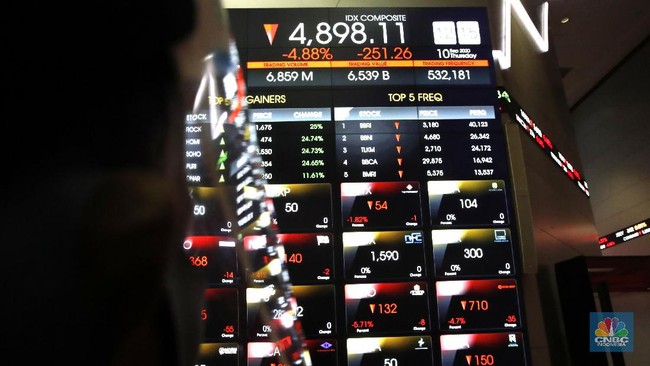
Jakarta, CNBC Indonesia — The Indonesia Composite Index (IHSG) plummeted at the start of the second session of trading on Monday (14/09/2026). As of 14:14 WIB, the IHSG had fallen by 2.02%, or 132.05 points, to the level of 6,409.33.
The decline in the IHSG occurred following the opening; the index had briefly reached a high of 6,543.28 but subsequently faced continuous selling pressure, touching a low of 6,409.18.
According to Indonesia Stock Exchange (BEI) data, 544 stocks declined, significantly outnumbering the 157 stocks that strengthened. Meanwhile, 262 other stocks remained unchanged.
In terms of trading activity, investors have traded approximately 20.28 billion shares, with a transaction value of around Rp9.479 trillion and a transaction frequency of 1.387 million times. The market capitalisation of the Indonesia Stock Exchange was recorded at approximately Rp11,196 trillion.
The pressure on the IHSG coincided with foreign selling activity. Foreign investors recorded a substantial net foreign sell of Rp664.34 billion across the entire market during the first session today.
The largest foreign sell-off occurred in PT Aneka Tambang Tbk. (ANTM) with a value of Rp164.81 billion. This was followed by PT Bank Mandiri (Persero) Tbk. (BMRI), which saw foreign outflows of Rp127.90 billion—contributing to the index’s decline—and PT Bumi Resources Tbk. (BUMI) at Rp124.55 billion.
Pressure on the IHSG also occurred amidst rising geopolitical tensions in the Middle East, which are once again threatening global energy supplies.
Houthi attacks against Saudi Arabia and shipping disruptions in the Gulf region have increased market concerns regarding oil supplies. Damage to Saudi Arabian oil pipelines, which serve as alternative routes for oil shipments bypassing the Strait of Hormuz, has further heightened the risk of supply disruptions.
Global oil prices, which breached US$100 per barrel last week, could potentially become a renewed focus for investors. A surge in energy prices may increase global inflationary pressures and narrow the scope for monetary policy easing.