
JCI likely to move sideways as markets weigh global and domestic factors
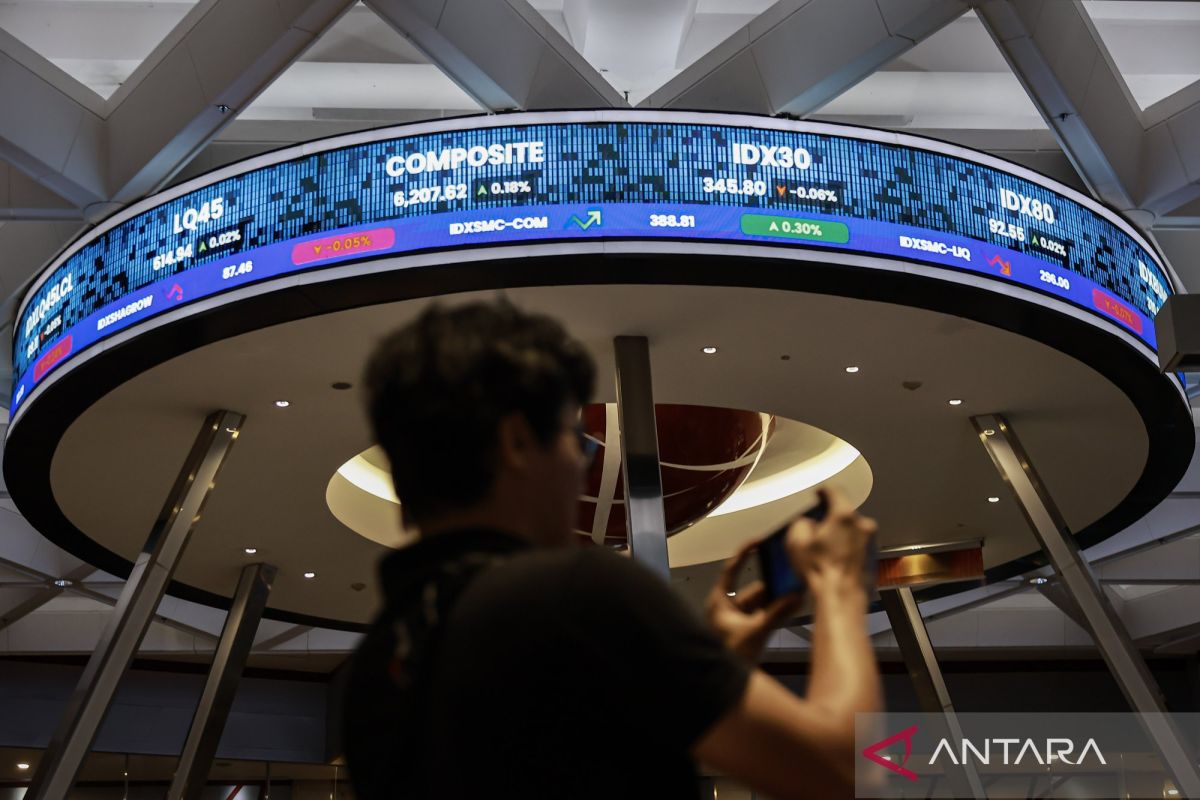
Jakarta (ANTARA) - The Indonesia Stock Exchange’s (IDX) Jakarta Composite Index (JCI) is expected to move sideways on Friday as market participants assess global and domestic factors.
The JCI opened 7.73 points, or 0.13 per cent, higher at 6,039.01. The LQ45 index of 45 leading shares rose 1.38 points, or 0.23 per cent, to 595.02.
“The JCI may test support at 5,979, with the next support at 5,898–5,887 if that level is breached. Conversely, if it strengthens, the JCI could test resistance at 6,095–6,120,” said Liza Camelia Suryanata, head of research at Kiwoom Sekuritas Indonesia, in a note issued in Jakarta on Friday.
Overseas, minutes from the Federal Reserve’s September 2026 meeting showed that most officials expected one increase in the federal funds rate by the end of 2026, although the timing remained uncertain.
Fed Governor Christopher Waller said a further rate increase might be needed to bring inflation back to target, while stressing that there was flexibility over the pace of adjustments.
Markets put the likelihood of the Fed holding rates in October 2026 at about 78 per cent, while the probability of a 25-basis-point increase in December 2026 stood at around 69 per cent.
In Japan, investors were also monitoring the outlook for tighter Bank of Japan (BOJ) policy after yields on 10-year government bonds fell from a 30-year high.
Meanwhile, tensions between the United States and Iran have risen again after Iran stepped up attacks on tankers in and around the Strait of Hormuz.
Nine tankers were reportedly targeted over the past week, while oil flows through the strait fell to about 9.5 million barrels per day, or 30 per cent below the normal level before the Iran war.
US President Donald Trump said the United States would not attack Iran before the November 2026 midterm elections, although earlier reports said his administration was considering further strikes in the coming weeks.
In the United States, Hurricane Isaias also threatened offshore oil production facilities in the Gulf of Mexico, prompting energy companies to shut in around 500,000 barrels of daily output.
Investor sentiment, meanwhile, has become more defensive as concerns grow over technology share valuations and the sustainability of the market’s bullish trend.
King Lip of BakerAvenue Wealth Management said the bull market was not over, but was being tested by a combination of rising borrowing costs and global uncertainty.
In his view, corporate earnings growth and AI-driven productivity gains could continue to support the market, although volatility was expected to increase.
“Investors will be watching the sustainability of earnings growth, developments in the AI sector, and the market’s ability to absorb pressure without triggering a broader correction,” Liza said.
Domestically, the Directorate General of Taxes (DJP) recorded tax refunds of Rp198.71 trillion through September 2026, down 38.7 per cent from Rp323.92 trillion in the same period last year.
Refunds comprised Rp137.79 trillion in value-added tax (VAT) and luxury goods sales tax, and Rp59.08 trillion in income tax. The figures could indicate that tax refunds are being held back, potentially affecting businesses and the economy.
A further Rp70.25 trillion in refund liabilities remained unpaid at the end of 2025, meaning that delays in disbursement until 2027 could add pressure to the 2027 state budget.
Meanwhile, Indonesia’s investment realisation reached Rp1,010.6 trillion in the first half of 2026, generating employment for 1.448 million people through domestic and foreign investment projects.
Data from the Investment Coordinating Board (BKPM) showed that employment generated by direct investment had grown by an average of 22.4 per cent over the past five years.
“This trend reflects investment’s contribution to job creation and domestic economic activity, with continued investment realisation an important factor in supporting economic growth,” Liza said.
European stock markets closed lower across the board on Thursday (8 October): the Euro Stoxx 50 fell 0.94 per cent, Britain’s FTSE 100 fell 0.16 per cent, Germany’s DAX fell 1.18 per cent and France’s CAC 40 fell 0.51 per cent.
Most US markets also closed lower on Thursday (8 October). The S&P 500 fell 0.47 per cent to 7,765.36, the Nasdaq Composite dropped 1.25 per cent to 27,193.34, and the Dow Jones Industrial Average rose 0.10 per cent to 51,231.64.
In Asian trading this morning, Japan’s Nikkei fell 0.73 per cent to 68,548.00, Hong Kong’s Hang Seng rose 0.94 per cent to 24,010.50, Shanghai’s index fell 1.19 per cent to 3,766.44, and Singapore’s Straits Times Index fell 0.43 per cent to 5,389.85.
South Korea’s KOSPI was closed for the national holiday marking Hangul Day.