
JCI Falls Back to 6,100 Level, Here's Why It Plunged Over 2%
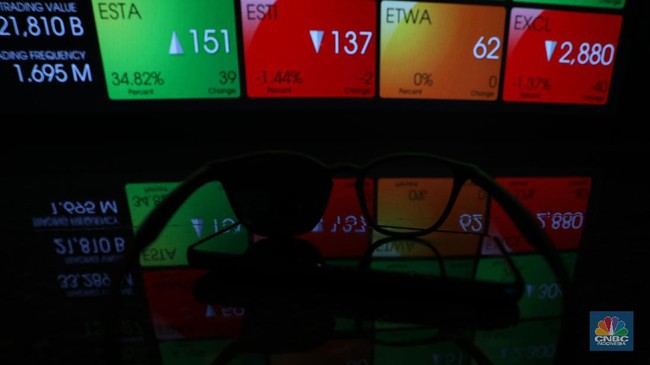
Jakarta, CNBC Indonesia — The Jakarta Composite Index (IHSG) plunged more than 2% at the start of trading on Friday (24/7/2026) amid heavy selling in big-cap stocks, particularly in the banking sector.
External sentiment in the form of new tariff policy from US President Donald Trump, as well as a surge in global oil prices above US$100 per barrel, also prompted investors to reduce their exposure to risky assets.
As of 09.26 WIB, the IHSG had slumped 125.92 points, or 1.99%, to 6,189.39. Of all shares traded, 556 declined, only 99 advanced, while 310 were unchanged. Transaction value had reached Rp4.37 trillion with a trading volume of 9.79 billion shares across 608,200 transactions, reflecting intense selling pressure from the start of the session.
Pressure on the IHSG was dominated by the financial sector, which fell 1.44%, making it the weakest sector. Declines were also seen in utilities (-0.92%) and non-primary consumer goods (-0.71%). By contrast, the property sector managed to strengthen by 5.41%, followed by energy (+1.09%) and industrials (+0.76%).
At the stock level, the index decline was largely triggered by selling in jumbo market-capitalisation stocks. PT Bank Mandiri (Persero) Tbk (BMRI) was the biggest drag on the IHSG, shaving 11.97 points off the index.
It was followed by PT DCI Indonesia Tbk (DCII) (-8.94 points), PT Bank Central Asia Tbk (BBCA) (-7.47 points), PT Amman Mineral Internasional Tbk (AMMN) (-6.65 points), PT Telkom Indonesia (Persero) Tbk (TLKM) (-6.24 points), PT Barito Renewables Energy Tbk (BREN) (-5.67 points), PT Barito Pacific Tbk (BRPT) (-2.95 points), PT Bank Negara Indonesia (Persero) Tbk (BBNI) (-2.60 points), PT Bumi Resources Minerals Tbk (BRMS) (-2.52 points), and PT Dian Swastatika Sentosa Tbk (DSSA) (-1.93 points).
Pressure on banking shares had been visible since the previous trading day. On Thursday (23/7), foreign investors recorded net foreign sales of around Rp920.3 billion in the regular market. Foreign selling was concentrated in jumbo bank stocks such as BBCA, BBRI, BMRI and BBNI, so pressure on the financial sector continued into early trading today.
On the external front, negative sentiment continued to dominate. US President Donald Trump officially imposed new import tariffs of 10%-12.5% on 60 trading partners, including Indonesia.
At the same time, the conflict in the Middle East flared up again, pushing Brent crude prices up 7% to close at US$100.69 per barrel, breaking through the psychological US$100 level for the first time in two months.
The surge in oil prices has sparked concerns that global inflation will rise again, increasing the likelihood that central banks will keep interest rates higher for longer. The combination of geopolitical pressure, rising energy prices and foreign selling of banking stocks led market participants to adopt a cautious stance at the start of trading today.