
JCI and Rupiah Strengthen, Economist Highlights Policy Stability Factor
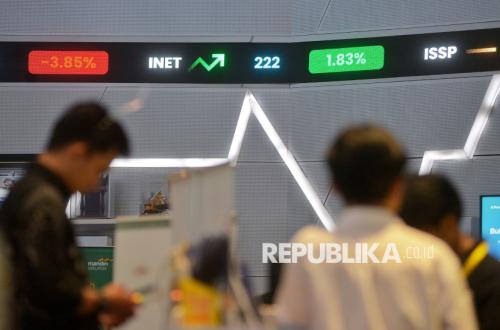
The strengthening of the Jakarta Composite Index (JCI) and the rupiah exchange rate in trading on Tuesday (9/6/2026) is considered inseparable from improved market sentiment following clarification regarding the cabinet reshuffle issue. The subsiding speculation about changes in the economic ranks helped reduce the uncertainty that had previously been a concern for investors.
Economist from STIE YKP Yogyakarta, Aditya Hera Nurmoko, said the market generally responds positively when political and policy uncertainty diminishes. According to him, the issue of replacing economic officials, especially the position of Finance Minister, had raised questions about the continuity of fiscal policy and the government’s economic coordination.
“The rumour of replacing the finance minister had raised questions about the direction of the government’s fiscal policy. When the issue was denied, some investors regained confidence that there would be no sudden changes in economic policy,” Aditya said on Tuesday (9/6/2026).
He explained that market participants generally pay attention to the stability and consistency of economic policy. Clarity regarding policy direction is considered helpful in maintaining investor confidence, especially amidst a global economic dynamic that remains full of challenges.
Besides that factor, Aditya assessed that the market strengthening was also influenced by investor buying action after the pressure that occurred in the previous trading session. A day earlier, the JCI experienced a fairly deep correction, while the rupiah also weakened against the US dollar.
When market pressure began to subside, some investors took advantage of the decline in stock prices to make purchases. This condition then encouraged a recovery in the stock market and the exchange rate.
Nevertheless, Aditya emphasised that the strengthening of the JCI and the rupiah cannot be explained by just one factor. Financial market movements are influenced by various variables, ranging from foreign capital flows, interest rate policies, global economic developments, US dollar movements, to market participants’ expectations of government and Bank Indonesia policies.
“The subsiding of the reshuffle rumour likely became one of the positive catalysts that reduced market panic. However, it is not the only factor determining the strengthening of the JCI and the rupiah today,” he said.
A similar view was conveyed by a lecturer from the Faculty of Economics and Business at Diponegoro University (Undip), Esther Sri Astuti. According to her, the strengthening of the financial market is highly dependent on the level of investor confidence in the national economic prospects and policy stability.
“The main thing is, if large capital flows enter Indonesia and the country’s foreign exchange reserves are ample, then the rupiah value will not depreciate,” said Esther.
She explained that there are a number of factors that investors consider when investing in Indonesia, including legal certainty, economic growth prospects, availability of raw materials, business ecosystem support, global supply chain integration, adequate infrastructure, and regulatory harmonisation between central and regional governments.
According to Esther, policy stability and certainty in the direction of economic management are important elements in maintaining Indonesia’s attractiveness in the eyes of investors.
“If these factors can be maintained well, then the opportunity for incoming investment will be greater and ultimately support the strengthening of the domestic financial market,” she said.