
JCI and Rupiah Dynamics: Ex-TKN Member Urges Public to Scrutinise Resistance to Strategic Programmes
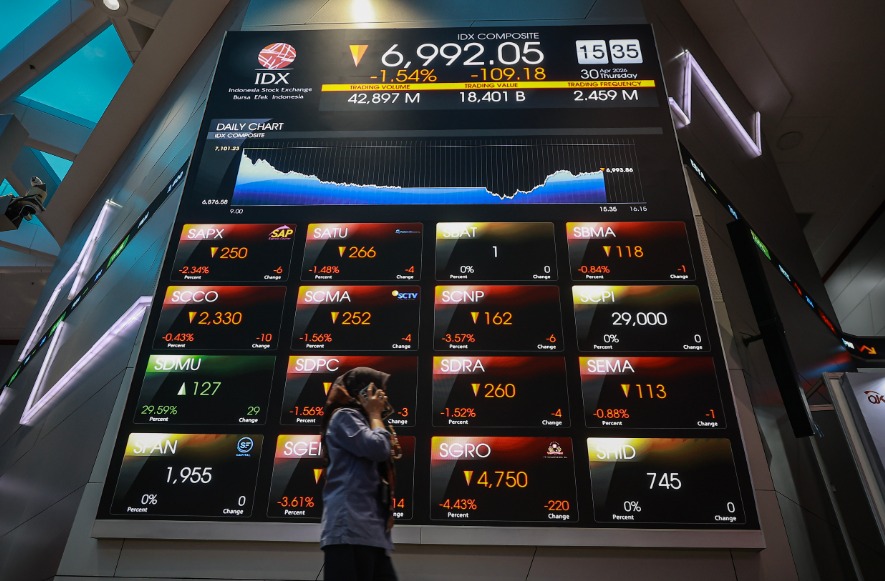
Pemrakarsa 98 Resolution Network and former volunteer commander for the TKN Prabowo-Gibran, Haris Rusly Moti, claims that the recent turbulence in the Jakarta Composite Index and the weakening of the Rupiah exchange rate are not solely a natural market response. Haris suspects a coordinated cyber movement and systematic narrative deliberately designed to destabilise the national economy. He argues this movement intentionally amplifies hashtags and slogans such as “sale Indonesia”, “1998 redux”, “buang rupiah”, and “Indonesia gelap” in the public sphere to erode market and public confidence in the progressive economic policies being implemented by President Prabowo Subianto. “We assess the JCI turmoil and Rupiah depreciation as a coordinated destabilisation attack. They are obsessed with recycling the 1998 reformation events, triggering political upheaval through engineered economic shocks,” Haris stated. Haris maps out at least three axes of power believed to be disturbed by President Prabowo’s firm policies and suspected to be behind the negative campaign: domestic oligarchs, a group of local businesspeople who benefited from the old business model; multinational corporations and actors with global business networks whose markets are disrupted by Indonesia’s protection and economic sovereignty policies; and neighbouring countries in the region that have allegedly served as havens for capital flight from the exploitation of Indonesia’s natural resources. “The fate of our nation, since the colonial era, has always been made a fool of and pitted against itself by foreign powers and greedy corporations or the evil companies of the past,” he said. Haris detailed several of President Prabowo’s economic reform policies deemed successful in cutting off the oligarchy’s room for manoeuvre, including the launch of the national competitiveness superholding, Investment Management Agency Danantara, the land seizure movement by the Land Management Task Force against unlicensed holdings, and the tightening of Export Proceeds rules requiring natural commodity exporters to park their dollars in domestic banks for at least one year. Other strategic steps, such as the food self-sufficiency programme hitting import cartels and the acceleration of corruption eradication through asset seizures, have triggered counterattacks from affected groups who are intriguing against the government’s programmes. “When the President formed Danantara to strengthen state-owned enterprises, they criticised it as ‘state capitalism’. When we secure natural resources with the DHE policy, it is rumoured to be a market distortion. Even welfare redistribution programmes like free nutritious meals, fishing village development, and fertiliser subsidies are labelled as unproductive policies or budget burning,” he explained. Amid this situation, Haris urged student movements and independent observers to act clearly and not be trapped in naivety when observing current financial market dynamics. The ongoing volatility should not be viewed purely as a systemic fiscal and monetary problem; geopolitical and geoeconomic factors are also at play. Nevertheless, Haris objectively acknowledged that the implementation of the government’s strategic programmes is not yet perfect and still requires technocratic strengthening at the bureaucratic level. “We also admit that the governance of several of President Prabowo’s strategic policy programmes is not yet perfect. Moreover, some of our officials still cannot escape the old mindset of using public office as a rent-seeking tool. However, the President continues to show a strong commitment to eradicating state leakages by optimising the Corruption Eradication Commission, the Attorney General’s Office, and the Financial and Development Supervisory Agency,” Haris concluded.