
Java's North Coast Threatened by Accelerated 'Doomsday', This Project Could Be the Saviour
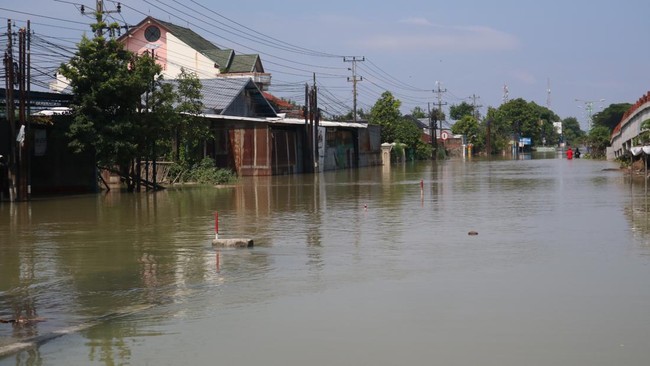
The National Research and Innovation Agency (BRIN) is championing a Hybrid Eco-Engineering concept to strengthen the protection of Java’s North Coast (Pantura), which is facing the threat of abrasion. This effort is underway alongside plans for the Jakarta Giant Sea Wall (GSW) project, which is targeted to begin its groundbreaking phase in October 2026.
Dinar Catur Istiyanto, Senior Engineer at BRIN’s Hydrodynamics Technology Research Centre (PRTH), stated that coastal protection strategies need to be directed towards a sustainable and integrated approach. According to him, the construction of hard structures needs to be combined with nature-based solutions tailored to local needs to be more effective in the long term.
“Coordination with the North Coast of Java Management Authority (BOPPJ) has agreed on a BRIN research location plan involving the construction of a breakwater demonstration plot at Pantai Sederhana, Bekasi, in accordance with existing Marine Spatial Utilisation Activity Conformity (KKPRL) approvals. There, we are championing the Hybrid Eco-Engineering concept,” Dinar said, quoted from a written statement on Saturday (27/6/2026).
BRIN has proposed the construction of a 100-metre breakwater with a BRINlock protective layer, which will then be integrated with mangrove planting. To support this physical implementation, the preparation of technical data is being accelerated. “Currently, we need to conduct bathymetric measurements and collect soil data. The research proposal itself has been approved, and we are awaiting the finalisation of the budget approval, which is expected to be completed within the next one to two weeks,” he added.
Dinar mentioned that the ongoing cooperation plan includes the potential production of BRINlock protective layer units with PT Semen Indonesia (Persero) or other state-owned construction firms. On the other hand, the ecological aspects of the coastal ecosystem are also a serious concern. Khusnul Setia Wardani, Senior Engineer at PRTH BRIN and Coordinator for the mangrove rehabilitation demonstration plot implementation, stressed that threats to coastal areas like Muara Gembong do not only come from natural factors.
“The numerous requests for land clearing for fish farms are a challenge in themselves. Our studies show that mangrove damage in the field is not solely caused by the impact of sea waves, but is triggered by the opening of these fish farms,” Khusnul asserted. She emphasised the need for a comprehensive, in-depth study regarding zoning and vegetation specifications before massive construction is carried out. “It is very important for us to conduct a thorough study on the appropriate specifications, from selecting the right type of mangrove to determining the ideal safe distance between the forest position and the embankment structure,” she explained.
As a reference for success, she shared a case study of ecological transition in Losarang, Indramayu. The construction of an embankment in that area successfully triggered sedimentation that slowed currents, thereby encouraging the natural growth of new mangroves.
Responding to the presentation from BRIN researchers, the BOPPJ stated its readiness to integrate the research recommendations into the spatial planning for the Jakarta Bay area. BOPPJ Deputy I Sawarendro stressed that concrete steps would be taken immediately to harmonise conditions on the ground. “We will immediately collect and map data for mangrove and fish farm areas. Subsequently, this data will be translated into layout and cross-section maps to be formally incorporated into the Jakarta Bay regional planning,” Sawarendro revealed.
In addition to focusing on Jakarta Bay, he also highlighted challenges in the Kendal-Semarang-Rembang segment. Land subsidence in that region continues to occur even though groundwater extraction has been restricted. For this reason, he hopes BRIN can provide technical reviews regarding the management of retention ponds, water treatment areas, as well as studies on the tectonic and geological factors affecting the Pantura region. Regarding the embankment infrastructure in Semarang, Sawarendro stated that the use of BRINlock structures in front of the embankment provides an efficient wave-breaking concept, thus not requiring excessive structural strength.