
Javan Hawk-Eagle Sightings in Bali Spur Research and Conservation
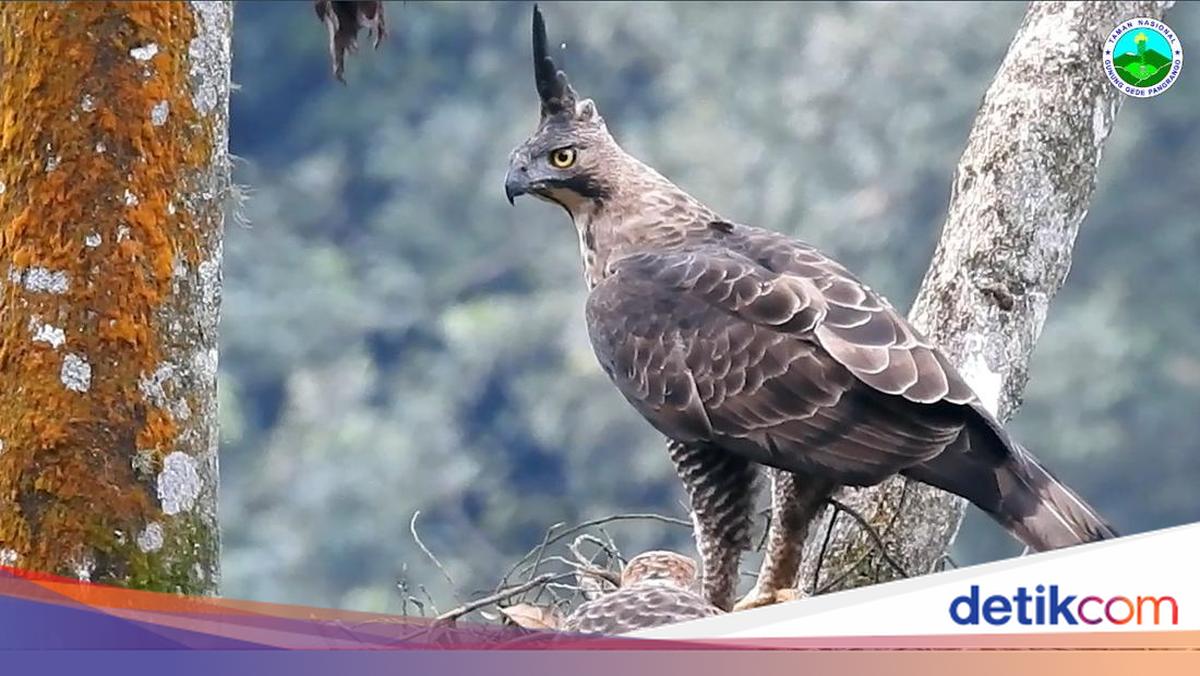
The Javan hawk-eagle (Nisaetus bartelsi) has long been known as a bird endemic to the island of Java. However, the bird has been recorded appearing several times in a number of areas in Bali. The emergence of this nearly extinct animal has prompted researchers and environmentalists to study the Javan hawk-eagle on the Island of the Gods.
Chairman of Raptor Indonesia, Zaini Rahman, said records regarding the existence of the Javan hawk-eagle in Bali have appeared since 1994. However, these early records were still doubted. By 2014, the existence of the Javan hawk-eagle in Bali became stronger after photographic documentation was obtained.
“Until 2014, there was photographic documentation explaining that it was truly a Javan hawk-eagle in Bali,” said Zaini in Kuta, Badung, Friday (21/8/2026).
One of the documentations showing the existence of the Javan hawk-eagle in Bali was made by Rusman Prasetya on 24 October 2014. Rusman documented an encounter with an adult Javan hawk-eagle on Mount Sega, Karangasem.
In addition, in 2016 an encounter with a Javan hawk-eagle was also recorded at the Eka Karya Botanic Garden in Bedugul. Records of the animal’s existence have also been found in a number of other areas, including eastern Bali.
“So, currently there are around 14 location points in Bali. Starting from West Bali to Mount Sega in the north. So, Mount Lempuyang and so on, there are records,” added Zaini.
On the island of Java itself, there are currently around 74 population pockets or habitats of the Javan hawk-eagle. The additional 14 points in Bali bring the recorded population pockets or habitats of the Javan hawk-eagle to 88.
Nevertheless, the existence of the Javan hawk-eagle in Bali still requires more in-depth research. One aim is to ascertain whether the Javan hawk-eagle in Bali has the same genetic characteristics as those on Java or is a different group.
“The DNA difference is only 1%. So, more samples are needed to determine whether that difference is significant or not,” explained Zaini.
Raptor Indonesia plans to continue data collection and report the existence of the Javan hawk-eagle in Bali to the international conservation community. Similar data was also submitted in 2025.
Professor of Animal Ecology in the Biology Study Programme, Faculty of Mathematics and Natural Sciences at Udayana University, Luh Putu Eswaryanti Kusuma Yuni, said that encounters with the Javan hawk-eagle are most frequently recorded in the central region, particularly the Eka Karya Botanic Garden in Bedugul and around the Buyan-Tamblingan Nature Tourism Park.
According to Eswaryanti, the presence of eagles, including the Javan hawk-eagle, can serve as an indicator of the quality of an ecosystem. As an apex predator, the animal’s presence indicates that ecosystem conditions still support its survival.
“Usually, if an ecosystem has an apex predator, it reflects good environmental quality,” said Eswaryanti.