
Jatiwaringin Landfill Fire Reinforces Urgency of Waste-to-Energy Transition
A fire at the Jatiwaringin Final Processing Site (TPA) has served as a stark reminder of the need to accelerate the transformation of the national waste management system. The current reliance on landfill systems must shift towards utilising waste for energy through waste-to-energy (WTE) schemes.
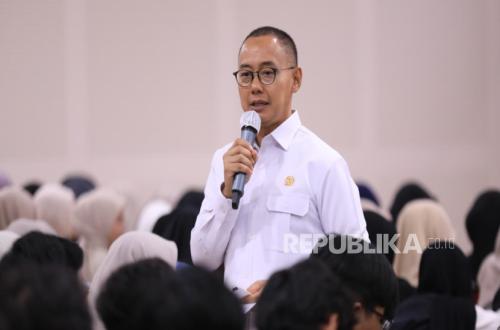
Deputy Speaker of the People’s Consultative Assembly (MPR) Eddy Soeparno stated that the landfill fire once again demonstrates the limitations of landfill-based waste management. He argued that this situation requires a fundamental change so that waste is not merely buried but also utilised as a valuable resource.
“The Jatiwaringin TPA fire is an alarm that our waste management capacity has reached a point requiring fundamental change. This includes processing waste into resources that benefit the community, including generating electricity,” Eddy said in a statement.
He noted that Indonesia produces approximately 56 million tonnes of waste annually. However, most of it still ends up in final processing sites using the landfill method. This condition increases the risk of fires due to methane gas accumulation, exacerbates environmental pollution, and means the energy potential from waste is not being optimally utilised.
Therefore, Eddy supports the government’s move to accelerate the construction of waste-to-energy facilities in various regions as part of reforming the national waste management system.
“The waste-to-energy programme is a strategic solution because it addresses two challenges at once: reducing the volume of waste entering landfills and generating electricity that can be used by the community. This is a tangible form of a circular economy that provides added value from something previously considered waste,” he said.
According to Eddy, waste-to-energy technology has been implemented in various countries with strict environmental standards. He therefore assessed that the construction and operation of such facilities must comply with environmental regulations, use the best available technology, and be conducted transparently.
“The implementation of this programme must ensure that the technology used meets international emission standards, is strictly supervised, and produces the clean energy we need for the energy transition,” he stated.
Nevertheless, Eddy emphasised that waste reduction at the source must remain a priority through household waste sorting, increased recycling activities, strengthening waste banks, and public education.
“Waste-to-energy does not mean we ignore waste reduction efforts. Instead, WTE is part of an integrated waste management system. Waste that still has economic value must be recycled first, while the residue can be utilised as an energy source,” he said.
He expressed hope that the Jatiwaringin TPA fire would become a momentum to accelerate the transformation of national waste management from a landfill-based approach to a more modern system that prioritises technology, circular economy principles, and clean energy.
“The waste problem cannot be solved simply by expanding landfills. We need the courage to make a policy leap by accelerating the development of waste-to-energy as part of the national strategy towards a cleaner, healthier, and more energy-independent Indonesia. This momentum must be seized so that incidents like the Jatiwaringin TPA fire do not recur in the future,” said the member of House Commission XII.
Source: jawawa.id (https://jawawa.id/newsitem/jatiwaringin-landfill-fire-reinforces-urgency-of-waste-to-energy-transition-1783259496)
Originally published by Republika (https://esgnow.republika.co.id/berita/thpe1d522/kebakaran-tpa-jatiwaringin-dinilai-perkuat-urgensi-percepatan-wastetoenergy), translated from Indonesian