
Jasa Raharja: Integrated vehicle tax data boosts taxpayer compliance
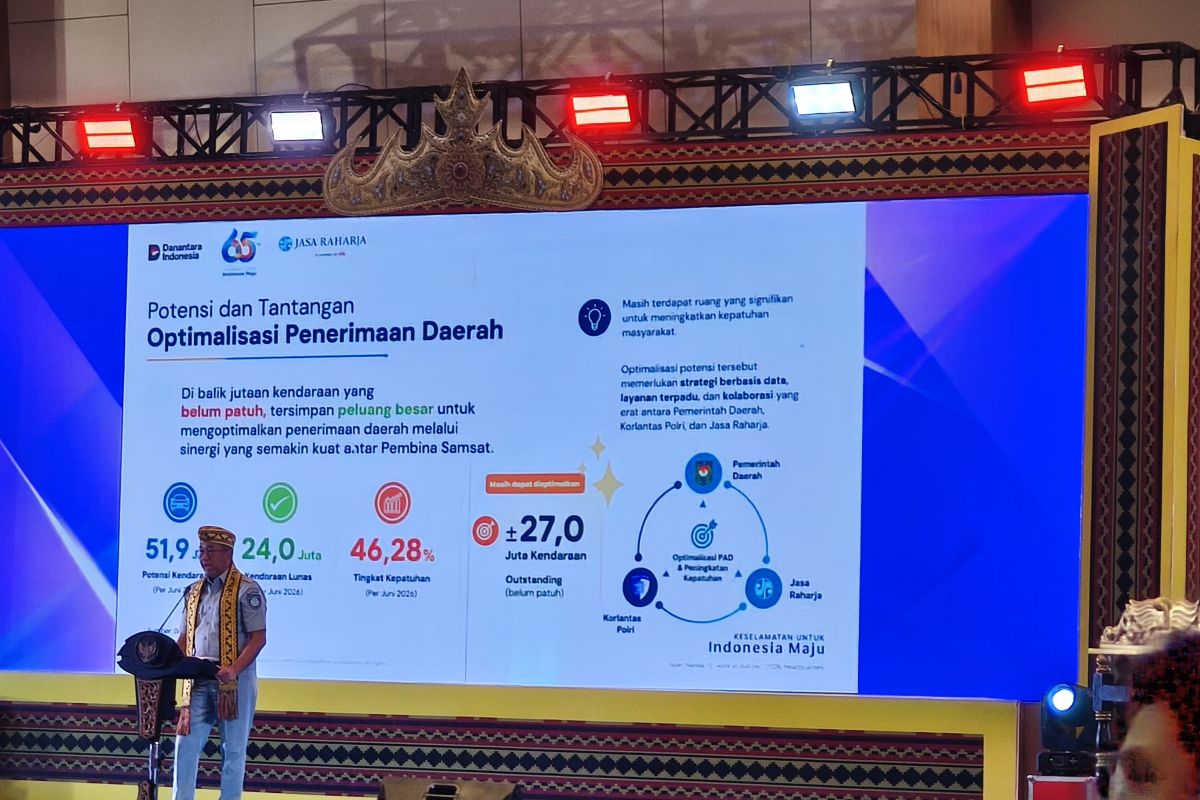
PT Jasa Raharja has stated that strengthening national data integration is a key strategy for improving taxpayer compliance in the payment of Motor Vehicle Tax (PKB). “Through the utilisation of more integrated and segmented data analysis, efforts to increase regional revenue can also be carried out more effectively and on target,” said PT Jasa Raharja President Director Muhammad Awaluddin in Bandarlampung on Tuesday. He explained that whilst the conditions for PKB payment compliance vary by region, a shared national strategy can be applied, namely cross-agency data integration, strengthening data-based analytics, and collaboration among stakeholders. “We are no longer looking at data generally, but it must be more specific and segmented so that the intervention patterns carried out truly match the characteristics of each region,” he said. He noted that one of the main current challenges is that vehicle data remains scattered across various sources, complicating the analysis process and the formulation of appropriate strategies. Therefore, transformation towards an integrated system is an urgent necessity so that decision-making can be carried out more accurately. To increase programme effectiveness, Jasa Raharja is implementing a collectable population approach, targeting groups of vehicles deemed to still have high potential for collection. “Of the total data managed, 98 million records fall into this category, while the remainder are classified as a recovery population, meaning data that still requires validation and updating,” he said. He mentioned that one indicator used in the recovery population category is vehicles that have not made PKB payments for five consecutive years, alongside other parameters such as vehicle condition, transfer of ownership, and the possibility the vehicle is no longer operational. He added that the approach is also supported by analysis based on vehicle age and taxpayer profiles. Based on the analysis results, groups with relatively younger vehicles have a higher probability of resuming tax payments compared to other groups. “As part of the implementation of the data-based strategy, Jasa Raharja has also conducted a case study on approximately three million vehicle data records. The analysis results show that the greatest potential lies in the regions of Central Java, East Java, and West Java,” he said. According to him, this data has been mapped based on payment probability levels, compliance history, and ability to pay, so it can be directly utilised by regional governments as a basis for designing compliance improvement programmes. “We are ready to share the results of the data analysis with regional governments through a mutually agreed mechanism within the framework of the three pillars of Samsat, namely the regional government, the Indonesian National Police, and PT Jasa Raharja,” he stated.