
Jasa Marga Strengthens Toll Road Services Through Digitalisation and Rest Area Upgrades
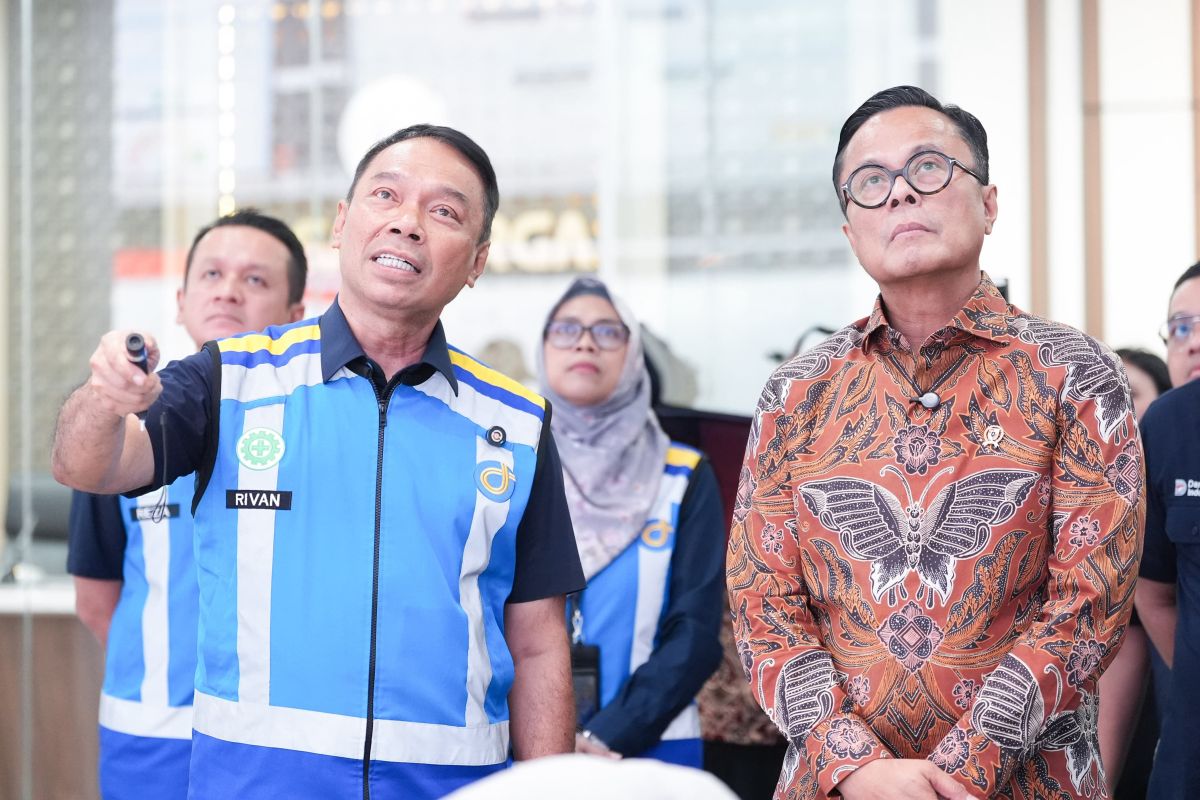
State-owned toll road operator PT Jasa Marga (Persero) Tbk is strengthening its services through the optimisation and transformation of its technology-based operational control centre and the improvement of rest area facilities. President Director Rivan A Purwantono stated that the transformation includes the strengthening of the Jasamarga Tollroad Command Center (JMTC), the refurbishment of basic rest area facilities, spatial planning, and enhancing the role of local micro, small, and medium enterprises (MSMEs). “The transformation at Travoy Rest KM 88A on the Cipularang Toll Road began by prioritising the improvement of essential rest area facilities,” Rivan said in an official statement received in Jakarta on Thursday. He noted that Travoy Rest KM 88A on the Cikampek-Purwakarta-Padalarang (Cipularang) Toll Road is being prepared as a pilot model for rest area development focused on improving service for road users. The area’s refurbishment includes expansion, the renovation and relocation of toilets for easier access, the addition of green open spaces, and the optimisation of vehicle flow and parking capacity. The company has also added supporting facilities, including public electric vehicle charging stations (SPKLU), to adapt services to the evolving needs of road users. “The hope is that Travoy Rest KM 88A can become a model rest area capable of accommodating the needs of road users more optimally,” Rivan said. Meanwhile, the transformation of Travoy Rest KM 88B is focused on increasing the role and quality of local MSMEs, including by presenting a variety of authentic Indonesian culinary products. Jasa Marga has implemented an integrated waste management system at the location, covering sorting at the source, collection, processing, and the utilisation of processed material into organic fertiliser. This system is being developed as a pilot for waste management in rest areas and is part of the company’s implementation of environmental, social, and governance (ESG) principles. On the digital side, Jasa Marga is optimising the JMTC in Jatiasih, Bekasi, as an integrated operational control centre that monitors the company’s toll road network 24 hours a day in real time. The JMTC is supported by more than 3,500 surveillance cameras, traffic counting systems, electronic information boards, speed cameras, weigh-in-motion technology, traffic radar, artificial intelligence, and big data analytics. With this technological support, the JMTC monitors the movement of approximately 3.5 million vehicles daily and supports faster coordination in handling emergency situations, traffic engineering, and delivering information to road users. Head of the State-Owned Enterprises Supervisory Board (BP BUMN) and Chief Operating Officer of Danantara Indonesia, Dony Oskaria, assessed that the use of technology must continue to be optimised so that toll road services become more responsive and travel information received by the public is more accurate. “Technology must also be able to provide accurate travel information so that the public can know traffic conditions and estimate travel time,” Dony said. He made these remarks during a review of Travoy Rest KM 88A, Travoy Rest KM 88B, and the JMTC with Jasa Marga’s board of directors on Tuesday (21/7). He stated that improving the quality of rest areas is an inseparable part of toll road services because road users need safe and comfortable resting facilities. Dony appreciated the transformation carried out by Jasa Marga, assessing that it has improved the operational aspects of the toll roads and provided convenience, comfort, and added value for the public. According to him, Jasa Marga’s transformation is in line with Danantara Indonesia’s direction in encouraging value creation based on service excellence. “I would like to express my sincere gratitude to the entire Board of Directors and employees of Jasa Marga. Over the past year, we have seen an extraordinary transformation at Jasa Marga progressing very well. In principle, the Government wants to improve the quality of public services, so that the public can enjoy and experience a significantly improved toll road service,” Dony concluded.