
Japfa Comfeed Indonesia Strengthens Foundations for Sustainable Agrifood Business
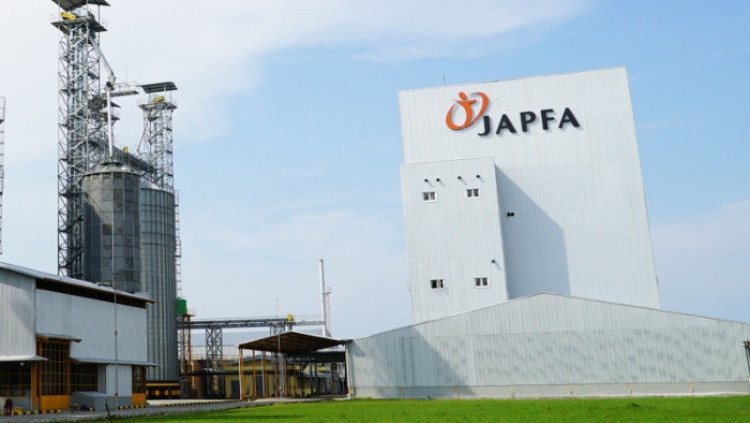
As one of Indonesia’s largest integrated agribusiness companies, PT Japfa Comfeed Indonesia Tbk. (formerly PT Java Pelletizing Factory) faces significant challenges in sustaining business growth. Global economic dynamics, cost-of-living pressures, climate change, and raw material price fluctuations are factors that must be anticipated to ensure the company can continue meeting society’s demand for animal protein whilst creating value for shareholders.
In response to these conditions, Japfa Comfeed has chosen to strengthen its business foundations through a long-term strategy. The company is not solely focused on volume growth but is also building efficiency across the entire business chain, reinforcing its financial structure, and integrating sustainability principles as part of its corporate strategy.
Japfa Comfeed implements an integrated industrial business model encompassing large-scale operations, advanced feed technology, and superior genetics. The company also pursues a protein diversification strategy, covering chicken, fish, shrimp, and beef, to cater to consumer preferences. Furthermore, the listed company is investing in downstream processing units, such as slaughterhouses and consumer food products.
“This integrated business model is expected to broaden the company’s value chain and provide greater flexibility in navigating market dynamics,” said Rachmat Indrajaya, Director of Corporate Affairs at Japfa Comfeed Indonesia.
For Japfa Comfeed, maintaining strong fundamentals is key to sustaining performance in the capital market. The company strives to be an efficient provider of affordable animal protein to withstand industry downturns. For instance, it maintains sales volume momentum, particularly during the Ramadan period, whilst improving feed business margins through more stable selling price adjustments.
Regarding capital expenditure management, the annual budget is formulated based on projected market demand growth. However, Rachmat noted that the company consistently applies a prudent approach through a flexible capital allocation policy. This policy is guided by the philosophy of “building small boats, not a large ship,” allowing the company to adjust capital expenditure mid-year to carefully manage cash flow. “During a crisis, non-essential capex will be deferred,” he stated.
Meanwhile, in managing its capital structure, Japfa Comfeed has demonstrated progressive and innovative steps. In 2021, the company issued a US$350 million Sustainable-Linked Bond, the first of its kind in the global agrifood industry. This was followed by a Sustainable-Linked Loan in 2022. In 2025, Japfa Comfeed secured a US$150 million Sustainable-Linked Loan that, for the first time, incorporated a Social Key Performance Indicator focusing on improving the nutritional status and welfare of children, particularly in rural areas, through the Japfa Comfeed for Kids programme.
Rachmat explained that these sustainable finance initiatives have contributed to an improved financial structure for the company. This is indicated by the Net Debt to Equity ratio, which was significantly reduced from 52.5% in March 2025 to 28.9% in March 2026.
The company’s commitment to sustainability is also demonstrated through a science-based approach. Japfa Comfeed is recorded as the first integrated poultry company in Indonesia to formally integrate scientific studies into its financing strategy through the application of a Life Cycle Assessment. This comprehensive study serves as the foundation for accessing various sustainable financing instruments globally, a factor that is increasingly relevant as investors, bondholders, and financial institutions pay greater attention to environmental, social, and governance (ESG) aspects in their investment decisions.
Amidst the growing practice of sustainable finance, lenders no longer assess a company’s commitment based solely on targets but also require transparent and accountable measurement methods. In this context, the Life Cycle Assessment acts as a science-based instrument that provides a credible basis for setting sustainability targets and objectively measuring their achievement.
Business strengthening is also supported by various operational innovations. Japfa Comfeed has developed modern biosecurity technology, established an independent vaccine research unit called Vaksindo, and expanded its consumer food business through Japfa Comfeed Food Indonesia.
All these strategies, Rachmat explained, align with the company’s commitment to ESG principles and the Sustainable Development Goals, particularly the second goal of achieving “zero hunger.” He further explained that the immediate focus is the 2030 agenda, specifically reducing scope 1 emissions by 25 percent per kilogramme of live bird. “This emission reduction must start from genuine operational efficiency, not merely offsetting,” he said.