
JAPFA Boosts Water Recycling and Clean Energy Use
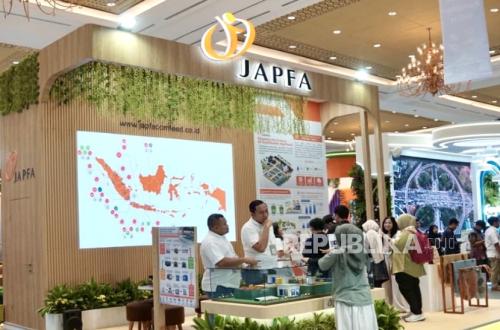
Water and energy availability are becoming increasingly critical challenges for the food industry amid climate change risks. PT JAPFA Comfeed Indonesia Tbk (JAPFA) has strengthened its management of water, waste, and energy as part of efforts to maintain supply chain sustainability. The commitment was presented at the Indonesia International Environment Technology and Innovation Expo & Conference (INVIROTECH) 2026, held by the Ministry of Environment at the Jakarta International Convention Center (JICC) from 11 to 13 June 2026. One key achievement highlighted was a 94 percent increase in water recycling volume in 2025 compared to 2023. The company stated that water efficiency is a crucial step to safeguard operational resilience against growing water scarcity risks. As an agrifood company, JAPFA views clean water availability as vital for supporting its entire business chain, from farming to consumer products. Consequently, the company continues to develop water recycling facilities, improve water use efficiency, and implement rainwater harvesting at several operational units. JAPFA Director Rachmat Indrajaya said sustainability is a key factor in ensuring business continuity amid climate change. “Every drop of water we successfully recycle is a concrete step to strengthen operational resilience against the increasing risk of water scarcity. We do not see sustainability as a trade-off for business, but rather as a way to realise the value of ‘Growing Towards Shared Prosperity’ amidst increasingly dynamic climate challenges,” Rachmat stated on Wednesday (17/6/2026). Beyond water management, JAPFA also reported progress in waste reduction. Throughout 2025, the company diverted over 90 percent of its non-hazardous waste, or around 137,000 tonnes, away from final disposal sites through reuse and recycling. The company also applies circular economy principles by processing unused poultry and fish parts into value-added products, while animal manure is utilised as fertiliser to reduce waste and create economic benefits. In the energy sector, JAPFA is accelerating the reduction of fossil fuel use. Since 2025, the company has begun phasing out coal and transitioning to lower-emission sources such as natural gas and biomass fuels made from candlenut shells and palm kernel shells. Currently, biomass accounts for about 35 percent of the company’s total energy needs. These efforts are further supported by the installation of solar panels with a total capacity of 1.8 megawatt peak (MWp) across various production facilities. These measures have also attracted attention from the financial sector. JAPFA previously secured funding through a USD 350 million Sustainability-Linked Bond (SLB) in 2021 and a Rp1.42 trillion Sustainability-Linked Loan (SLL) from BNI in 2022. These financing schemes link the company’s financial performance to independently evaluated sustainability targets.