
Japan’s Inflation Heats Up to Its Highest Level This Year, Raising Concerns
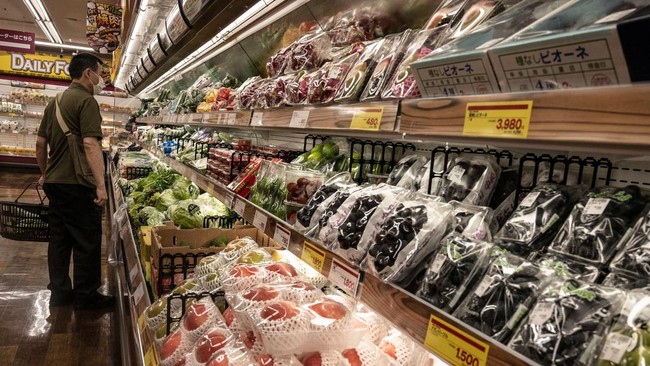
Japan’s core inflation rose again in September 2026, reaching its highest level this year. The increase strengthens the possibility that the Bank of Japan (BOJ) will raise interest rates again before the end of the year.
According to CNBC International on Friday (23 October 2026), Japan’s core inflation, which excludes fresh food prices, stood at 2.1% year on year. This was up from 1.7% in August and above the forecasts of several analysts.
Headline inflation in Japan was also 2.1%. Meanwhile, the narrower core inflation measure, which excludes both fresh food and energy, was 2.4%. The BOJ monitors this measure as one indicator of underlying price pressures.
Inflation rose despite a sharp 20.6% year-on-year fall in Japanese rice prices. However, the decline was not enough to prevent overall prices from increasing.
Abhijit Surya, a senior Asia-Pacific economist at Capital Economics, said the acceleration was noteworthy because it came as fresh-food price increases slowed sharply and energy prices remained in deflation.
He said one factor pushing prices higher was the indirect impact of expensive energy. Inflation in other manufactured goods reached 3.9%, its highest level in 13 months.
Prices were also under pressure from increases in durable goods and public utility charges. Services inflation rose from 1.2% to 1.5%.
BOJ may raise interest rates again
Inflation’s return above the BOJ’s 2% target has strengthened the prospect that Japan’s central bank will continue tightening monetary policy. In September, the BOJ raised interest rates by 25 basis points to 1.25%, the highest level in about three decades.
Surya expects the BOJ could raise rates again in December. Such a move would form part of the normalisation of monetary policy after years in which Japan struggled with deflation and sought to achieve sustained price increases.
The weak yen has added to inflationary pressure by making imported goods, including energy, more expensive. Japan is also facing higher oil import costs as some energy supplies shift to the United States and supply sources in the Middle East change amid the Iran conflict.
Nevertheless, consumer energy prices in Japan fell 0.6% in September. The decline was partly supported by energy subsidies introduced by Prime Minister Sanae Takaichi’s government.
Japan’s Finance Minister, Satsuki Katayama, said earlier that the country was on the brink of moving into a period of sustained inflation driven by wage growth. She also acknowledged that higher import costs were contributing to price increases.
Japan discusses food tax cut
Amid price pressures, Japan’s parliament has begun discussing a draft policy to cut consumption tax on food to 1% from 8% for two years.
Public broadcaster NHK reported that the proposal also includes provisions for income-based assistance for workers.
The policy is intended to help ease the cost-of-living burden on households. However, inflation remains a concern, as interest-rate rises to curb prices could increase borrowing costs for households and businesses.
In financial markets, the Nikkei 225 fell about 1.6% in Friday’s trading. The yen strengthened to around 156.15 to the US dollar.
Source: jawawa.id (https://jawawa.id/newsitem/japans-inflation-heats-up-to-its-highest-level-this-year-raising-concerns-1792731064)
Originally published by CNBC Indonesia (https://www.cnbcindonesia.com/market/20261023101449-17-778809/inflasi-jepang-makin-panas-tertinggi-tahun-ini-bikin-waswas), translated from Indonesian