
Japanese Researcher Outlines Challenges in Indonesia’s Mining Governance
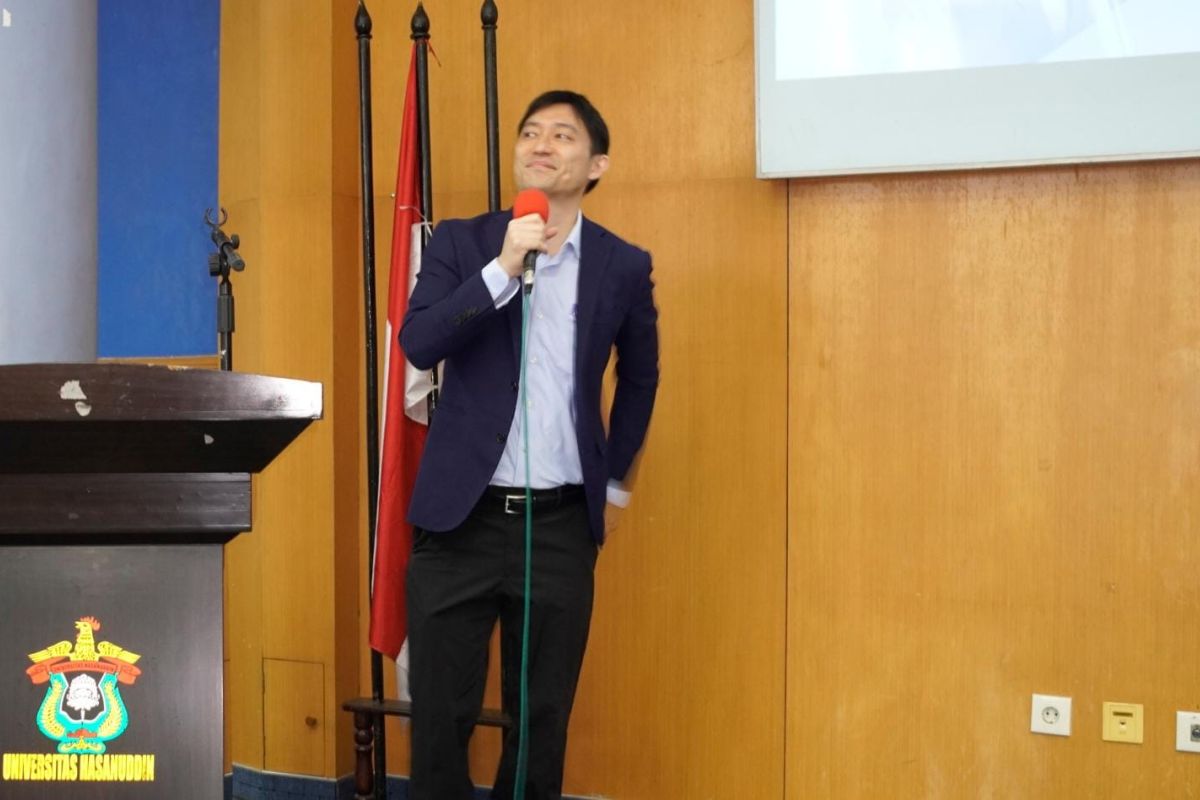
Makassar (ANTARA) – Japanese natural-resource governance researcher Komatsuzaki Yoshihisa outlined challenges to transparency in Indonesia’s mining governance during a public lecture at Hasanuddin University in Makassar.
Hasanuddin University lecturer Ishaq Rahman said in a statement in Makassar on Tuesday that the issues raised by Komatsuzaki reflected a phenomenon commonly found in global governance.
International norms for good governance, including transparency, accountability and participation, are often found in regulations and official documents but have yet to be implemented in practice.
“In constructivist studies, this phenomenon is known as ‘symbolic compliance’. Countries generally comply with international norms only symbolically, without putting them into practice,” Ishaq said.
In his lecture, Komatsuzaki explained the resource curse: a situation in which countries rich in natural resources nevertheless face governance problems, high corruption risks and unequal distribution of economic benefits.
“One challenge in the extractive industries is the concentration of profits among corporations and certain interest groups, while local communities bear the environmental damage and social problems caused by mining activities,” he said.
To assess the quality of natural-resource management, Yoshihisa introduced two relevant international frameworks: the Extractive Industries Transparency Initiative (EITI) and the Natural Resource Governance Institute (NRGI).
EITI is a multi-stakeholder initiative involving governments, companies and civil society. It aims to strengthen public oversight, reduce corruption risks and ensure that government revenues are managed responsibly.
NRGI provides indicators for assessing natural-resource governance across three main dimensions: value realisation, revenue management and the enabling environment.
Several issues still require attention, including the disclosure of mining contracts, verification of ultimate beneficial ownership, and the availability of information across the mining industry’s value chain.
Strengthening company ownership verification is considered important for identifying the individuals behind corporate structures, including any potential links to political interests.
In addition to corporate transparency, the transfer of mining permit authority from regional to central government has also drawn attention. Centralising the licensing process does not automatically eliminate corruption or resolve governance problems at the local level.
Effective oversight, government institutional capacity, and relations between mining companies, government officials and affected communities therefore continue to require serious attention.
Komatsuzaki stressed the importance of developing empirical research at the local level to identify gaps between international governance standards and their implementation in Indonesia.
Source: jawawa.id (https://jawawa.id/newsitem/japanese-researcher-outlines-challenges-in-indonesias-mining-governance-1793688914)
Originally published by Antara (Indonesian) (https://www.antaranews.com/berita/5828435/peneliti-jepang-paparkan-tantangan-tata-kelola-pertambangan-indonesia), translated from Indonesian