
Japanese National Seeks Justice at Constitutional Court Over Inheritance Rights Worth up to Rp231 Billion
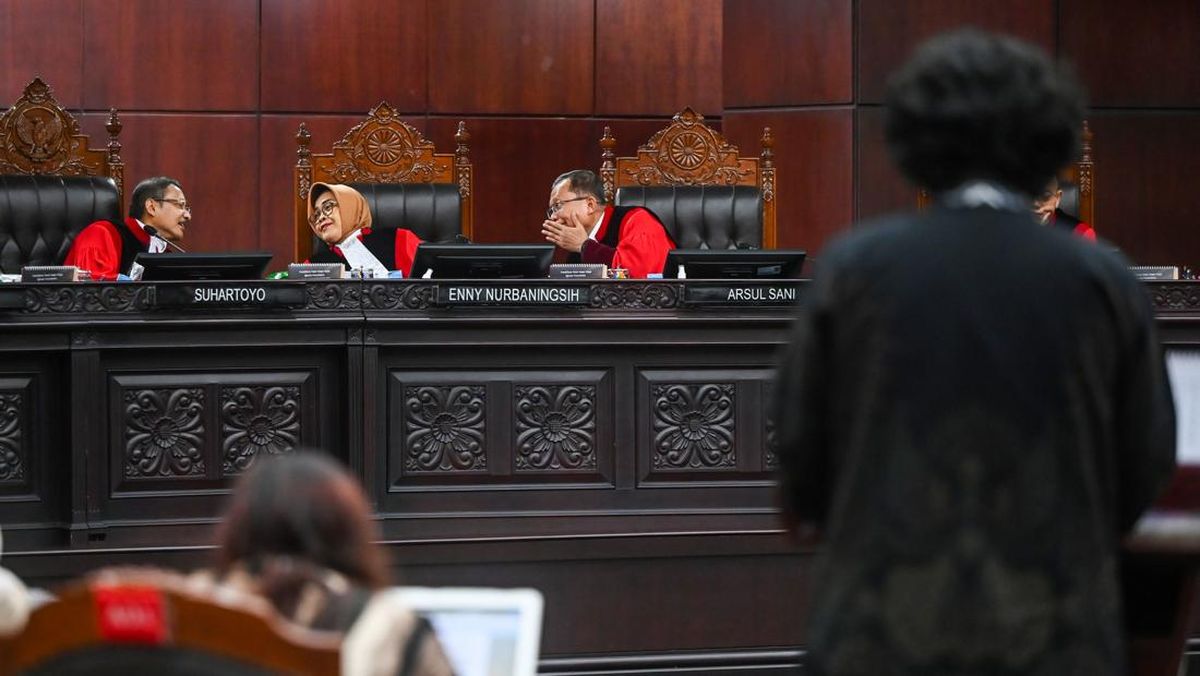
Hisako Dewanto, a Japanese national, is currently facing issues regarding inheritance. Through her legal counsel, Hisako claims she has lost her inheritance rights from her late husband, who was an Indonesian citizen.
On this basis, Hisako is seeking justice by filing a judicial review of the provisions of Article 140 of the Indonesian Civil Code (KUHPer/Burgerlijk Wetboek voor Indonesie) at the Constitutional Court of the Republic of Indonesia (MKRI). The petition is registered under number: 334/PUU-XXIV/2026.
The case originated from an inheritance dispute, in which the children filed a lawsuit in court which was subsequently granted.
At the Constitutional Court, Hisako’s legal counsel, Fatiatulo Lazira, explained that due to the ambiguity of the norms in Article 140 of the Civil Code, his client lost her inheritance rights as the longest-surviving spouse, and consequently lost the right to access and trace her late husband’s estate.
“Based on documents from the tax office, there are assets under the name of Hisako Dewanto’s late husband that have not been reported, totalling up to Rp231 billion, including assets worth approximately Rp60 billion abroad,” Fati stated during the hearing regarding the revision of the judicial review petition in Jakarta on Monday (28/9), as reported by the MK website on Tuesday (29/6).
Fati noted that there are several bank accounts in the personal name of the late Rachmat Hartojo (Hisako’s husband) that are allegedly being used by other parties and are indicated to be used for manipulating financial transactions.
The late Rachmat Hartojo is said to have purchased 43 kilograms of gold in stages using cash payments.
According to information provided by the deceased during his lifetime, the gold was handed over to his mother, and the funds used for the gold purchase are strongly indicated to have been withdrawn in cash from companies in which the deceased held shares.
“Hisako has also lost the right to inherit the late Rachmat Hartojo’s shares in several companies, including: PT Megamarine Pride, PT Baramuda Bahari, and PT Mega Marine Prime,” said Fati.
List of Petitioners for the Same Article
In addition to Hisako, three other individuals have joined the judicial review. These include a married couple, Hartono Effendi (Petitioner III) and Chientasari Ichsan (Petitioner IV), as well as an Indonesian student, Jessica Tritanya (Petitioner II).
The Petitioners are challenging the provisions of Article 140 of the Civil Code because it limits the scope of marriage agreements, often resulting in the surviving spouse losing inheritance rights.
According to the Petitioners, even though Hisako is a foreign national, the provisions of Article 140 of the Civil Code should remain binding on everyone within the jurisdiction of Indonesian law.
This is because Hisako holds an Indonesian ID card (KTP) and has resided permanently in Surabaya since marrying Rachmat Hartojo (an Indonesian citizen) in 1997, with whom she had three children.
Chronology of the Inheritance Dispute
According to the Constitutional Court website, after her husband passed away, the eldest child, in their capacity as a child and/or heir, issued a statement of power of attorney to Hisako to manage the late father’s estate in November 2022.
The second child also provided power of attorney, primarily to manage the inheritance certificate. The third child, being a minor at the time, was legally represented by Hisdo as a guardian.
However, the eldest child issued a revocation of power of attorney in December of the same year. Since then, legal inheritance disputes have emerged between Hisako and the children, as well as between Hisako and her parents-in-law.
The eldest child filed a lawsuit that was partially granted, with a verdict stating that the entirety of the deceased’s estate be divided into one-third shares for each heir, excluding Hisako.
This decision was upheld at the cassation level, which considered the existence of a derivative marriage agreement deed, making the agreement binding on the parties involved.
This means that upon the death of one party, personal or separate property becomes the individual property of each spouse as there is no joint property, and inheritance is divided according to the contents of the marriage agreement.
Consequently, Hisako has no right to inherit her late husband’s estate, and vice versa.
The petition is being heard by a Panel of Judges led by Constitutional Judge Enny Nurbaningsih, with members Constitutional Judges Ridwan Mansyur and Arsul Sani.
The Panel of Judges, through the Judges’ Deliberation Meeting (RPH), will discuss the petition to determine its further progress.
The Article and Phrase Challenged at the MK
For information, the current Article 140 of the Civil Code states: “The agreement may not reduce the rights derived from the husband’s authority as husband, and as father, nor the rights which by law are given to the longest-surviving spouse. Likewise, the agreement may not reduce the rights intended for the husband as the head of the marital union; however, this does not reduce the wife’s authority to require for herself the management of personal property, both movable and immovable goods, alongside the free enjoyment of her personal income. They also have the right to make an agreement that, even if there is a category of joint property, fixed assets, registration documents in the large books of state loans, other valuable papers, and receivables obtained in the name of the wife, or which during the marriage fall into joint property, shall not be transferred or encumbered by her husband without the wife’s consent.”
The Petitioners consider that the norm of this Article contradicts Article 1 paragraph (3), Article 28D paragraph (1), and Article 28H paragraph (4) of the 1945 Constitution.
Therefore, in their petition, the Petitioners request the Constitutional Court to declare the phrase in Article 140 of the Civil Code, “Nor the rights which by law are given to the longest-surviving spouse,” to be conditionally unconstitutional with the 1945 Constitution.