
Japanese Firm Complains to Indonesia Over Surge in Chinese Nappy Raw Material Imports
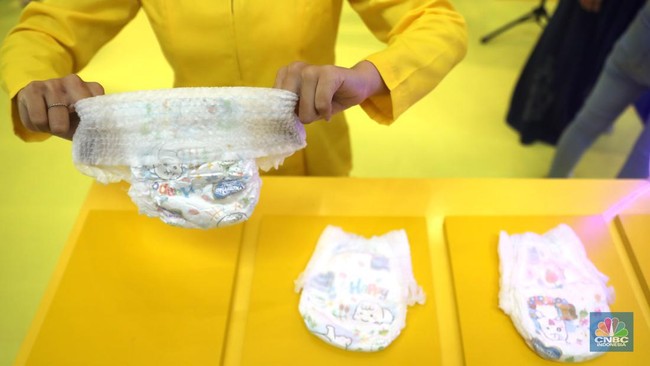
Jakarta - The Chair of the Indonesian Anti-Dumping Committee (KADI), Frida Adiati, has revealed that imports of Superabsorbent Polymers (SAP) from China surged by 94% in volume during January-June 2026 compared with the same period the previous year. The products fall under Harmonized System (HS) codes 3906.90.92 and 3906.90.99 based on the 2022 Indonesian Customs Tariff Book (BTKI).
Not only did volume rise, but the import value of these products also increased by 81%. In January-June 2025, SAP imports from China were recorded at 46,824,693 kilograms with a value of US$72,918,080. That figure rose to 90,621,285 kilograms with a value of US$131,995,746 in January-June 2026. SAP is a raw material used to make nappies and sanitary products.
The import surge is now part of an anti-dumping investigation conducted by KADI into SAP products from China. In the latest development, KADI is still awaiting responses to mini questionnaires from Chinese exporters and producers, as well as questionnaire responses from domestic industry and importers.
“The next process will be on-site verification, both to domestic industry and selected exporters in China,” Frida told CNBC Indonesia on Thursday (20/8/2026).
Frida said that based on preliminary evidence submitted by domestic industry, her team found pressure on the national industry from the influx of imported SAP from China. A number of economic performance indicators for domestic industry have declined, including domestic sales, profits, market share, domestic prices, cash flow, and rising inventories.
“In addition, the imported goods alleged to be dumped caused domestic industry to lower its selling prices during the investigation period, and the downward trend in selling prices was higher than the downward trend in cost of goods sold, resulting in losses for domestic industry,” she said.
Amid the ongoing investigation, Frida said her team is open to the possibility of recommending the imposition of Provisional Anti-Dumping Import Duties (BMADS). KADI may recommend BMADS if the preliminary investigation proves dumping, injury to domestic industry, and a causal link between dumped imports and that injury.
“BMADS is a provisional measure to prevent continued injury to domestic industry during the investigation process,” she explained.
Nevertheless, the potential imposition of BMAD could also affect downstream industries that use SAP as a raw material. She noted that user companies that still import the raw material could face higher production costs.
“SAP products are raw materials for nappies and sanitary products. With BMAD, it will affect production costs for user or downstream companies if they import the raw material,” she said.
Conversely, Frida continued, downstream industries that purchase raw materials from domestic industry will not experience an increase in production costs. “If the downstream industry buys raw materials from domestic industry, it will not experience an increase in production costs,” she said.
She assessed that this condition is a possibility in the short term. Meanwhile, if dumping is proven but no action is taken, the applicant industry could continue to suffer losses in the long term.
“However, it must also be understood that this is a possibility in the short term. Conversely, if dumping is proven but no action is taken, in the long term the applicant industry will continue to lose money and the worst possibility is that the industry could close and we will become dependent on imported products,” she explained.
The SAP investigation from China is a follow-up to an application from PT Nippon Shokubai Indonesia representing domestic industry. KADI officially began the investigation on 14 August 2026.
Based on the investigation period from 1 January 2022 to 31 December 2025, Indonesia’s total imports of SAP products reached 570,543 tonnes. Most of those imports came from China, namely 354,918 tonnes or about 62% of total imports.
The investigation will be conducted over 12 months and may be extended up to 18 months if necessary.
Source: jawawa.id (https://jawawa.id/newsitem/japanese-firm-complains-to-indonesia-over-surge-in-chinese-nappy-raw-material-imports-1787201528)
Originally published by CNBC Indonesia (https://www.cnbcindonesia.com/news/20260820100859-4-760836/perusahaan-jepang-ini-ngadu-ri-diserang-bahan-baku-popok-asal-china), translated from Indonesian