
Japanese Delegation Blends Kimono and Balinese Endek at 2026 Bali Arts Festival
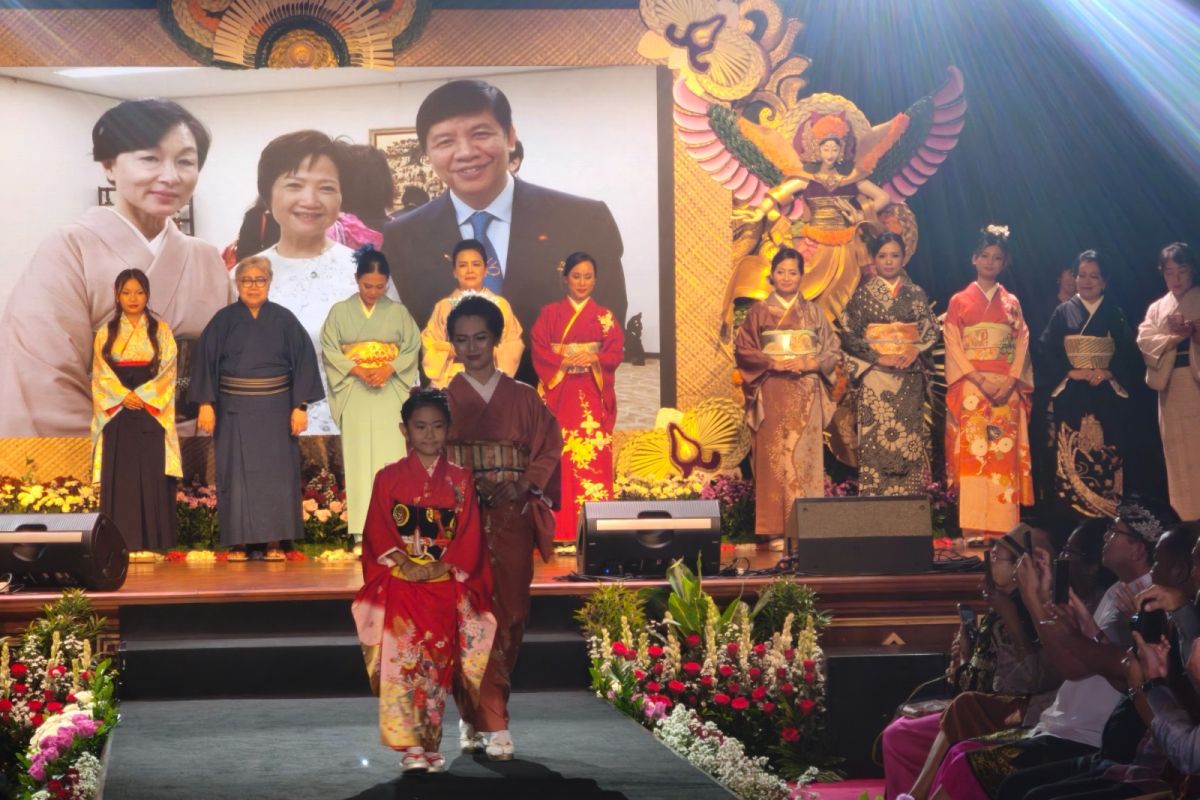
A Japanese delegation from Kimono Gallery Yawara combined traditional kimono with Balinese endek fabric during the Bali World Culture Celebration at the 48th Bali Arts Festival (PKB) 2026. Kimono Gallery Yawara Director Tomi Nakamura said the garments were the result of three years of development to bring together Japanese and Indonesian traditions. “We hope to create new harmony, new inspiration, and strengthen friendship between the two countries,” he said in Denpasar on Monday. Eleven types of kimono were introduced in a fashion performance that conveyed philosophy, tradition, and cross-cultural connections. “The kimono, long known as a symbol of Japanese life, is brought together with Indonesian textiles, especially Balinese endek, which also holds values and philosophy in each motif,” he said. The kimono types presented and combined with the fabric included Kurotomesode, the most formal black kimono typically worn by close family members of the bride at wedding ceremonies, as well as Furisode, distinguished by its long sleeves and associated with young women, Homongi for formal occasions, and Tsukesage, which has a simpler yet elegant appearance. Visitors to the 2026 PKB were also introduced to Komon and Edo Komon, kimono used in daily life. Though appearing simple from a distance, the fabric contains detailed motifs that demonstrate the high skill of Japanese artisans. The performance continued with a collaborative collection from Kimono Gallery Yawara that paired Japanese fabric with Indonesian textiles beyond endek, including Javanese batik and various traditional weavings from across the archipelago. Another unique feature was the design of kimono that can be worn on both sides, offering different looks in a single garment, while Japanese obi and Balinese sashes were also combined to reinforce the character of both cultures. Each motif in the kimono carries its own philosophy, such as sakura representing the beauty of life, bamboo symbolising hope and longevity, and wave motifs depicting steadfastness and harmony between humans and nature. According to Nakamura, this philosophy shares similarities with Balinese endek textiles, which also carry symbols of nature and prayer in each motif, making the blend of kimono and endek a meeting of two traditions that complement each other. He expressed hope that through this traditional clothing collaboration, the basic form of the kimono can be preserved while presenting more practical designs so that younger generations can wear traditional attire more easily. Bali Governor Wayan Koster, who watched the BWCC performance by the Japanese delegation, expressed his appreciation to the Japanese team. Koster said Japan’s involvement in this year’s PKB was a new experience and a form of cultural diplomacy that strengthens relations between Bali and Japan. “This is the first time, thank you to the team for attending this event and enlivening the Bali Arts Festival, which also features BWCC. BWCC is part of the Bali Provincial Government’s efforts to strengthen and advance culture by opening space for arts from various regions and countries to get to know each other,” he said. The Governor noted that relations between Bali and Japan have been good, including in education and employment, with many young Balinese participating in internship programmes and working in Japan.