
Japanese Corporate Leaders Issue Warnings: What is Happening?
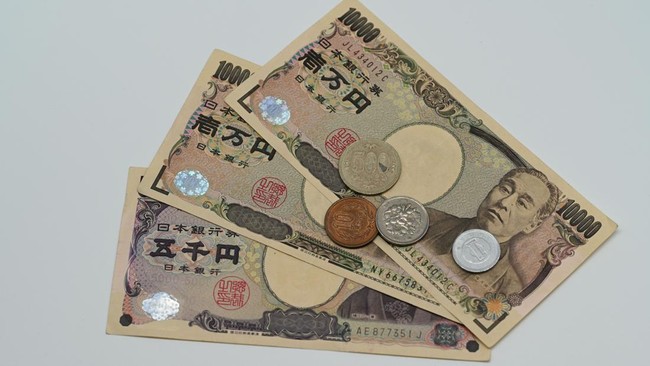
Executives from Japanese companies have begun voicing concerns regarding the weakening of the yen. Interestingly, calls for the Japanese currency to strengthen are coming even from companies that have traditionally profited from a weak yen.
One such voice is Yoshinori Kanehana, Chairman of Kawasaki Heavy Industries. He stated that the excessive volatility of the yen’s exchange rate is one of the greatest challenges for companies, as it complicates the formulation of business strategies. “We cannot create strategies when the yen is fluctuating,” Kanehana told CNBC International during the Gastech conference in Bangkok, Thailand.
Kanehana even noted that if the yen reaches levels around 150 per US dollar, Kawasaki might consider moving some of its manufacturing operations from the United States back to Japan. Kawasaki currently operates 27 production facilities outside Japan, including in the US, alongside 15 domestic facilities.
This statement demonstrates that an excessively weak yen is not always an advantage for Japanese firms. While currency depreciation can enhance export competitiveness, it also increases production costs and the price of various imports.
Calls for a stronger yen are also emerging from Japanese energy companies, most of which operate primarily overseas. Takayuki Ueda, President and CEO of Inpex, suggested that an exchange rate of 100 yen per US dollar would be an “appropriate” level for the Japanese economy. This is noteworthy because nearly 90% of Inpex’s business is conducted outside Japan, with most transactions denominated in US dollars.
Theoretically, such a condition allows companies to profit when dollar-denominated revenue is converted into a weaker yen. In its financial reports, Inpex noted that a 6.7% depreciation of the yen to 158.37 per US dollar helped offset a decline in company revenue during the first half of this year caused by falling crude oil sales volumes. “Looking at the Japanese economy as a whole, the current exchange rate may be too weak,” said Ueda.
While the yen has strengthened relatively quickly over the past two weeks, it remains historically weak. Data cited by CNBC International shows the average yen exchange rate over the last 10 years has been around 123 yen per US dollar. As of Thursday, the yen was trading at approximately 156.3 per US dollar.
Takeshi Hashimoto, Chairman of Mitsui O.S.K. Lines, previously expressed a desire for a more stable foreign exchange market, stating he would feel comfortable if the yen remained in the 150-155 per US dollar range. Although Mitsui O.S.K. Lines earns most of its revenue in US dollars and directly benefits from a weaker yen, Hashimoto noted that the depreciation causes concern by creating confusion within financial markets.
Japanese companies had previously factored in an average exchange rate of approximately 152.51 yen per US dollar for the second half of this year, based on a quarterly survey by the Bank of Japan (BOJ) released in July. Meanwhile, the market is now awaiting the BOJ’s decision regarding interest rates. Investors anticipate the BOJ will raise interest rates by 25 basis points to 1.25% during the two-day policy meeting ending Friday.
Matthew Ryan, Head of Market Strategy at Ebury, stated that the decision carries significant stakes for the BOJ. He expects the BOJ to raise interest rates while simultaneously providing signals for a tighter policy stance, which could pave the way for subsequent periodic rate hikes.