
Japanese Company Group Implements Various Plastic Reduction Innovations
According to World Bank projections, Indonesia’s national plastic waste volume is estimated to reach 9.9–12.4 million tonnes per year by 2025, or approximately 13.98% of total waste generation. Recognising this significant challenge, Ajinomoto Indonesia Group believes that a clean environment is an important foundation for creating healthier families.
Through its Ajinomoto Health Provider initiative, the company has introduced a series of environmental programmes designed to deliver tangible benefits to communities, including more environmentally friendly packaging innovations. Since 2020, the Japanese company has implemented various breakthroughs such as the use of recycled materials with monomaterial packaging and reduced packaging thickness to minimise plastic usage in several products.
“We became the first company to use paper-based MSG product packaging, introducing paper packaging that replaces some plastic material with paper, thereby reducing plastic usage by up to 30%. For other products such as Masako, implementing the No Inner Plastic initiative and reducing header parts successfully saved 8.4% of plastic usage,” said Grant Senjaya, Head of Corporate Communication at Ajinomoto Indonesia, in a written statement on Thursday (12 March).
Meanwhile, Sajiku’s monomaterial packaging innovation provides plastic usage efficiency of up to 9.5% per package. Overall, these various packaging innovations have enabled Ajinomoto to reduce plastic usage by 1,736 tonnes by 2025.
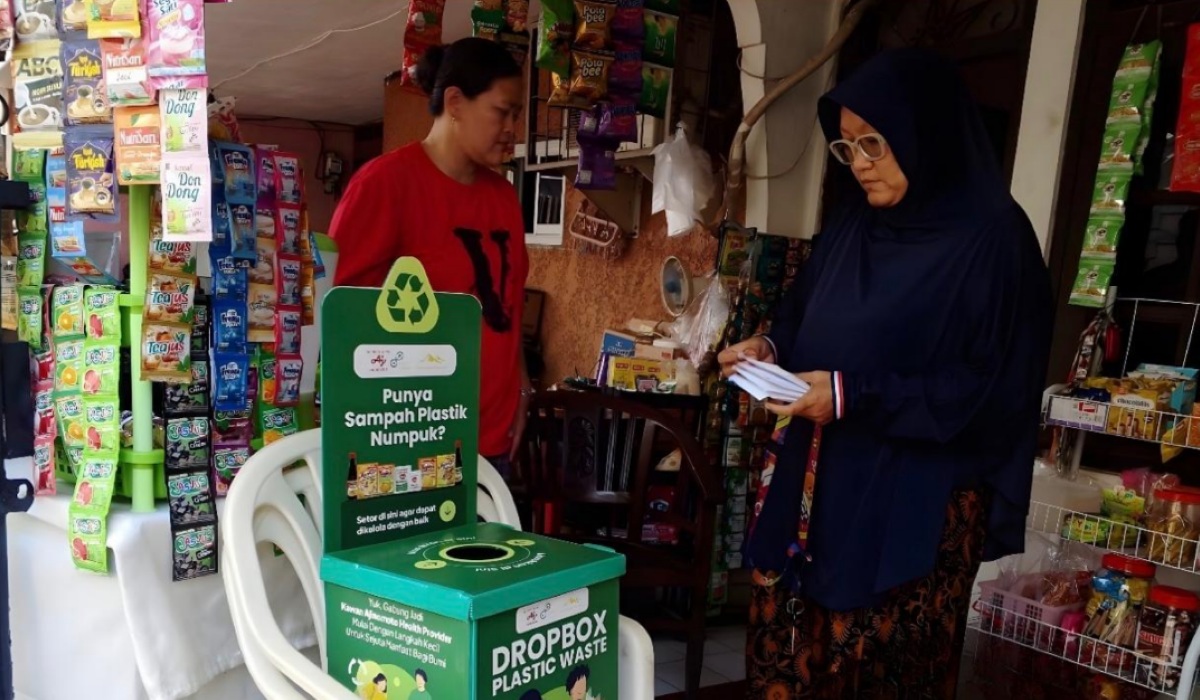
Beyond providing waste management infrastructure, Ajinomoto has also collaborated with various waste banks, including Gunung Emas Waste Bank (East Jakarta), Patriot Bekasi Waste Bank, as well as those in Karawang, Mojokerto, and Surabaya, plus waste processing facilities in the Karawang and Mojokerto regions. This collaboration aims to strengthen community-based waste management.
From all these initiatives, Ajinomoto successfully managed 352 tonnes of waste throughout 2025. The presence of these facilities not only benefits the environment but also creates economic opportunities in some communities through waste collection schemes.
Ajinomoto recognises that education is a crucial component of the success of this sustainability programme. The company carries out this through the Berseri (Clean and Healthy Nation) programme with the primary objective of collecting multilayered plastic waste and through Greenducation.
To increase awareness of waste separation, Greenducation programmes in East Jakarta, Bekasi, and Karawang raise community awareness about the importance of separating plastic waste from other types of waste. This is done to prevent environmental pollution so that more useful products can be generated.