
Japanese Automotive Industry Highlights Investment Barriers in Indonesia
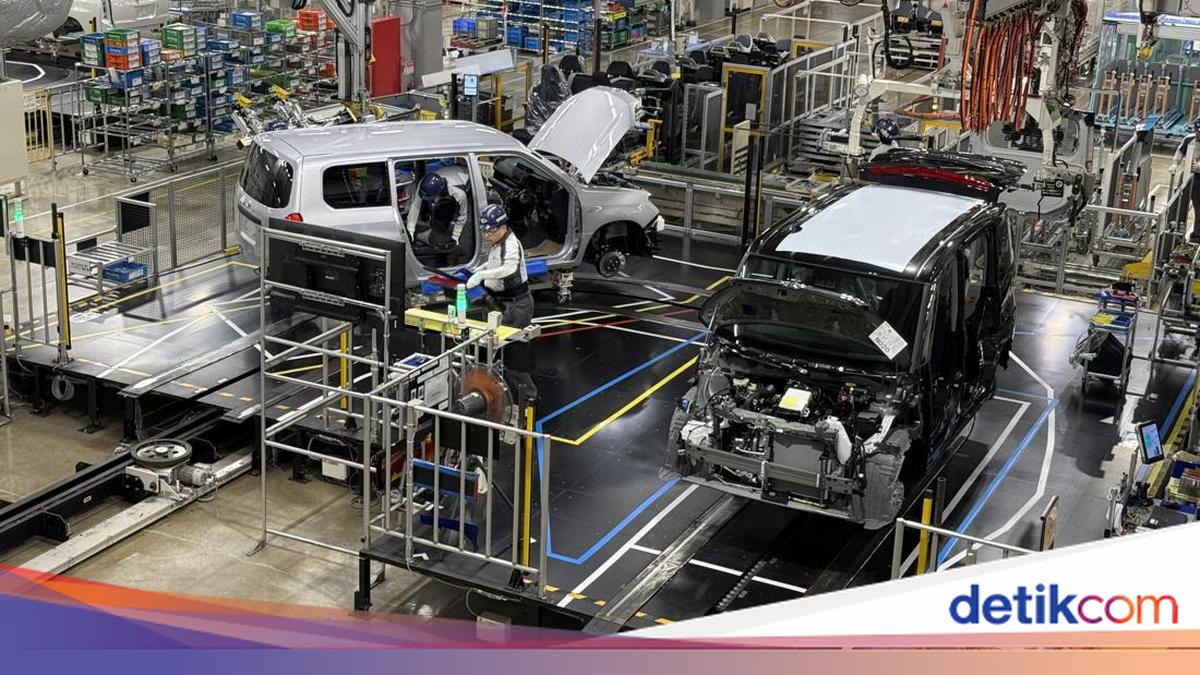
National automotive industry players and their Japanese partners shared several perspectives regarding the business climate in Indonesia with the Coordinating Ministry for Economic Affairs during a Business Discussion Lunch in Nagoya, Japan, on Saturday (19/9). The most highlighted issues by automotive industry players include licensing problems, access to financing for small and medium-sized enterprises (SMEs) supporting the automotive sector, and Local Content Requirement (TKDN) certification during the transition towards electric vehicles.
The delegation from the Coordinating Ministry for Economic Affairs included Deputy Coordinating Minister Susiwijono Moegiarso, accompanied by the Deputy for Coordination of Trade and Digital Economy, Ali Murtopo Simbolon.
Deputy Coordinating Minister Susiwijono stated that the government welcomes this feedback and reaffirmed its commitment to refining policies and addressing ongoing investment barriers. “The government welcomes all this input and reaffirms its commitment to continuously improve policies through concrete steps, including handling ongoing investment obstacles,” he said, as quoted from the official website of the Coordinating Ministry for Economic Affairs on Sunday (20/9/2026).
Susiwijono emphasised that the series of visits and business meetings in Nagoya revealed a clear common thread: industrial competitiveness is built from a combination of technological mastery, human resource strengthening, and a robust supply chain ecosystem. This same principle serves as the foundation for Indonesia’s efforts to strengthen its national manufacturing and automotive industries.
Furthermore, Susiely stated that this meeting reinforces Indonesia’s position as a strategic partner to Japan, particularly in the automotive industry and its supporting components. He noted that Indonesia is poised to be more than just a market, but also a part of the global value chain, serving as a primary production base for exports to over 100 destination countries.
“Through open dialogue such as this, the Government is optimistic that the Indonesia-Japan partnership can continue to grow and provide real benefits to the economies of both countries in the future,” he said.
During the meeting, the Government stated that Indonesia has signed 25 international trade agreements, including both FTAs and CEPAs, and has completed the ratification process to accelerate implementation in an effort to expand market access. One of the most immediate is the IEU-CEPA, with its ratification process scheduled to begin in November 2026 and a target implementation in January 2027. This step is part of the Government’s grand strategy to maintain growth momentum amidst an improving global economic outlook for 2027, which is projected to be in the range of 3.2-3.3 per cent.
From a domestic perspective, the government continues to strengthen the economic foundation, which is currently dominated by the consumption and investment sectors. Various social assistance programmes, subsidies, and fiscal incentives are being implemented to maintain public purchasing power and strengthen the demand side.
On the other hand, the government is paving the way for new growth sectors, particularly Artificial Intelligence (AI) and semiconductors, through ongoing international cooperation. Indonesia established cooperation with ARM earlier this year, subsequently became a member of WAICO, and is currently in the process of exploration and communication with PAX Silica.
Indonesia’s participation in these global forums is expected to increase economic productivity, particularly in the automotive sector, which is increasingly dependent on semiconductor components and smart technology.
Source: jawawa.id (https://jawawa.id/newsitem/japanese-automotive-industry-highlights-investment-barriers-in-indonesia-1789894245)
Originally published by finance.detik.com (https://finance.detik.com/industri/d-8670977/industri-otomotif-jepang-soroti-hambatan-investasi-di-ri), translated from Indonesian