
Japan, US, Australia and India voice concern over China’s economic policies
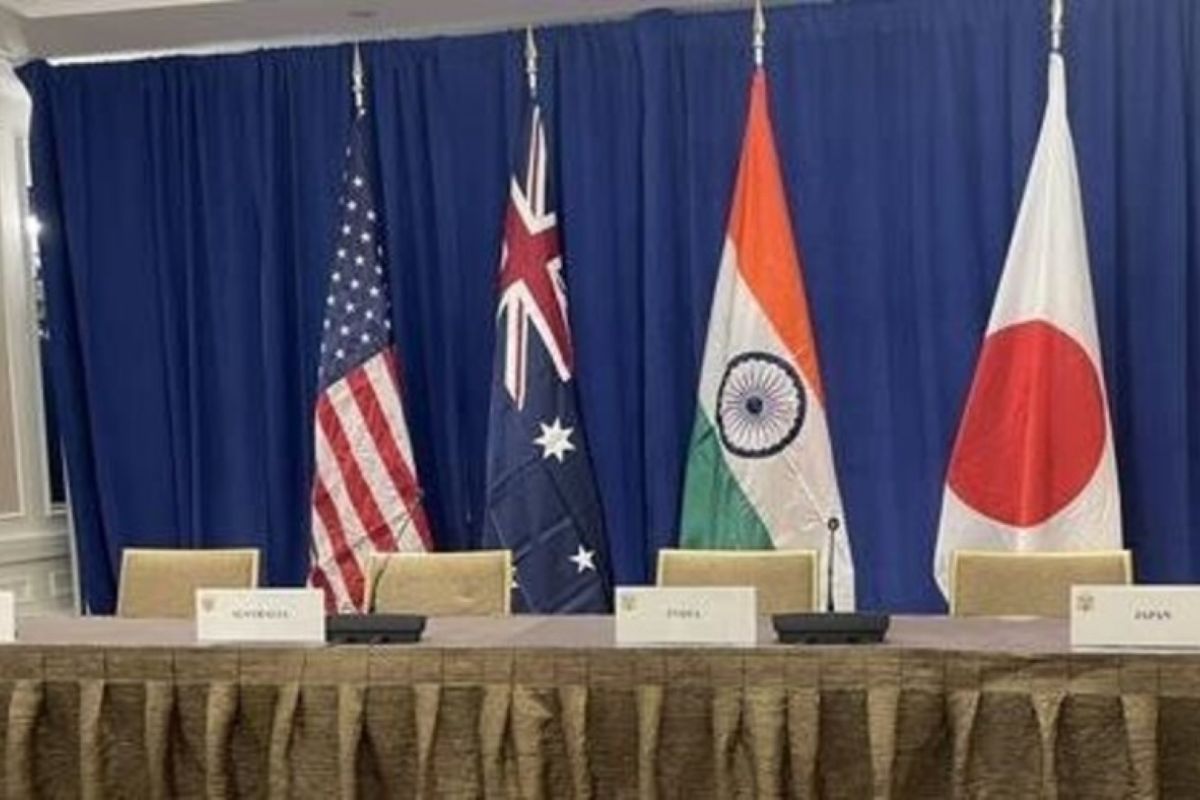
Atlanta (ANTARA) – The foreign ministers of the United States, Japan, Australia and India on Saturday (31 October) voiced serious concern over trade restrictions and other policies imposed by China that they regard as economic coercion, although they did not name the country directly.
At a meeting of the group known as the Quad in Atlanta, Japanese Foreign Minister Toshimitsu Motegi and his counterparts from the other three countries also pledged more than US$85 million (about Rp1.54 trillion) in technical and financial assistance to improve access to trusted artificial intelligence (AI) technology in the Indo-Pacific.
Motegi, US Secretary of State Marco Rubio, Australian Foreign Minister Penny Wong and Indian External Affairs Minister Subrahmanyam Jaishankar reviewed progress on various ongoing Quad initiatives on the sidelines of a meeting of G20 foreign ministers.
In a joint document issued after the meeting, the four ministers expressed serious concern about economic coercion, including unilateral export restrictions, as well as non-market policies and practices that lead to excess production capacity and disrupt global supply chains in strategic industries.
The meeting was the Quad foreign ministers’ third gathering this year, ahead of a possible Quad summit next month in the Philippines.
The leaders of Japan, the US, Australia and India are scheduled to visit Manila in mid-November for several meetings involving ASEAN and its partner countries.
The last Quad summit was held in September 2024, when Joe Biden was still US president, before Donald Trump succeeded him.
The four countries had planned to hold a leaders’ meeting in India last year, but the plan did not go ahead as relations between New Delhi and Washington deteriorated.
The Quad is often seen as a counterweight to China’s growing influence in the Indo-Pacific.
Although the group’s areas of co-operation have expanded in recent years, from maritime security and critical minerals to health protection and emerging technologies, China has criticised its initiatives, viewing them as an attempt to contain its influence in the region.
At Saturday’s meeting, the foreign ministers also aligned their views on developments in the Indo-Pacific, including the South China Sea and East China Sea, as well as the situation in the Middle East, according to Japan’s Ministry of Foreign Affairs.
Motegi strongly rejected any attempts to unilaterally change the status quo through the use of force or intimidation, the ministry said.
Rubio, meanwhile, stressed that the Quad was not formed to oppose any country.
“If we express concerns in the Quad, they relate to certain behaviour and activities. At present, those activities or behaviour are repeatedly carried out by one country,” Rubio said at a press conference.
“That is certainly visible to everyone. But the Quad is not an alliance formed to oppose China or any other country,” he said.
According to the joint document, the foreign ministers agreed to establish a joint business forum to strengthen trade diplomacy, bringing together industry leaders, government officials and policy experts from the four countries.
The forum aims to strengthen ties between the public and private sectors.
As part of the initiative, the Quad countries’ export credit agencies are scheduled to meet in Tokyo on 18 November to identify opportunities to deepen economic co-operation.
In contrast with the unity demonstrated by the Quad, the two-day G20 meeting exposed differences among its members.
One source of disagreement was the presence of Russian Foreign Minister Sergey Lavrov, which drew protests from several European officials.
As a result, representatives of the world’s major economies, including China and Russia, failed to issue a joint communiqué after discussing issues such as energy security, global supply chains and geopolitical tensions.
“I don’t want to give the impression that we are anywhere close to an acceptable solution to these issues at this point,” Rubio, who chaired the meeting, said.
The meeting formed part of preparations for this year’s G20 summit, which Trump is due to host in Miami in December.
Instead, Rubio issued a chairman’s statement, although the document was considered to contain little substantive content.
Source: jawawa.id (https://jawawa.id/newsitem/japan-us-australia-and-india-voice-concern-over-chinas-economic-policies-1793505115)
Originally published by Antara (Indonesian) (https://www.antaranews.com/berita/5824495/jepang-as-australia-india-soroti-kebijakan-ekonomi-china), translated from Indonesian