
Japan Turns to Bangladesh and Nepal for Workers as Southeast Asian Recruitment Gets Harder
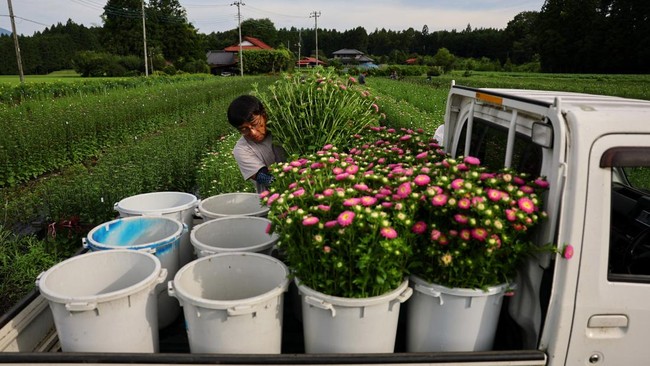
Japan is beginning to seek new sources of agricultural labour in South Asia as it becomes increasingly difficult to recruit workers from Southeast Asia.
Rising wages in countries such as Indonesia, Vietnam and the Philippines have made it harder for Japan to attract workers, prompting it to widen its recruitment network. Bangladesh and Nepal are emerging as alternatives.
The shift is reflected in a growing number of South Asian workers entering Japan’s agricultural sector. Mirai, a Tokyo-based worker training and recruitment company, has introduced its first agricultural worker candidates from Bangladesh. The move marks Japan’s effort to build new labour supply sources beyond Southeast Asia.
Two Bangladeshi candidates, 21-year-old Ahasan Habib and 20-year-old Siam Ur Rahman, secured job offers from an agricultural company in Aomori Prefecture after passing the agricultural Specified Skilled Worker (SSW) examination in August 2026. Both are students at a Mirai partner school in Bangladesh and are expected to travel to Japan in the coming months.
Habib said he was excited to have the opportunity to work in Japan and learn about its agricultural technology. He hopes to use the experience to develop his skills, including in poultry farming. Rahman said he was ready to work hard and curious to experience snow in Japan.
The Japanese government recorded 44,050 foreign workers with Specified Skilled Worker Type 1 status in agriculture in June 2026, a 26% increase on the same period a year earlier. Workers in this category generally face a maximum stay of five years.
Indonesia remains the largest source country, with 18,255 workers, up 45% year on year. Although the numbers from Bangladesh and Nepal remain far below Indonesia’s, their growth points to Japan’s increasingly diverse labour supply from South Asia.
Indonesia still holds a dominant position, but Japan is beginning to expand its recruitment options in anticipation of changing labour market conditions in Southeast Asia.
Yuji Nomura, general manager of the Career Advisory Division at Sustainable Holdings, Mirai’s parent company, said rising wages in Vietnam, the Philippines and other Southeast Asian countries had made it more challenging for Japan to attract workers from the region.
“We are seeing a shift in labour supply sources towards South Asia,” Nomura said.
He said Bangladesh had considerable potential as a new source of workers. Although it does not have one of the world’s largest agricultural sectors, Bangladesh is an agrarian country with a population of about 170 million.
Since 2018, Sustainable Holdings has run training and worker retention programmes in various Asian countries through Mirai. Its network of partner schools includes the Philippines, Indonesia, Vietnam, Bangladesh and Myanmar. The company is also extending its network to Sri Lanka and Nepal.
The programme is aimed at candidates aged 18 to their thirties. According to Nomura, women are generally steered towards care work, while men are more likely to receive training for agricultural jobs.
To obtain SSW status in agriculture, candidates must meet several requirements, including passing the Japanese-language proficiency test at N4 level or an equivalent beginner level, as well as written and practical agricultural examinations.
Nomura said experience working in Japan could also help foreign workers develop their careers in agriculture. Japan is known for its advanced agricultural technology, and some workers go on to work in the agricultural sectors of Australia and Israel or establish farming businesses in their home countries.
Mirai operates three partner schools in Bangladesh, in Dhaka, Chittagong and Barisal. Noriko Nour Noby, a Japanese-language teacher at the Dhaka school, said Habib and Rahman’s success in passing the examinations was a source of pride.
Having lived in Bangladesh for two decades and speaking Bengali, Nour Noby said understanding each worker’s cultural background and way of thinking was an important part of the training process. She also stressed the need to create safe workplaces in Japan so foreign workers can develop and remain in the country over the long term.
Japan’s need for foreign workers is closely tied to its ageing population and a long-standing labour shortage in agriculture.
According to Japanese government data, the number of foreign workers in agriculture—including Specified Skilled Workers in Types 1 and 2, for whom there is no general limit on the length of stay, and technical intern trainees—reached 67,905 at the end of December 2025.
More specifically, Indonesia and Vietnam accounted for more than 60% of the 39,234 foreign workers with specified skills in agriculture during that period, according to Japan’s Ministry of Agriculture, Forestry and Fisheries.
However, wage increases in several Southeast Asian countries are beginning to reshape recruitment patterns. This is creating greater opportunities for Bangladesh, Sri Lanka and Nepal to help meet Japan’s agricultural labour needs.
Noriyuki Takakura, director of Sustainable Holdings, said workers from the three countries were regarded positively by companies for their seriousness and diligence.
To expand its labour supply, Sustainable Holdings offers free education to students at Mirai partner schools across Asia. The company also helps provide accommodation for workers after they arrive in Japan.
Takakura said the company would gradually expand agricultural training classes in each country to strengthen the supply of foreign workers to Japan.
Source: jawawa.id (https://jawawa.id/newsitem/japan-turns-to-bangladesh-and-nepal-for-workers-as-southeast-asian-recruitment-gets-harder-1795495928)
Originally published by CNBC Indonesia (https://www.cnbcindonesia.com/research/20261124104314-128-787887/bahaya-bagi-ri-jepang-kini-berburu-pekerja-bangladesh-nepal-ada-apa), translated from Indonesian