
Japan Says Legok Nangka WtE Plant Will Be Model for Modern Waste Processing in Indonesia
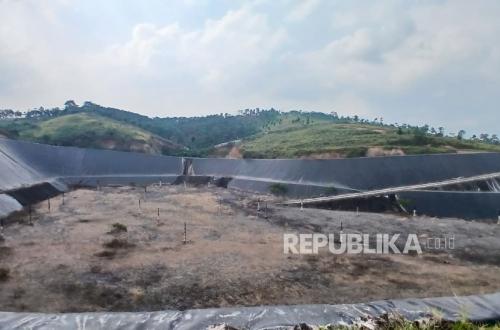
Myochin Mitsuru, Chargé d’Affaires ad interim at the Japanese Embassy in Indonesia, believes that the Legok Nangka Waste-to-Energy Plant (PSEL) project in West Bandung Regency will serve as an example of successful, technology-based modern waste management for other regions in Indonesia.
Myochin said the project has passed through several important milestones, from the signing of the Power Purchase Agreement (PPA), the revision of the cooperation agreement, to the guarantee agreement.
“I also very much hope that we can now reach the signing of the financing agreement and the start of construction this year,” Myochin said at the groundbreaking of the Legok Nangka PSEL in Legok Nangka, Cempakamekar, Padalarang District, West Bandung Regency, West Java, on Wednesday (29/7/2026).
According to Myochin, the construction of the plant will not only solve the waste problem and generate electricity, but will also create new jobs for local communities.
He explained that Japan’s experience shows that modern incineration facilities can stand side by side with residential areas without causing significant disruption, thanks to advanced technology and rigorous maintenance.
“Problems very rarely occur around waste incineration facilities in Japan. In fact, many facilities have been built in the middle of residential areas. Thanks to sophisticated technology and careful maintenance, these facilities have operated stably for decades,” he said.
Myochin also conveyed his confidence in the consortium led by Sumitomo Corporation, Kanadevia and Kyuden International as the project implementers.
According to him, the success of the Legok Nangka PSEL will become a reference for other regional governments wishing to develop similar facilities.
“I am confident that the project carried out by PT Jabar Environmental Solution, a joint venture between Sumitomo Corporation, Hitachi Zosen (Hitz) and PT Energia Prima Nusantara, will make this place a good example for other regional governments,” Myochin said.
He added that the Legok Nangka project is the fruit of international collaboration involving the Japan International Cooperation Agency (JICA), Japan’s Ministry of the Environment, and the West Java Provincial Government in the project preparation process and the public-private partnership (PPP) tender scheme.
Indeed, going forward, several international investors from the Netherlands and other development institutions are also planning to join.
“Through collaboration such as this, I very much hope that the development of waste processing infrastructure in Indonesia will continue to advance. Through this Legok Nangka project, I also hope that the strong cooperative relationship between Indonesia and Japan will continue,” he said.