
Japan Records First Official 'Cruel Heat Day' as Temperatures Soar Past 40°C
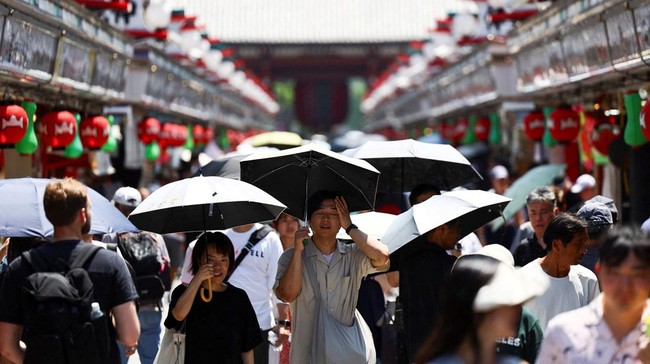
Japan has officially recorded its first ‘kokushobi’ — a term meaning ‘cruelly hot day’ introduced in April — as temperatures soared past 40 degrees Celsius in multiple cities. The Japan Meteorological Agency (JMA) launched the specific designation to warn the public about the dangers of extreme heatwaves, a phenomenon once rare in the country but now increasingly common.
According to reports, the cities of Gujo and Tajimi in Gifu Prefecture, along with Toyota City in Aichi Prefecture, simultaneously recorded air temperatures exceeding 40 degrees Celsius. The readings of 40 degrees Celsius in Gujo and 40.1 degrees Celsius in Toyota marked the highest temperatures ever recorded at their respective local weather stations. Across the nation, 278 out of 914 weather monitoring stations logged temperatures above 35 degrees Celsius, falling into the ‘moshobi’ (extremely hot day) category.
The escalating temperatures have led to tragic fatalities. A man in his 40s was found dead on a street in Sanjo City, Niigata Prefecture, and a man in his 70s died in Kanagawa, with both deaths strongly suspected to be caused by heatstroke. The threat is growing more severe, as data from Japan’s Fire and Disaster Management Agency revealed that heatstroke deaths surpassed 2,000 for the first time in 2024, with over 100,000 people rushed to hospital between May and September.
The climate threat is also disrupting agriculture, reducing rice yields and quality. In response, farmers are switching to more heat-resistant rice varieties, with some even beginning to cultivate crops like avocados that were previously not grown commercially in Japan. The sporting world has also been forced to adapt, with the popular national high school baseball tournament at Koshien now splitting games into morning and evening sessions to protect players and spectators. Workplace culture is shifting too, as Tokyo Governor Yuriko Koike has recommended that office workers wear shorts and polo shirts to conserve energy during the Cool Biz campaign. The JMA noted that average summer temperatures in Japan have risen by approximately 1.3 degrees Celsius over the past century, with recent summers significantly exceeding historical norms.