
Japan PM pledges consumption tax will return to 8 percent in 2029
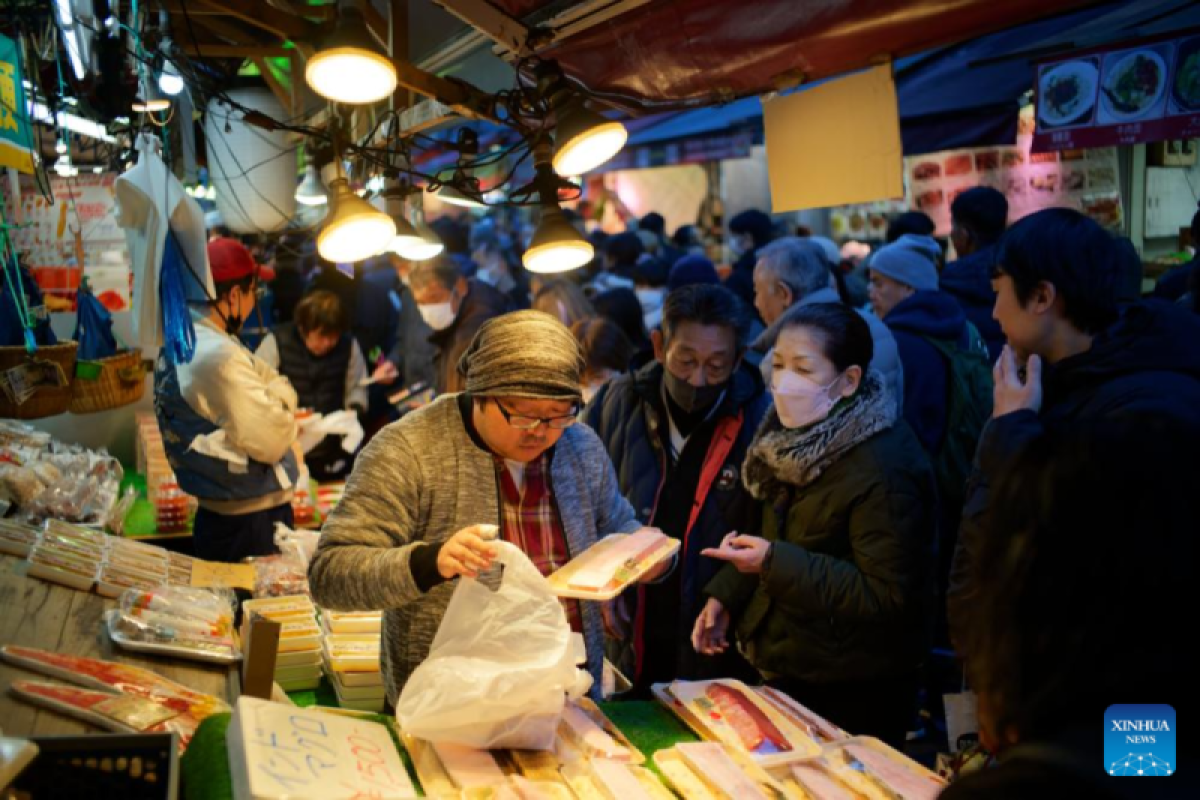
Tokyo (ANTARA) - Japanese Prime Minister Sanae Takaichi pledged on Monday to return the consumption tax rate to its original 8 percent level once a proposed temporary reduction concludes.
The two-year tax cut policy was proposed amid prolonged inflation and mounting concerns over Japan’s deteriorating fiscal condition.
“We will return it to the original level two years after the implementation (of the consumption tax cut),” Takaichi said during a parliamentary committee session.
She made the remarks in response to a question from opposition lawmaker Ken Tanaka of the Democratic Party for the People regarding the ruling Liberal Democratic Party’s (LDP) stance.
Tanaka argued it would be difficult to restore the tax rate to its previous level after a reduction, as the public could perceive it as a “tax increase,” potentially triggering a negative reaction.
Takaichi’s statement came after the LDP proposed lowering the consumption tax rate on food and beverages to 1 percent for two years starting April 2027.
The proposal diverges from the party’s campaign pledge, which had previously committed to reducing the consumption tax on food to zero percent.
The LDP submitted the proposal during a cross-party national council session on taxation and social security as a draft interim report, set to be finalised by the end of this month following months of deliberation.
According to Takaichi, she intends to proceed swiftly with the tax cut plan once the national council delivers its interim report.
During the February general election campaign, the LDP promised to slash the consumption tax on food products to zero percent for two years.
The LDP’s coalition partner, the Japan Innovation Party, along with several opposition parties, made similar pledges to help households cope with inflation.
However, a surge in Japanese government bond yields to multi-decade highs and the yen’s continued weakening could amplify concerns over Japan’s fiscal health.
Japan’s fiscal condition is currently regarded as the worst among the Group of Seven (G7) nations.
The plan to implement a 1 percent rate emerged because transitioning to zero percent would require more time to adjust retailers’ cash register systems.
To fulfil its campaign promise and effectively make the consumption tax rate zero, the LDP also proposed annual cash handouts totalling 600 billion yen (approximately Rp62 trillion).
This figure is equivalent to the estimated state revenue from a 1 percent tax on food products.