
Japan Officially Prepares Secondary Capital as Tokyo Faces Major Earthquake Threat
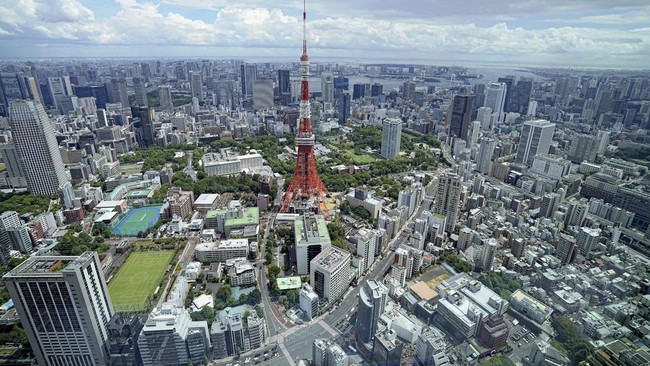
Japan’s parliament has officially passed a bill to establish a secondary capital, concluding a dramatic political session that extended into the early hours. The legislation was approved by the House of Councillors with 123 votes in favour and 121 against, ending a week of fierce debate. The parliamentary session, which lasted 158 days, was extended specifically to pass the controversial bill before closing on Saturday morning (25/7/2026). The secondary capital bill was a primary agenda item for the government of Prime Minister Sanae Takaichi and her coalition partner, the Japan Innovation Party (JIP). To ensure its passage, the government extended the parliamentary session by eight days. The law provides for the establishment of a secondary capital to take over core government functions should Tokyo be crippled by a major disaster, such as an earthquake or national crisis. Beyond ensuring continuity of government, the project also aims to promote more balanced development outside Tokyo. Although a location has yet to be determined, the proposal has fuelled speculation that Osaka is the leading candidate. Six opposition parties rejected the bill, arguing it contained numerous flaws. They demanded guarantees that a referendum on creating a special administrative zone would not be held concurrently with local elections. The disagreement nearly triggered a further extension of the parliamentary session and even talk of a no-confidence motion against the Takaichi administration. Under the new law, the government can designate a prefecture outside Tokyo as the secondary capital. The chosen area is also expected to become a new economic growth engine to reduce the concentration of population and economic activity in Tokyo. To qualify, a region must have special districts similar to Tokyo’s 23 wards or collaborate with a major city. This requirement sparked controversy, with many viewing it as a tailor-made provision to advance the Osaka Metropolis Plan, a JIP project to restructure Osaka City into a special district system like Tokyo. Critics argue the law unfairly benefits Osaka over other regions. Observers have also questioned the policy’s effectiveness in reducing Tokyo’s dominance, suggesting that depopulating regions like Tohoku or Hokuriku would be more deserving of priority if balanced development were the true goal. Osaka itself is not without risk, as it lies along the Nankai Trough, a potential source of megathrust earthquakes. This raises concerns about its ability to serve as an alternative government centre during a major disaster. The law also allows for other areas to be designated as substitute centres for certain government functions, sparking fears that future infrastructure projects could be driven more by political interests than national need, potentially burdening the state budget. Despite the criticism, the bill’s passage marks a significant victory for Prime Minister Sanae Takaichi. The secondary capital plan was a key condition of the coalition agreement between the LDP and JIP. The legislation also offers tax incentives for companies that relocate offices or open branches in the secondary capital to reduce economic concentration in Tokyo. However, the effectiveness of this policy is doubted, with some arguing that advancements in AI will further concentrate business activity in Tokyo. Data supports these concerns, showing that in 2025, 149 companies moved to Osaka while 226 left, marking 44 consecutive years of net corporate outflow, with 24.3% of departing firms relocating to Tokyo. Before Tokyo became the capital, Japan’s seat of government shifted several times. Nara was the first capital in 710 AD, followed by a move to Nagaoka-kyō in 784 AD and then to Kyoto in 794 AD, where the imperial court resided for over a millennium. The capital moved to Edo, renamed Tokyo, during the Meiji Restoration in 1868. Although discussions about relocating the capital arose after disasters like the 1995 Kobe earthquake and the 2011 Tohoku earthquake and tsunami, none were ever realised, making the passage of this secondary capital bill a new milestone in Japanese history.