
Japan Needs Foreign Workers, But Many Find It Hard to Stay
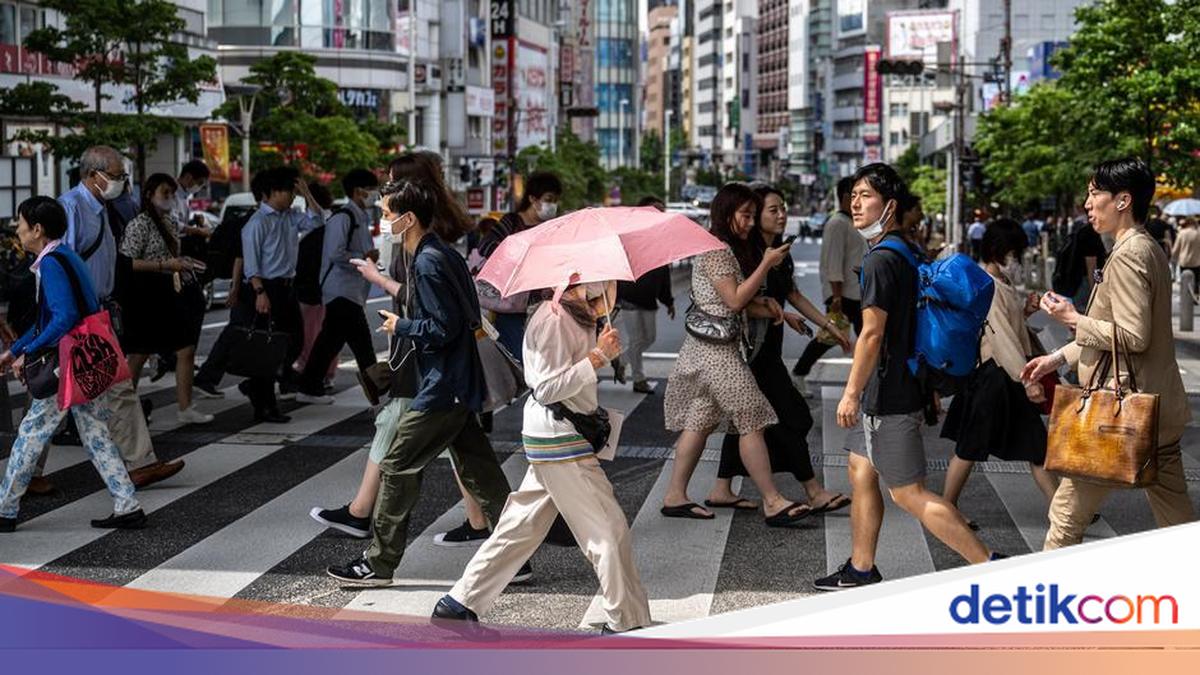
“I was shocked. It’s too expensive to pay 100,000 yen (around 10 million Rupiah) to renew a visa every three years,” said Srijana Sunar, a 29-year-old Nepali woman who has worked in various factories in Japan since 2018. She earns a monthly salary of 145,000 yen (around 16 million Rupiah). At the end of May 2026, the Japanese government passed a law increasing the maximum fee for changing residence status or extending a period of stay tenfold, from 10,000 yen to 100,000 yen, which will come into effect by the end of March 2027 at the latest.
Srijana’s husband, Spandan Sunar, who has worked in Japan since 2016 at a transport company and Japanese language school, told DW that his years of hard work have “not been appreciated” by Japanese society. “We are not newcomers. We have valid visa status, we follow the rules, and we pay taxes. Yet our freedom to choose jobs and our working conditions are very limited,” he said in fluent Japanese. The young couple, who married in Japan in 2022, hope to apply for permanent residency, but only if they can afford the costs. Under the same law, the upper limit for permanent residency application fees will also be raised from 10,000 yen to 300,000 yen. This poses a major obstacle for the couple, given that most applicants consider an annual personal income of over three million yen as a requirement for obtaining permanent resident status.
As of April 2025, Japan’s population of Japanese nationals was recorded at approximately 119.7 million, a decrease of 941,000 people compared to the previous year, according to the Statistics Bureau of Japan. Meanwhile, the number of foreign nationals in Japan continues to rise, offsetting about 40% of the population decline. According to the Immigration Services Agency of Japan, there were approximately 4.125 million foreign nationals in Japan at the end of 2025, an increase of more than 356,000 people from the previous year. “Foreign workers are essential. Without them, society cannot function properly,” Toshihiro Menju, a Japanese immigration policy expert, told DW. According to Menju, who is also a visiting professor at Kansai University of International Studies, it is impossible to cover the labour shortage solely by increasing women’s participation or relying on robots. “The reality is that the number of foreign workers continues to increase across various sectors, from highly skilled professions to frontline care work. Meanwhile, the number of people supporting the basic infrastructure of society continues to decline,” he added.
In January 2026, the administration of Prime Minister Sanae Takaichi approved a series of policies tightening rules for foreign nationals. The policy package is translated as “comprehensive measures for the acceptance and coexistence with foreign nationals.” This policy emerged after the government established the Foreign Nationals Policy Headquarters in November 2025. The new rules include doubling the required period of stay for naturalisation to 10 consecutive years, as well as imposing Japanese language proficiency requirements for permanent residency applicants. “Many of our previous systems were not designed to handle the current number of foreign visitors and residents,” said Takashi Yamashita, a member of parliament from the Liberal Democratic Party (LDP) and chair of one of the project teams under the Foreign Nationals Policy Headquarters. “We are drawing a clear line. We will provide full support to those who use the system properly, but we will be firm against misuse and excessive exploitation. We want to eliminate the sense of unfairness in society,” he said. He added that the government also wants to create an environment where foreign nationals who reside legally and wish to contribute to Japan can live peacefully and thrive as part of the local community.
However, some prospective foreign workers say the new policies are already affecting their plans. Yanika Roongpairoj, a 35-year-old researcher from Thailand working at Chiba University Hospital near Tokyo, said her career in clinical pharmacy had been progressing smoothly, including visa and job-hunting matters. Despite earning her Ph.D. in Japan in 2024, she told DW that “these policy changes are somewhat affecting my long-term plans to stay in Japan.”
Negative sentiment towards foreigners is on the rise. According to a Nikkei opinion poll conducted by mail between October and December 2025, 37% of respondents disagreed with the increasing number of foreigners in their workplaces and communities, a 10 percentage point increase from the 2024 survey. A 26-year-old Japanese consultant in Tokyo, who requested anonymity, said coexistence with foreigners is being promoted without adequate controls, particularly regarding public safety and social norms. “For example, in Japan there is an understanding that everyone should consider the comfort of others in public spaces. However, I often see people playing music without earphones or talking on the phone inside trains, which makes many people uncomfortable. Japanese people tend to be reluctant to confront them directly, so they just feel uneasy without saying anything,” he said.