
Japan Has 'Burned' Rp1,200 Trillion, Yet Still Fails to Rescue the Yen
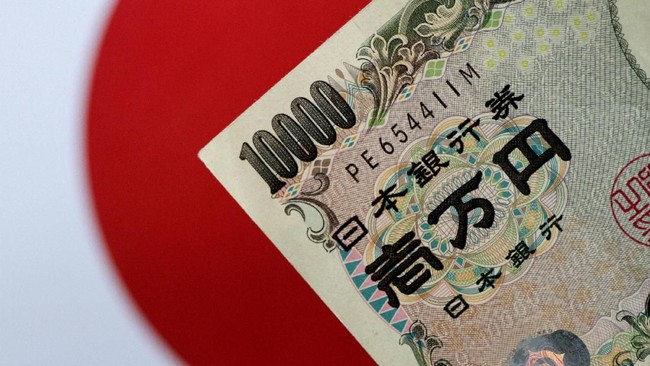
Japan is facing severe pressure in the foreign exchange market. The yen continues to weaken against the US dollar, edging closer to its weakest position in nearly 40 years. According to Refinitiv, the yen closed sharply lower at JPY 161.37/US$ on Thursday (18/6/2026), a drop of 0.46%, after touching an intraday low of JPY 161.80/US.IftheyenbreachesJPY161.96/US, it will be at its weakest since 1986. This pressure persists despite significant steps taken by Japanese authorities. The government has deployed massive funds for intervention, and the Bank of Japan (BOJ) has raised interest rates, yet these measures have so far failed to reverse the trend.
The Ministry of Finance previously spent over US$70 billion on currency market interventions. Between April and May, Japan used more than JPY 11.7 trillion, or approximately US72.8billion(aroundRp1,294trillion), ofitsforeignexchangereservestopropuptheyen.Theinterventionprovidedonlytemporaryrelief.On30April, theyenbrieflystrengthenedfromJPY160.39/US to JPY 156.6/US, andmovedtowardsJPY155/US the following day. However, the gains were short-lived, and the yen gradually depreciated back towards JPY 160/US.JapanissuspectedofinterveningagainduringtheGoldenWeekholidayinearlyMaywhentheyenwasaroundJPY158/US, but again the effect did not last. Finance Minister Satsuki Katayama warned that Japan is ready to take decisive action against speculative moves, and BOJ Deputy Governor Ryozo Himino told parliament the central bank is closely monitoring currency movements due to their impact on the economy and inflation. Yet, these warnings and massive interventions have not deterred the market.
Beyond intervention, the BOJ also raised its short-term policy rate on Tuesday (16/6/2026) from 0.75% to 1%, the highest level since 1995. The hike came amid inflationary pressure, partly driven by the energy crisis triggered by the Iran conflict. The BOJ assessed that the risk of a sharp economic downturn from the Middle East conflict had diminished due to government measures to curb fuel prices and progress in securing alternative energy supplies. However, it warned of inflation risks as businesses begin passing higher oil costs onto consumers. In theory, a rate hike should make the yen more attractive, but the currency remains under pressure. Masahiko Loo, senior fixed income strategist at State Street Investment Management, said the BOJ’s rate increase was largely anticipated by the market, severely limiting its impact. Loo described the hike as merely a ‘plaster for a gunshot wound’ for the yen.
The yen’s persistent weakness stems from structural factors, primarily the wide yield differential between Japan and the US. The yield on 10-year Japanese government bonds stands at 2.64%, compared to 4.451% for 10-year US Treasuries. This gap makes dollar-based assets far more attractive and revives the carry trade, where investors borrow in low-yielding yen to invest in higher-yielding assets elsewhere. Data from the CFTC shows leveraged funds increased their short positions against the yen to over 115,000 contracts in the week ending 9 June, the largest bearish bet since November 2017. JPMorgan also noted that the market has largely priced in potential BOJ rate hikes and currency interventions, meaning their impact is far less than two years ago. As long as the US-Japan interest rate gap remains wide and the carry trade is attractive, the yen will struggle to recover.
Political direction in Japan is also weighing on the currency. The administration of Prime Minister Sanae Takaichi is perceived as having a reflationary stance, favouring loose policies to spur economic growth, which adds further downward pressure on the yen.
Source: jawawa.id (https://jawawa.id/newsitem/japan-has-burned-rp1-200-trillion-yet-still-fails-to-rescue-the-yen-1781866337)
Originally published by CNBC Indonesia (https://www.cnbcindonesia.com/research/20260619141259-128-744079/sudah-bakar-rp1200-triliun-jepang-tetap-gagal-selamatkan-yen), translated from Indonesian