
Japan Hardens Stance Against China as Defence Minister Warns of Blurring Peace and Emergency Lines
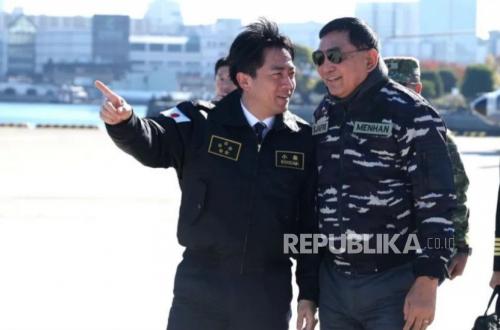
Geopolitical competition in East Asia is intensifying again. Japan has vowed to continue strengthening its defence capabilities and expanding security cooperation across the Indo-Pacific region, while rejecting Chinese accusations that these moves constitute ‘new militarism’.
Defence Minister Shinjiro Koizumi made the statement at the Shangri-La Dialogue international security forum in Singapore on Sunday. Tokyo’s stance comes amid rising regional rivalries involving China, the United States, and several Indo-Pacific allies.
Koizumi said the regional security environment has grown increasingly complex, with rising military tensions compounded by new competition in cyber, space, technology, and information domains.
‘The boundary between peace and emergency is becoming increasingly unclear,’ Koizumi said on Sunday (31 May 2026).
Amid this, Japan is accelerating its defence modernisation. Tokyo plans to revise key national security documents by year-end while boosting investment in artificial intelligence, unmanned systems, cyber capabilities, and space technology.
This forms part of a major shift in Japan’s security policy, which has been cautious in military matters since World War II. However, escalating regional tensions have led Tokyo to conclude that defence strengthening can no longer be delayed.
Koizumi openly addressed Beijing’s criticism accusing Japan of moving towards ‘new militarism’.
‘There is a country with large nuclear arsenals and strategic bombers. Japan does not possess such weapons. Yet, Japan is labelled as pursuing ’new militarism’. Isn’t that strange?’ Koizumi said.
He stressed Japan’s post-WWII reputation as a peace-loving nation would not be tarnished by what he called false accusations.
Nevertheless, Koizumi warned that opaque military buildup could breed mistrust and dangerous miscalculations. Japan has pledged to conduct its defence modernisation with high transparency.
Amid the debate, Tokyo-Beijing relations remain strained. Tensions rose after Prime Minister Sanae Takaichi indicated in November that Japan could support the US if China attacks Taiwan.
Taiwan is one of the most sensitive issues between the two nations. Beijing considers Taiwan part of its territory and has not ruled out using force for reunification. Meanwhile, regional nations fear a Taiwan Strait conflict could trigger wider security crises in Asia.