
Japan Discovers 'Treasure Trove' of Rare Earth Metals on Seabed, Potentially Alarming China
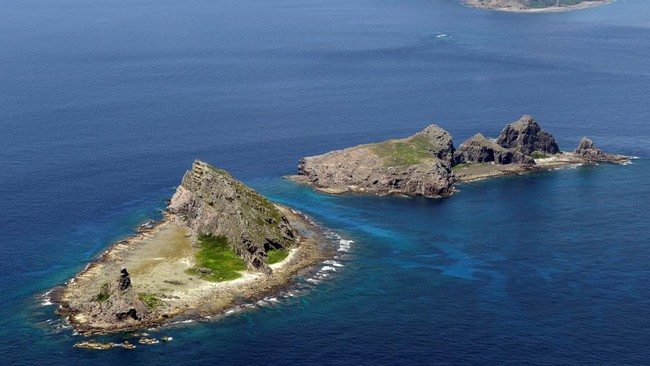
Japan has discovered significant potential rare earth deposits in the seabed near a remote island in the Pacific Ocean. The finding could reduce the Land of the Rising Sun’s dependence on supplies of the strategic metals from China.
Quoting Reuters, on Friday (24/7/2026), the Japanese government revealed the results of an analysis of seabed mud taken from waters around Minamitorishima island. The analysis showed that around 54% of the rare earth content in the mud consists of medium and heavy rare earth elements of high value.
However, the government has not yet disclosed the size of the reserves found. The reason is that sampling remains limited in terms of both location and research duration, so the data is not yet sufficient to calculate the total deposit.
The samples were taken using the scientific drilling vessel Chikyu during a one-month mission that ended in February 2026. The drilling site lies around 1,900 kilometres south-east of Tokyo, at a depth of about 6 kilometres below the sea surface.
The mission became the first in the world to successfully lift rare earth-bearing seabed mud continuously from extreme depths. The finding comes as Japan seeks to diversify its sources of critical minerals after China tightened export restrictions on heavy rare earths and related magnets.
It is worth noting that rare earths are currently regarded as the earth’s new treasure. These raw materials are vital for the defence industry, electric vehicles and semiconductors.
From around 50 tonnes of mud successfully lifted, researchers found a number of high-value elements, such as yttrium, which is used in the aerospace, energy and semiconductor industries. In addition, gadolinium was found, used in magnetic resonance imaging (MRI) machines and various high-tech devices, as well as dysprosium, a key element in manufacturing high-performance magnets for electric vehicles.
The Japanese government plans to continue the project with a large-scale mining trial in February 2027. At that stage, Japan aims to be able to extract around 350 tonnes of mud per day from the seabed.
The material lifted will be dried on Minamitorishima island before being processed on the Japanese mainland. This stage is intended to test the technology for separating, refining and smelting rare earth metals.
Project manager Kazushige Kikuchi of the Japan Agency for Marine-Earth Science and Technology (JAMSTEC) said the trial will form the basis for assessing the feasibility of domestic rare earth production. The government is targeting a comprehensive evaluation of the project’s industrialisation potential to be completed by March 2028.
Japan’s move is seen as strategic amid rising global competition for control of critical minerals. Since April 2025, China has imposed export restrictions on a number of heavy rare earths and related magnets, then further tightened exports to Japan in January 2026, including to several large conglomerates.
Source: jawawa.id (https://jawawa.id/newsitem/japan-discovers-treasure-trove-of-rare-earth-metals-on-seabed-potentially-alarming-china-1784904718)
Originally published by CNBC Indonesia (https://www.cnbcindonesia.com/news/20260724165143-4-753672/jepang-temukan-harta-karun-di-dasar-laut-china-bisa-ketar-ketir), translated from Indonesian