
Japan: ASEAN faces pressure to choose sides amidst geopolitical rivalry
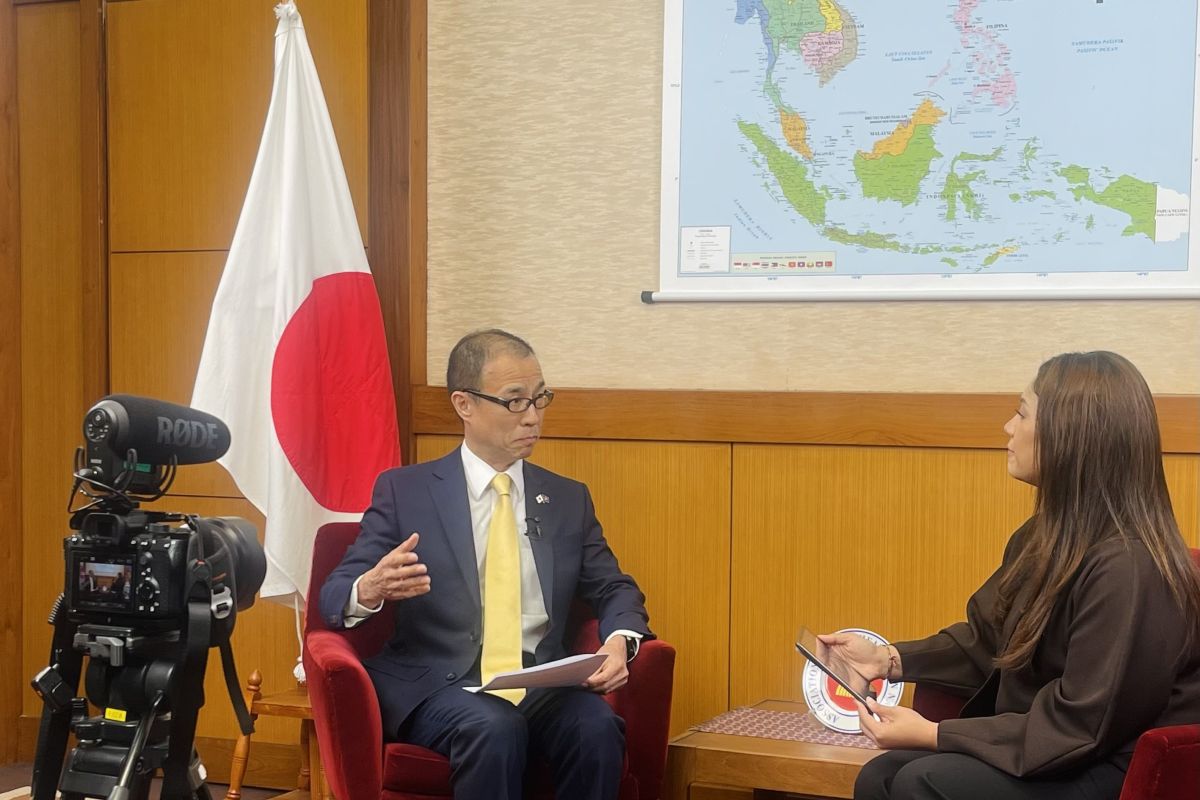
Jakarta (ANTARA) - The Japanese Ambassador to ASEAN, Yonetly Koji, believes that ASEAN is facing growing pressure to choose sides amidst escalating geopolitical tensions.
“In the context of increasing geopolitical tensions, ASEAN faces growing pressure to choose one side. In my view, this is the greatest challenge facing ASEAN,” Ambassador Yonetani stated during an interview with ANTARA as part of the International Corner programme in Jakarta on Thursday.
According to him, ASEAN needs to strengthen its autonomy and resilience across economic, social, and security sectors to confront these mounting challenges. He further noted that strengthening ASEAN’s autonomy and resilience requires cooperation with various partners, including a broader range of stakeholders. He suggested that the ASEAN Outlook on the Indo-Pacific (AOIP) could serve as an essential guide for such cooperation.
Japan perceives fundamental similarities between the AOIP and Japan’s Free and Open Indo-Pacific (FOIP) concept, specifically regarding freedom, openness, inclusivity, and respect for rules.
“Japanese Prime Minister Takaichi also recently delivered a policy speech articulating the renewal of the Free and Open Indo-Pacific concept in response to the evolving situation,” he said.
Yonetani stated that the renewal of FOIP includes several pillars of cooperation aimed at promoting the autonomy and resilience of Japan and its partner nations, including ASEAN. One of these pillars involves strengthening the supply chains of critical products, energy security, and the supply of critical minerals.
“Of course, Japan cannot do all of this alone, and we cannot work solely with ASEAN. Therefore, we need to work closely with other partners who share the same aspirations and principles,” he added.
In addressing geopolitical dynamics, Japan also reaffirmed its support for ASEAN centrality and unity as a vital component of the regional architecture.
“Japan remains committed to fully supporting ASEAN centrality and unity, as well as the regional architecture established by ASEAN,” the Ambassador stated. He assessed that a regional architecture with ASEAN at its centre provides an essential framework for broader regional nations to engage in open and honest dialogue and build concrete cooperation.
“Such dialogue and cooperation are much needed at this time to build mutual understanding and strengthen strategic trust amidst a constantly evolving world,” he concluded.