
Japan and the Philippines set to form intelligence pact amid concerns over China's military activities
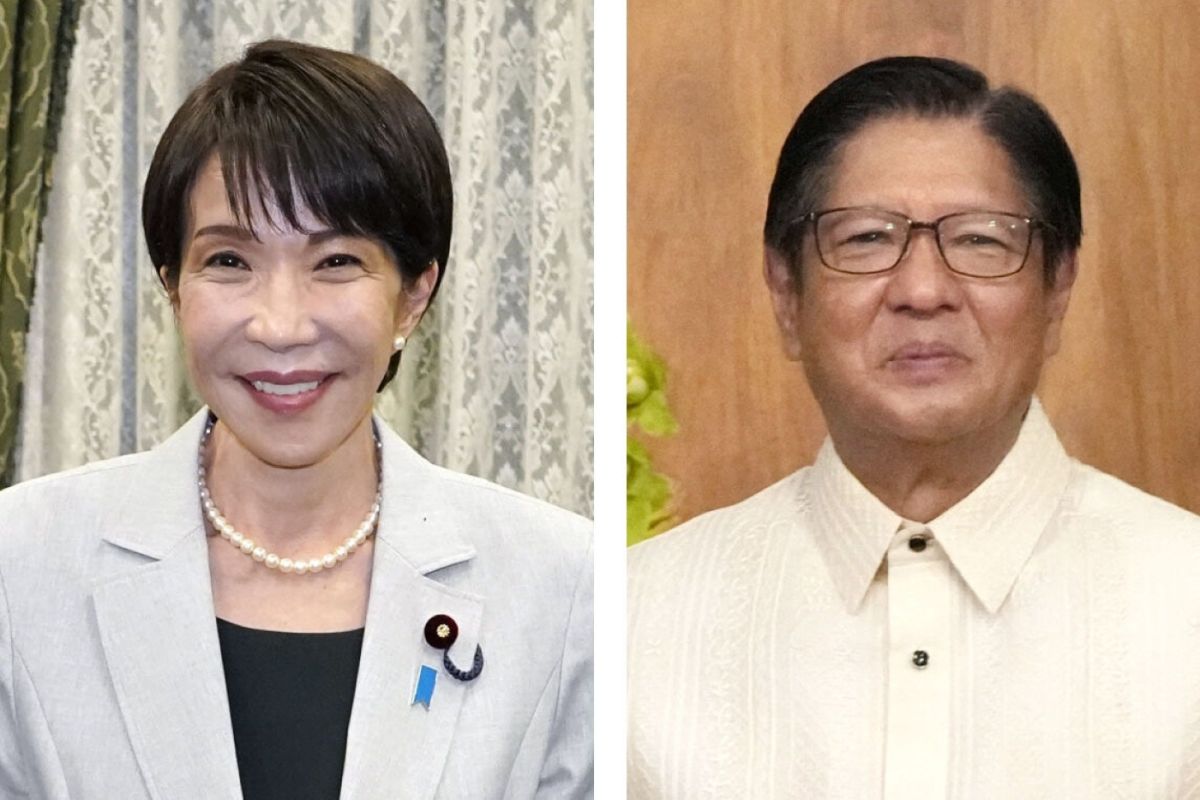
Tokyo - Japan and the Philippines are expected to announce their intentions to formally negotiate a security intelligence-sharing pact as the latest step to strengthen cooperation amid shared concerns over China’s military activities.
During a Tokyo meeting on Thursday, Japanese Prime Minister Sanae Takaichi and Philippine President Ferdinand Marcos Jr are scheduled to upgrade bilateral ties to a ‘comprehensive strategic partnership’, according to Japanese government sources.
The partnership is considered the second highest level of bilateral relations, after an alliance. Japan has previously established similar partnerships with several Southeast Asian nations, including Malaysia, Vietnam, and Laos.
Takaichi and Marcos are set to hold a joint press conference following the meeting and issue a joint statement, sources said.
Japan and the Philippines, both close allies of the United States, have steadily enhanced their security collaboration in recent years, aligning with Tokyo’s push for a free and open Indo-Pacific amid China’s increasingly assertive maritime stance.
Beijing claims the Senkaku Islands, administered by Tokyo in the East China Sea, and virtually all of the South China Sea, where Chinese coastguard vessels have been accused of aggressive actions against Philippine vessels in disputed waters.
The planned intelligence pact between Japan and the Philippines, known as the General Security of Military Information Agreement ( GSOMIA), requires both countries to safeguard shared military secrets. Japan already has similar bilateral agreements with Australia, South Korea, and the United States.
Earlier in January, Tokyo and Manila signed an acquisition and crossservicing agreement to facilitate defence supply sharing. Additionally, a reciprocal access agreement enabling faster deployment of troops for joint exercises and disaster relief operations came into effect inSeptember last year.
The Philippines is also the recipient of Japan’s official security assistance programme, which provides defence equipment to like-minded partner nations since its launch in the 2023 fiscal year.
Both nations, heavily reliant on Middle Eastern oil imports, face similar challenges in maintaining energy supplies amid global disruptions following the Israel-Iran conflict starting in late February.
Marcos’s four-day state visit to Japan until Friday, 29 May coincides with Tokyo and Manila marking 70 years of diplomatic relations this year.
Ahead of the summit with Takaichi, Marcos addressed Japan’s parliament, stating both countries remain ’ steadfast in their commitment to upholding international law’ in the increasingly complex Indo-Pacific, where tensions test the resilience of the rules-based order.
‘Let us strive to be an example of strategic collaboration that inspires the path to peace, shared opportunities for mutual prosperity, and new possibilities that benefit nations, people, and the wider Indo-Pacific region,’ he said.