
Japan and Taiwan Share Strategies to Reduce Colorectal Cancer Cases
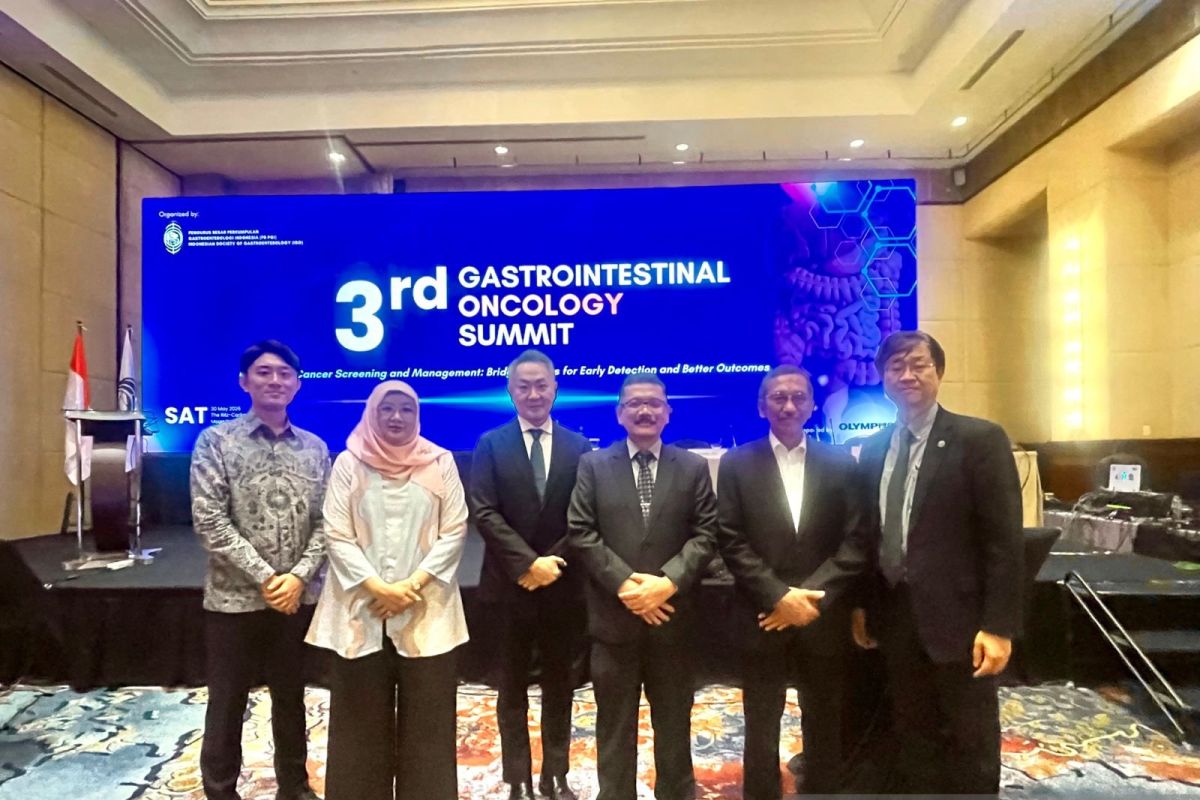
President of the Japanese Society of Gastrointestinal Cancer Screening, Professor Takahisa Matsuda, MD, PhD, outlined that Japan has implemented annual screening using Fecal Immunochemical Test (FIT) from age 40 as the most realistic and evidence-based first step in colorectal cancer management.
‘FIT offers advantages: low cost, non-invasive nature, scalability, and proven mortality reduction. However, Japan’s biggest challenge is not the FIT test itself but follow-up diagnostic colonoscopy. Around 30% of individuals with positive FIT results do not proceed to colonoscopy. This is a major challenge Indonesia will also face,’ Professor Matsuda said at the 3rd Gastrointestinal Oncology Summit 2026 in Jakarta.
In contrast to Japan’s approach, Professor Han-Mo Chiu, MD, PhD, from National Taiwan University and Hospital, highlighted Taiwan’s structured screening programme since 2004, which uses biennial FIT and has reduced colorectal cancer mortality by 35% and advanced-stage cancer incidence by 29% among participants.
Meanwhile, Professor DR Dr Murdani Abdullah, FACG, FASGE, Head of the Human Cancer Research Centre (HCRC) at the Indonesian Medical Education and Research Institute (IMERI) Faculty of Medicine, Universitas Indonesia, noted that medical procedures for examining the large intestine remain limited in Indonesia.
‘Indonesia’s colonoscopy capacity is currently very limited, given a population of 281 million spread across an area five times larger than Japan’s and thousands of inhabited islands. Therefore, our strategy must be phased: FIT pilot projects at primary healthcare facilities, colonoscopy concentrated in district and city hospitals, and strengthening digital referral systems,’ he said.
The summit also produced recommendations including phased implementation of structured FIT programmes starting with pilot areas, followed by improvements in colonoscopy capacity and quality.
National data integration and registries, mass education and digital innovation, and risk stratification using scoring systems (such as Japan’s 8-point model) to prioritise high-risk patients for colonoscopy.
Source: jawawa.id (https://jawawa.id/newsitem/japan-and-taiwan-share-strategies-to-reduce-colorectal-cancer-cases-1780146064)
Originally published by Antara (Indonesian) (https://www.antaranews.com/berita/5587911/jepang-dan-taiwan-bagikan-kiat-tekan-jumlah-pasien-kanker-kolorektal), translated from Indonesian