
Jamkrindo drives community empowerment in Garut to create economic value
Jakarta (ANTARA) - PT Jaminan Kredit Indonesia (Jamkrindo) (Persero) continues to promote economic self-reliance among the people of Garut through empowerment that integrates the environment, productive economy, agriculture, and technology.
President Director of PT Jaminan Kredit Indonesia (Persero) Abdul Bari said the Jamkrindo empowerment programme is directed at creating sustainable impact by encouraging communities to develop local potential into productive and independent economic activity.
“What has been built in Garut shows that local potential, mentoring, technology, and collaboration can be integrated into a sustainable economic chain from upstream to downstream,” Abdul Bari said in a statement received on Friday.
Entering its fifth year, Jamkrindo is not only providing assistance but also developing programmes run together with the Salarea Foundation and the Forest Village Community Institution (LMDH) Bunga Wana Lestari.
One of the main achievements is seen in the development of the Waste Bank, which initially operated in only one location and focused on plastic waste, and has now expanded to two locations.
The Waste Bank also processes household organic waste into organic planting media used to support residents’ agriculture while also holding potential economic value.
In the agricultural sector, Kebun Gizi has implemented Internet of Things (IoT) technology through collaboration with community service programme (KKN) students from UIN Sunan Gunung Jati Bandung. Smart farming technology enables automatic watering and fertilising while also making the garden a means of community education.
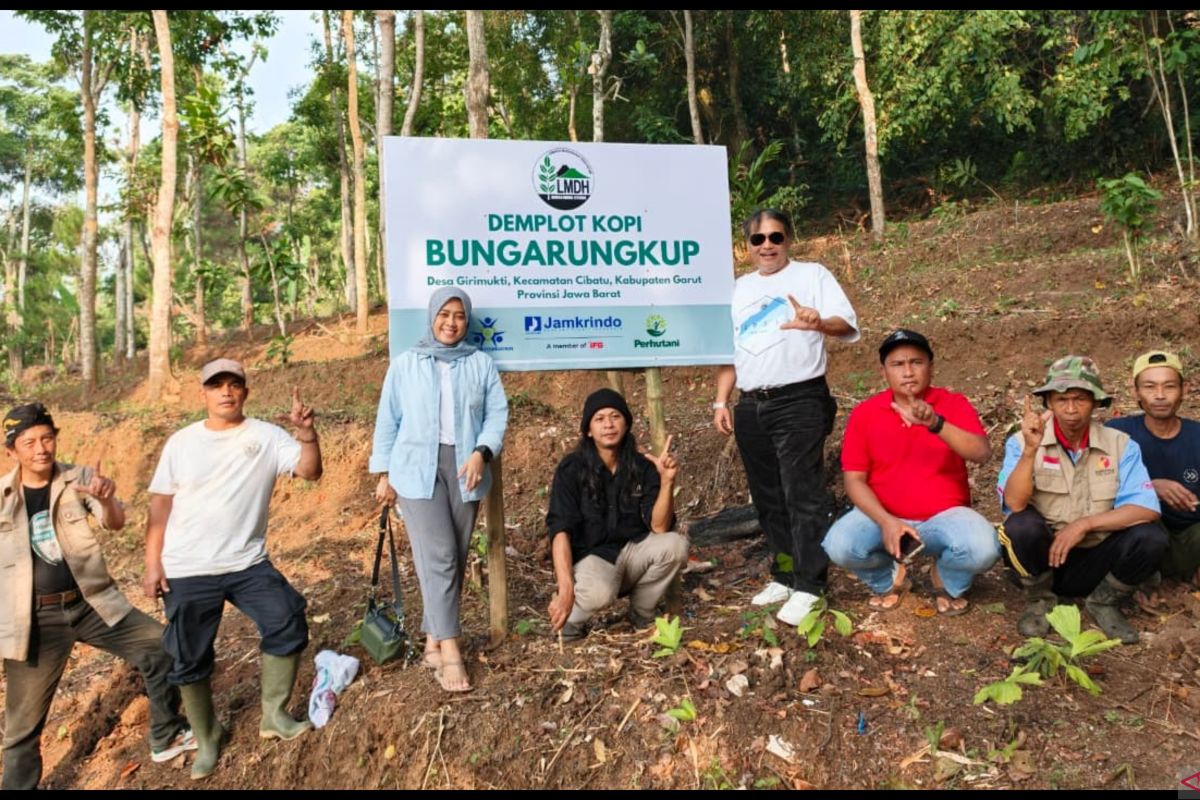
Meanwhile, the development of the Coffee Plantation on more than one hundred hectares of Perhutani land continues to show positive progress.
Going forward, Jamkrindo is encouraging the strengthening of downstreaming through the development of a Coffee Shop being prepared to welcome the first harvest. Coffee will not only be sold as a raw material but will be processed, roasted, and served at the shop so that the added value can be enjoyed by the community.
“Downstreaming is an important step so that the economic benefits of local potential are increasingly felt by the community. We hope the Coffee Shop can become a space that connects community products with the market while strengthening economic independence,” Abdul Bari said.
Through an approach that links the environment, agriculture, technology, and downstreaming, the Jamkrindo empowerment programme in Garut is targeted to continue growing and become a role model for village economic independence at the national level.