
Jamkrindo Builds Economic Independence for People with Disabilities
Access to skills and markets is one of the factors that can expand economic opportunities for people with disabilities. This is achieved through skills training followed by product development and introducing the work to the market.
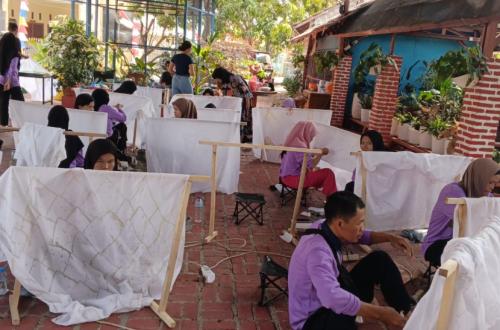
One such empowerment activity took place through the Harmoni Karya Inklusif programme at Taman Cimanuk Adiarsa, Karawang Regency, from 21 to 23 August 2026. The programme, organised by PT Jaminan Kredit Indonesia (Persero) or Jamkrindo, included batik-making and sewing training, as well as an exhibition and competition of works by people with disabilities.
The batik training was attended by 20 participants with disabilities, with material on developing motifs distinctive to Karawang. The activity was then followed by business matching between the batik and sewing training participants to develop the fabric produced into ready-to-use products.
Jamkrindo Corporate Secretary Akhmad Albaasithu said that the empowerment of people with disabilities should be viewed in terms of access to opportunities to develop, create and obtain economic opportunities.
“We want to ensure that every individual has the opportunity to develop and provide value. Through Harmoni Karya Inklusif, we want to encourage people with disabilities to be more confident in developing their potential, while opening up opportunities so that their work can have economic value,” said Akhmad in a press release on Sunday (6/9/2026).
Through business matching, fabric produced from the batik and sewing training can be developed into clothing, bags, accessories and other creative products. The scheme brings together participants’ skills with the product development process, opening up the possibility of forming a business value chain involving people with disabilities.
“We want to build an ecosystem that allows skills to develop into productive activities. Therefore, we brought together batik and sewing training participants through business matching so that the fabric produced can be developed into ready-to-use products,” Akhmad continued.
According to Akhmad, the sustainability of empowerment is one aspect that needs attention after the training is completed. Product development and introducing the work to the market are considered capable of providing space for participants to continue the skills they have acquired into productive activities.
“We want the empowerment programme not to stop when the training ends. There is a follow-up process in the form of collaboration, product development and introducing the work to the market,” he said.
The series of activities also included an exhibition and competition of works by people with disabilities, featuring a fashion show, display of works, judging, artistic performances, and the presentation of awards to participants. The exhibition served as a space to introduce the works to the public, government, business community, communities and potential marketing partners.
“Through this exhibition and appreciation, we hope that more parties will see that the work of people with disabilities has quality and potential to be developed. Inclusivity will become more meaningful when the public, government, business community and communities can together open access and create opportunities,” said Akhmad.
Developing skills through to market access is an important challenge in empowering people with disabilities. A model that connects training, product development and marketing can expand opportunities so that the skills acquired do not stop at training activities, but develop into sustainable economic activities.