
James Webb Discovery: Supermassive Black Holes Emerged Before Galaxies
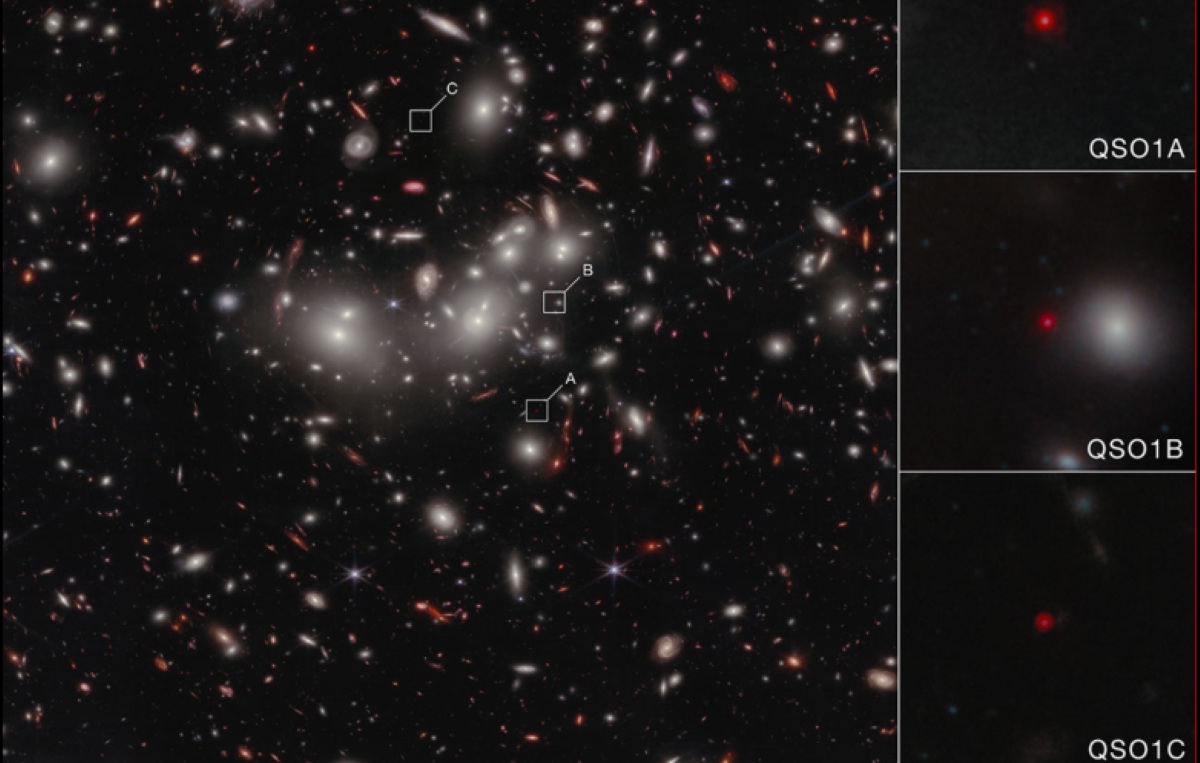
A revolutionary discovery by NASA’s James Webb Space Telescope (JWST) is beginning to alter humanity’s understanding of the universe’s history. Until now, scientists believed that galaxies formed first, and then the massive stars within them died and collapsed into black holes, which subsequently grew larger over time. However, the latest data suggests the opposite scenario: supermassive black holes may have existed from the very beginning, even before their host galaxies fully formed. Researchers using JWST have detected clear evidence that some supermassive black holes were already immensely large from the outset of their formation. They formed without going through a stellar collapse phase and without requiring a massive host galaxy to feed them. “This is a remarkable finding,” said Roberto Maiolino from the University of Cambridge, one of the authors of the study published in the journals Nature and Monthly Notices of the Royal Astronomical Society. “This is a paradigm shift, a complete revision of the classic scenario of how black holes form and grow.” The research team’s conclusion is based on in-depth observations of Abell2744-QSO1 (QSO1), an object known as a Little Red Dot that existed just 700 million years after the Big Bang. Although only 1,300 light-years in diameter, the light from QSO1 travelled for more than 13 billion years to reach Earth. Using the Near Infrared Spectrograph (NIRSpec) instrument on Webb, the team successfully mapped the movement of hydrogen gas around the black hole. They discovered that the gas exhibits Keplerian motion, orbiting the central point in the same way planets orbit the Sun in our solar system. The enormous proportion of the black hole’s mass compared to its host galaxy indicates that it could not have formed gradually from the merger of smaller black holes. Instead, this strengthens theories about direct collapse black holes or primordial black holes born directly from giant gas clouds or extreme conditions shortly after the Big Bang. “It appears we have found a black hole that lacks a substantial host galaxy and predates the process of star formation,” said Ignas Juodžbalis, a Cambridge postgraduate student who led one of the studies. This finding indicates that supermassive black holes may have been the seeds that triggered the formation of galaxies around them, rather than merely a by-product of galactic evolution. The research team is currently continuing to analyse similar objects to ascertain whether this phenomenon is standard in the formation of the universe’s early structures.