
James Riady Urges Businesses to Double Investment and Trade between Indonesia and Russia
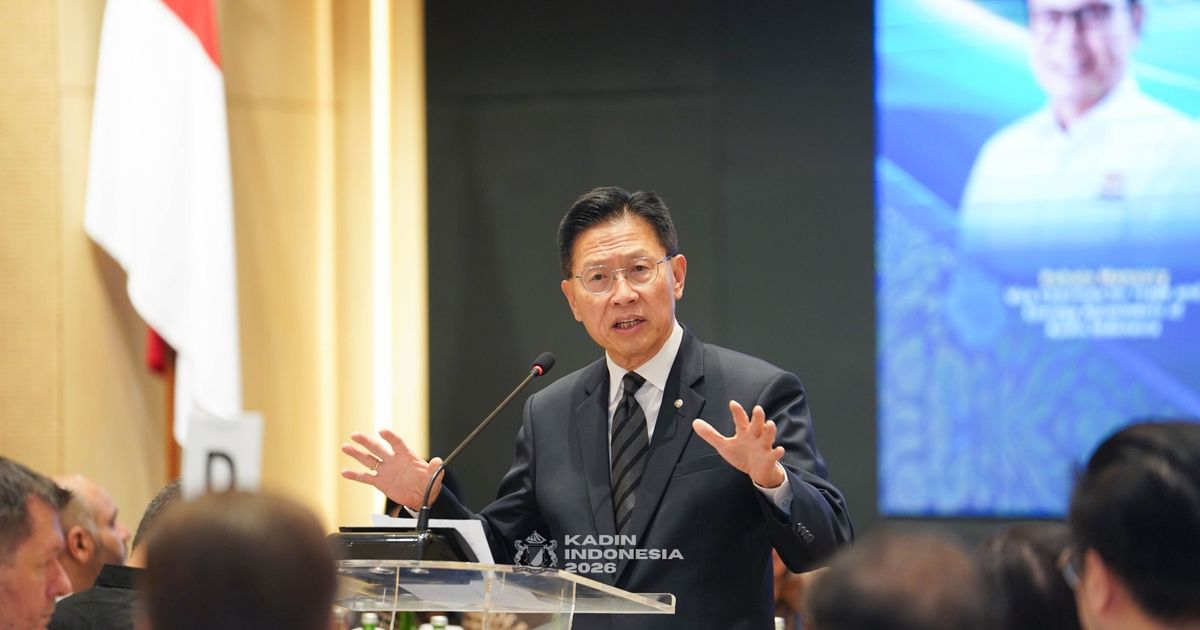
JAKARTA — James Riady, coordinating deputy chairman of the Indonesian Chamber of Commerce and Industry (Kadin), has urged Indonesian and Russian businesses to translate close political ties between the two countries into increased trade, investment, factory development and job creation. Doubling bilateral trade, he said, would require direct involvement from businesses and solutions to obstacles involving logistics, payments and certification.
“Indonesia and Russia have fairly strong political ties. Our friendship is longstanding. There is a history to this relationship. Now, the business community must make something tangible happen,” James said at the Indonesia–Russia Business Forum, themed “Made in Indonesia: Doubling Trade and Investment between Indonesia and Russia”, on Thursday (15 October 2026).
James referred to a visit he made to Vladivostok several weeks earlier, when President Prabowo Subianto addressed the Eastern Economic Forum as a guest of Russian President Vladimir Putin. The visit, he said, underscored that good relations between governments must be followed by economic cooperation with measurable outcomes.
He said President Prabowo had set a concrete challenge: to double Indonesia–Russia trade during the first review period of the Indonesia–Eurasian Economic Union (EAEU) free trade agreement. The target cannot be achieved by the government alone.
“That must be delivered by the people in this room,” he told forum participants.
James said the opportunity to strengthen cooperation was growing. In his speech, he noted that the Indonesia–EAEU FTA had been signed, Indonesia had completed its domestic ratification, and the government was aiming to bring it into force by the end of 2026. The agreement is expected to reduce barriers across thousands of tariff lines and give Indonesian companies wider access to the Eurasian market.
But he warned against allowing discussions to once again stop at the scale of the two countries’ potential. After years of discussing opportunities, businesses need to decide which projects, products and partnerships they will actually pursue.
“The question now is no longer, ‘Is there potential?’ We have been saying there is potential for years. The question is: what are we actually going to build together?” James said.
He identified three priorities: expanding trade, developing investment and joint production, and strengthening connectivity.
In trade, James sees scope for Indonesia to increase sales to Russia across a range of products, including food, coffee, fisheries, palm-oil-based products, rubber, furniture, textiles, footwear, electronics and other competitive goods.
However, market access under a new trade agreement is only the first step. Companies still need distributors, retail networks, logistics services, payment mechanisms and certification, as well as an understanding of the destination market and how business is conducted there.
“Market access on paper is not enough,” he said.
Russian companies seeking to enter Indonesia need similar support. Business forums should therefore connect companies with suitable partners and help resolve issues that are holding up transactions.
The next priority is to take the relationship beyond buying and selling towards investment and joint production. James said Russia had strong capabilities in energy, engineering, transport, industrial technology, agriculture, logistics and advanced manufacturing. Indonesia, meanwhile, offers economic scale, resources, a large domestic market and access to ASEAN.
These complementary strengths create opportunities for Russian companies to establish production in Indonesia with local partners.
“The more interesting question is: what can Russian companies produce, localise or build in Indonesia together with Indonesian partners?” James said.
With this approach, Indonesia could become a base for industrial development and value creation. The partnership could also work in both directions, with Indonesian companies using Russia and the wider EAEU region as a platform to reach Eurasian markets.
According to James, this model would create a more strategic partnership by involving long-term business activity, production capacity development and stronger links between markets.
The third priority is improving connectivity. James said the goal of doubling trade must be supported by the efficient and predictable movement of goods.
He said President Prabowo had specifically called for scheduled, reliable direct shipping between Vladivostok and Indonesia during his visit to the Russian city. Such links would need clear costs, insurance arrangements and cargo flows in both directions.
“This sounds operational. But it is, in fact, strategic,” he said.
Long shipping times, difficult payments, uncertainty over insurance and unfamiliarity with certification requirements can all reduce the benefits of a trade agreement. Improving shipping routes and support services must therefore go hand in hand with opening market access.
James said Kadin could help bridge these needs. The success of business organisations, he said, should be measured by completed transactions and economic activity, not by the number of seminars they hold.
Measures of success should include the number of new Indonesian products entering Russia, Russian companies beginning to invest or produce in Indonesia, joint ventures established and growth in bilateral trade.
“And perhaps most importantly: what business will be operating five years from now that does not exist today? That is the measure,” James said.
He also placed Indonesia–Russia ties within the broader framework of Indonesia’s openness to economic cooperation with countries around the world. Indonesia wants to work with all parties, he said, and Russia is an important part of that broad economic relationship.
“The Pacific Ocean should not separate us. The Pacific Ocean should connect us,” he said.
James said he hoped the government would provide the framework and trade agreements would open access, while businesses followed through with shipments, investment, factories, partnerships and new jobs.
With such tangible results, Indonesia–Russia relations are expected to grow stronger politically while delivering meaningful economic benefits to both countries.
Source: jawawa.id (https://jawawa.id/newsitem/james-riady-urges-businesses-to-double-investment-and-trade-between-indonesia-and-russia-1792068635)
Originally published by investortrust.id (https://investortrust.id/business/119413/james-riady-imbau-pelaku-bisnis-gandakan-investasi-dan-perdagangan-di-indonesia-dan-rusia), translated from Indonesian